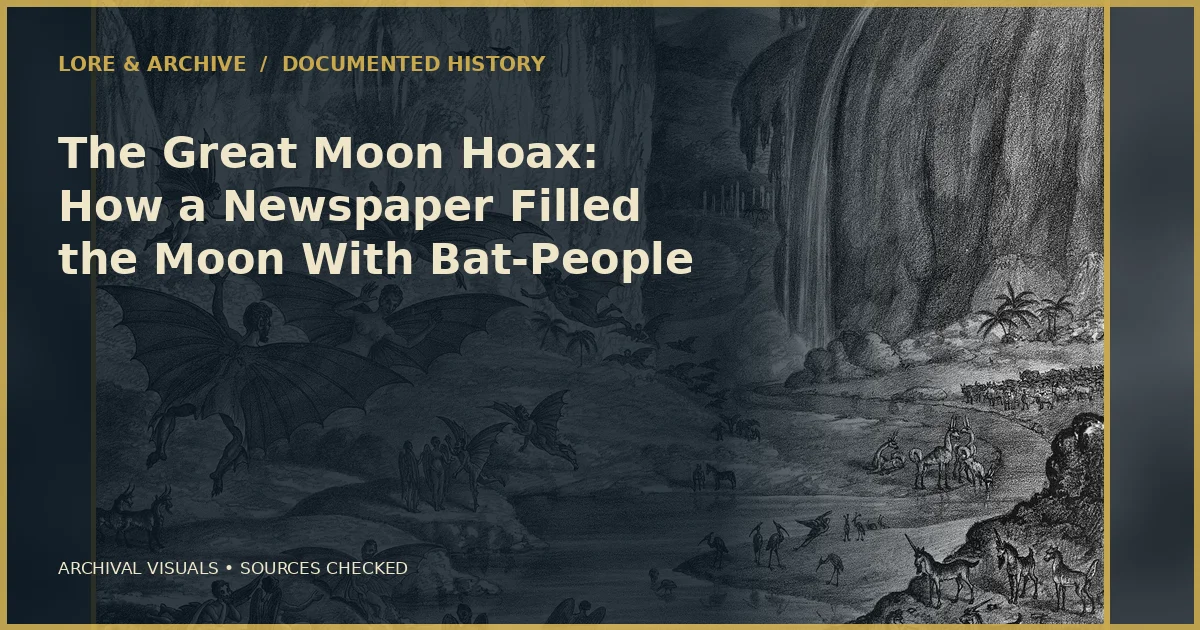
The hoax did not succeed because nineteenth-century readers were uniquely gullible. It succeeded because authentic astronomy was expanding the imaginable—and the articles copied the form of scientific reporting.
Archive record
- Publication: The Sun, New York
- Dates: six installments beginning August 25, 1835
- False attribution: discoveries by Sir John Herschel
- Likely author: reporter Richard Adams Locke
A telescope pointed at public appetite
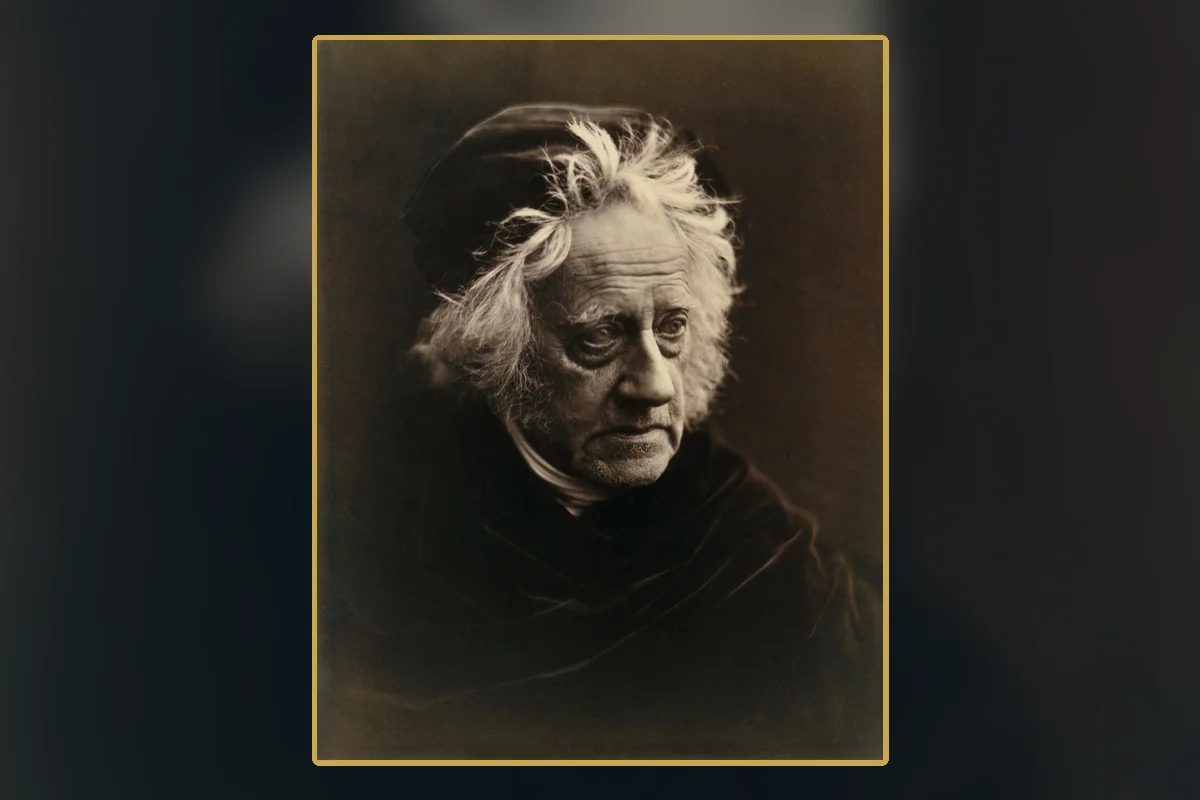
In 1835, astronomer Sir John Herschel really was observing the southern sky from the Cape of Good Hope. The Sun attached fiction to that credible expedition. Its series claimed that a gigantic new telescope had revealed astonishing lunar detail and that the account came from an Edinburgh scientific journal.
The journal attribution was false, but it supplied borrowed authority. Technical descriptions of optics and careful-sounding observation prepared readers to accept increasingly fantastic scenes. The hoax entered through recognizable science before opening the door to spectacle.
First rocks and plants, then man-bats
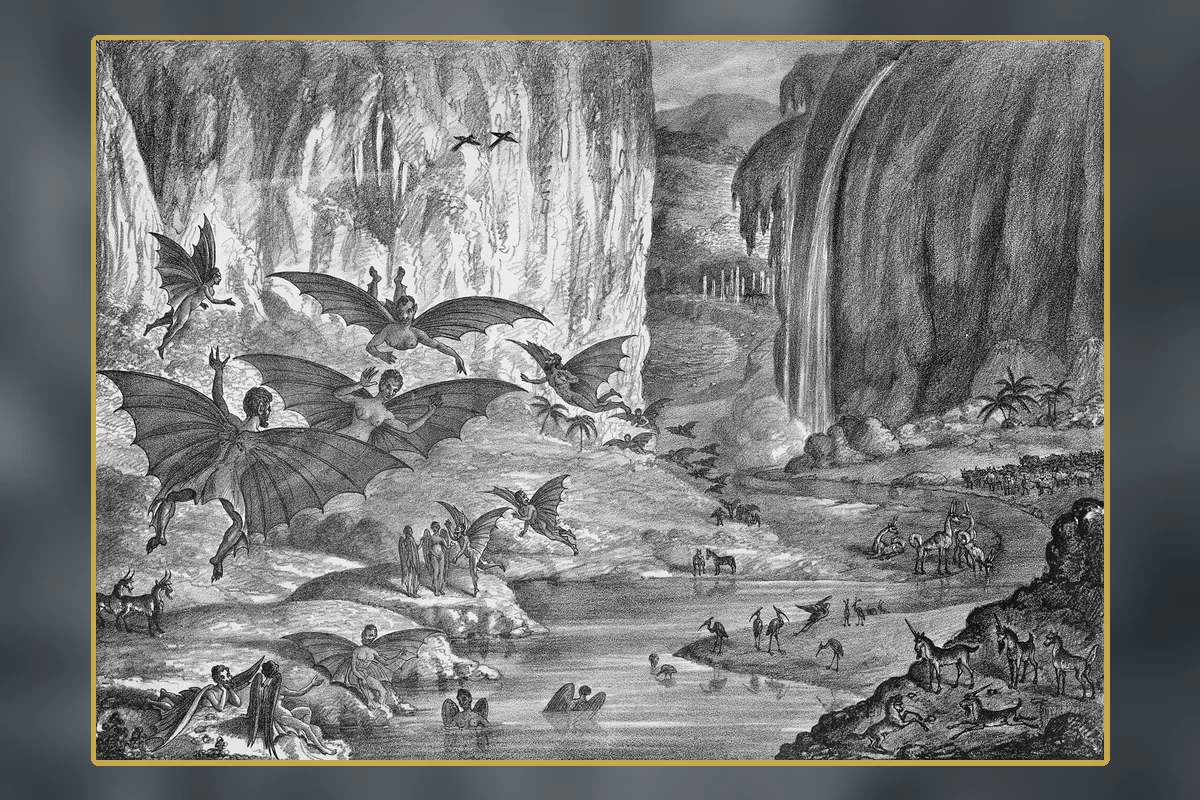
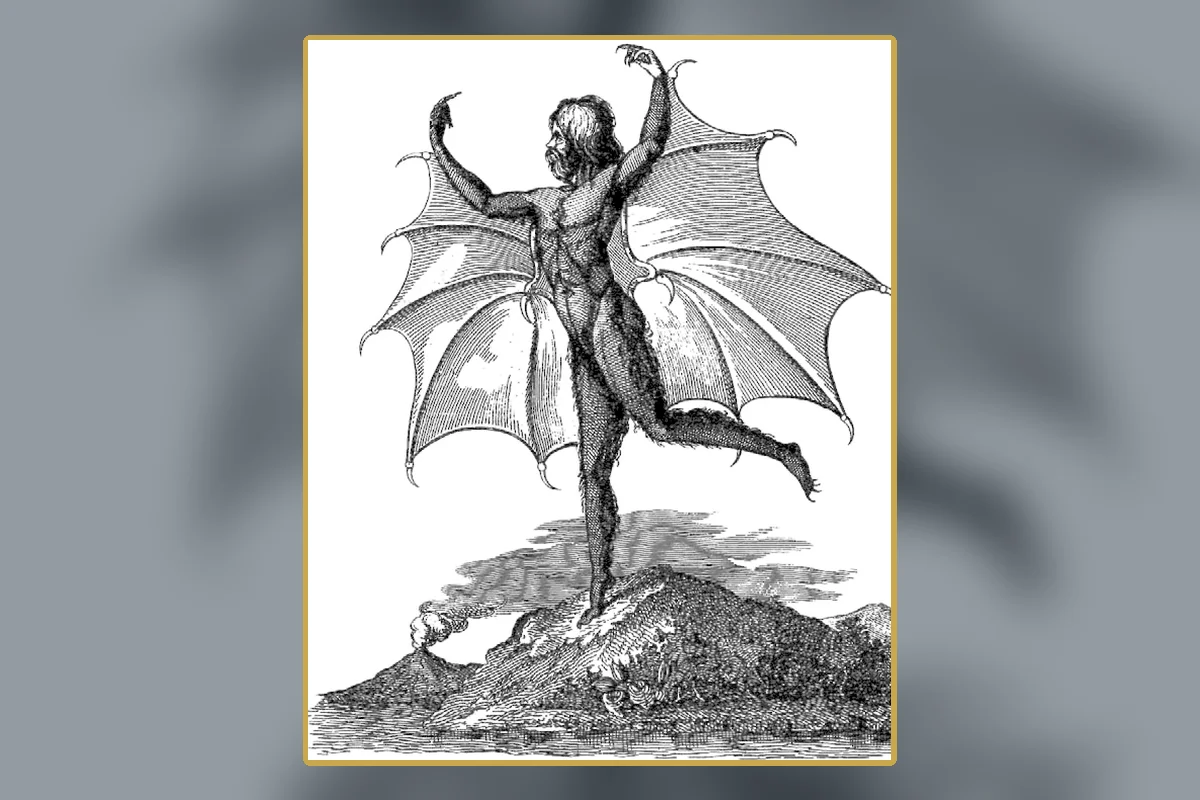
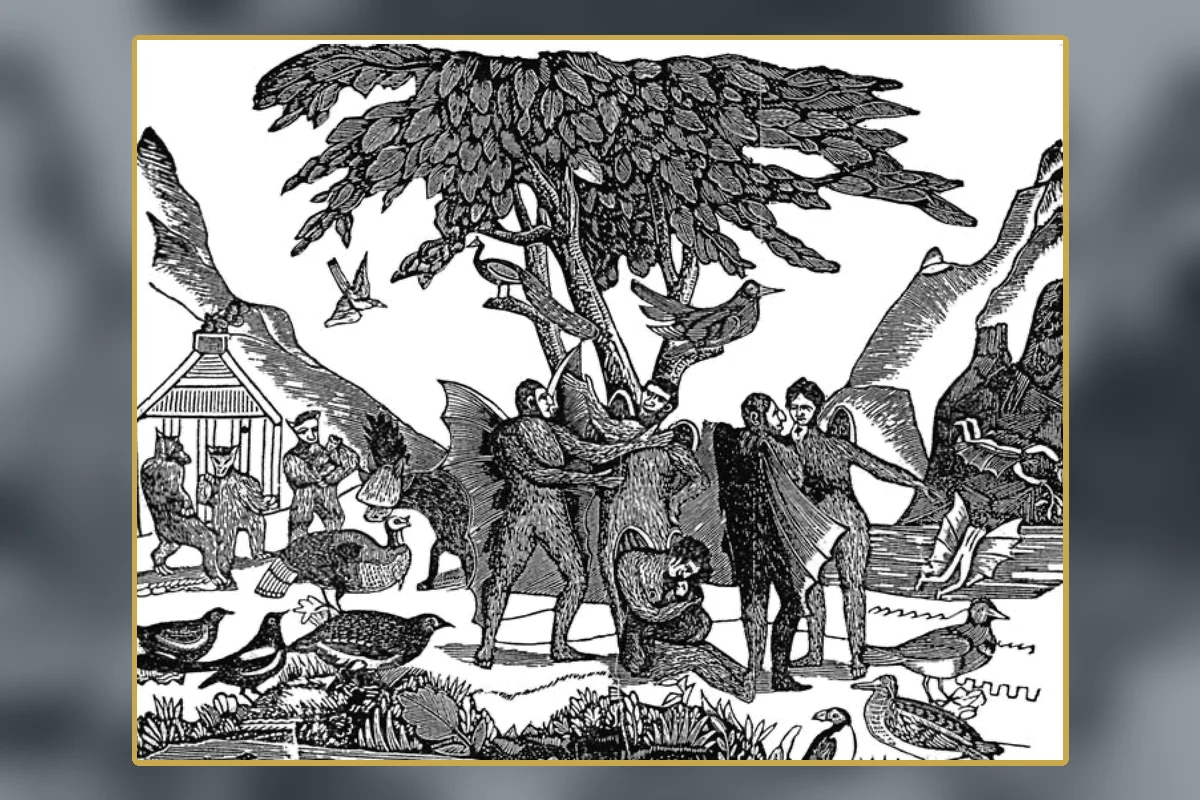
The early installments described lunar geology, water, vegetation, and animals. Bison, goats, beavers, and unicorn-like creatures appeared. The climax introduced winged humanoids—later remembered as lunar 'man-bats'—along with temples and signs of intelligent society.
The escalation was paced. Readers who accepted the instrument and landscape were carried step by step toward life. That structure matters more than whether every person believed every creature. The articles were serialized entertainment engineered to make tomorrow's issue necessary.
The prestige of a scientist who knew nothing about it
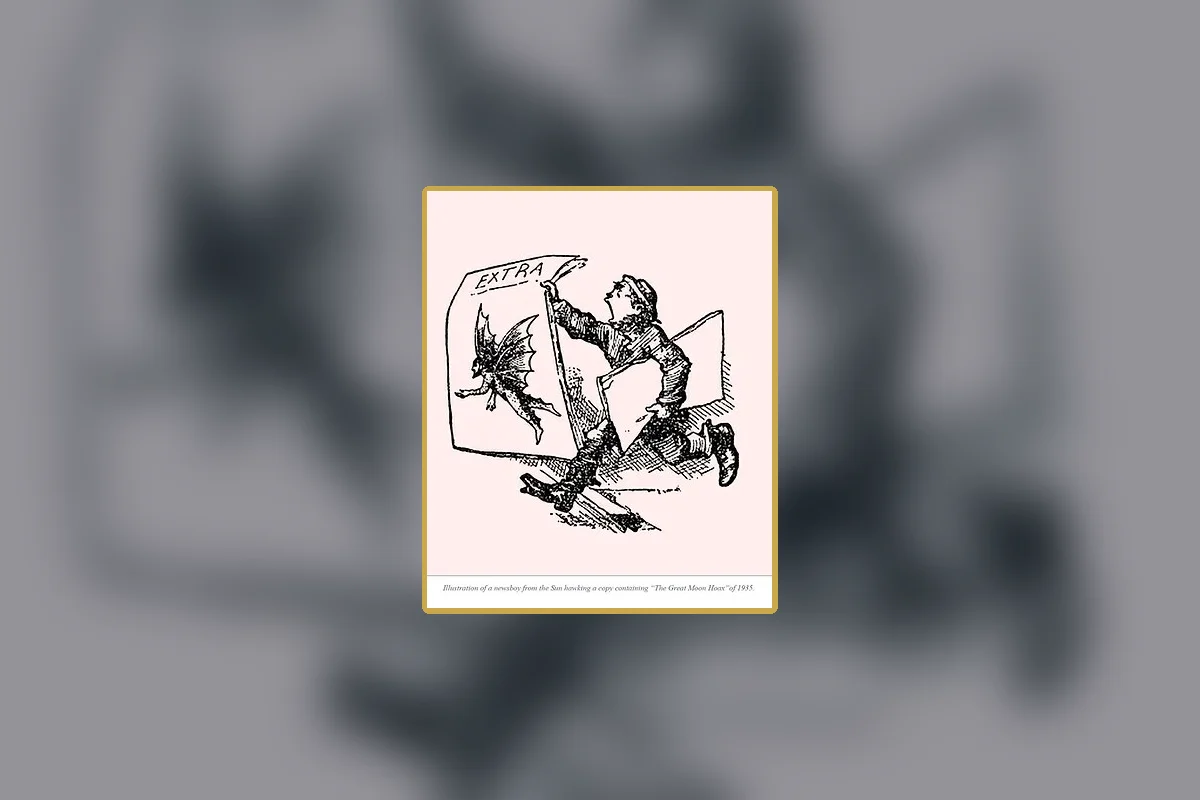
Herschel had not supplied the discoveries and learned of the sensation from afar. His genuine reputation made the story portable. Newspapers copied the series, readers debated it, and religious and philosophical implications circulated alongside jokes.
The hoax demonstrates a recurring vulnerability: accurate biographical facts can anchor false claims. Herschel was real, his location was real, and telescope technology was rapidly improving. The fabricated layer felt plausible because it sat on top of verifiable context.
Did everyone really believe?
Later accounts often picture New York surrendering completely to the story and credit the series with enormous circulation increases. Some readers certainly accepted it, others doubted, and others enjoyed the satire. Exact circulation legends are difficult to separate from the hoax's own later publicity.
Belief is not binary. A reader might suspend disbelief, repeat a vivid claim, or buy the next issue without staking a settled scientific opinion. The series could succeed commercially even among people who treated it as a game. Measuring impact requires more than collecting the most embarrassed reactions.
Satire, rivalry, and the penny press
Richard Adams Locke is generally identified as the author. He may have intended satire of speculative religious astronomy as well as circulation-building fiction. The new penny press competed for a mass readership using crime, scandal, human interest, and accessible language rather than relying mainly on business subscribers.
That environment rewarded a story too good not to repeat. Rival papers challenged, copied, or commented on it. The same competitive network that could expose fabrication also amplified it. The hoax was an early demonstration that correction and distribution do not move at the same speed.
Why the Moon remains a media laboratory
The Great Moon Hoax is not evidence that modern misinformation is simply old news. Distribution systems have changed radically. It does show durable techniques: borrow a trusted name, mix true context with invented specifics, mimic a respected format, and reveal wonders serially.
Its archive also cautions against flattering ourselves. Past readers were not a single credulous crowd, just as present audiences are not. The better question is which social and commercial conditions make checking slower than sharing—and which details manufacture the feeling that a claim has already been checked.
What the record supports—and what it does not
The Sun really printed the six-part lunar series, but stories that every New Yorker believed it or that circulation numbers prove universal gullibility are exaggerated. The hoax mixed satire, entertainment, and commercial news, while readers responded with belief, skepticism, and playful participation.
Evidence ledger
- SERIES — Six installments in August 1835: The Sun unfolded the supposed discoveries over consecutive issues.
- ANCHOR — A real astronomer in Cape Town: Sir John Herschel's genuine expedition supplied credibility without his knowledge.
- SOURCE — An invented scientific journal: False attribution made the newspaper appear to relay rather than originate the claims.
- ESCALATION — From geology to winged people: Each installment raised the level of wonder after establishing technical detail.
- MYTH CHECK — Readers were not one gullible mass: Belief, skepticism, satire, and entertainment could coexist.
- PATTERN — Authority can be assembled: True context plus false specifics created the feeling of independent verification.
How this reconstruction was built
The six newspaper installments are the primary artifact. They show how real names and technical language were used before the lunar creatures appeared. Claims about universal public belief or exact circulation gains come from a noisier later record and should not be treated like the printed series itself. Reception included belief, doubt, satire, and enjoyment; commercial success did not require every buyer to accept every sentence literally. Comparing the installments with neighboring newspaper commentary also shows how repetition, rivalry, and jokes could spread a claim without recording each reader's private judgment. That is why reception should be described as a spectrum instead of a single moment when an entire city was fooled.
To audit the account, open the source links below and compare dates, quantities, and the wording used by the institutions themselves. Look for the earliest recoverable record, then distinguish it from later summaries created after the story became famous. The five visuals in this article are archival photographs, maps, documents, objects, or clearly identified editorial diagrams selected to illuminate the surviving record. Each caption identifies its source and rights information; no reconstruction is presented as a historical photograph. That transparency is part of the Lore & Archive method.
Why this story matters
The episode provides a clean anatomy of manufactured authority. A real scientist, real expedition, invented journal, technical language, and serial cliffhangers combined to make fantasy feel pre-verified.
Continue in the archive
- The Emu War: What Really Happened When Australia Sent Soldiers After Birds
- Inside the Greenbrier Bunker: Congress's Secret Cold War Refuge
- The Night Niagara Falls Went Silent
Sources and further reading
- Library of Congress — Peoples and creatures of the Moon
- Smithsonian Libraries — Fantastic Worlds: Infinite Worlds
Editorial note: Lore & Archive distinguishes contemporary evidence, later institutional synthesis, and unresolved inference. Where sources disagree or the record is incomplete, the uncertainty is stated rather than converted into a dramatic fact.