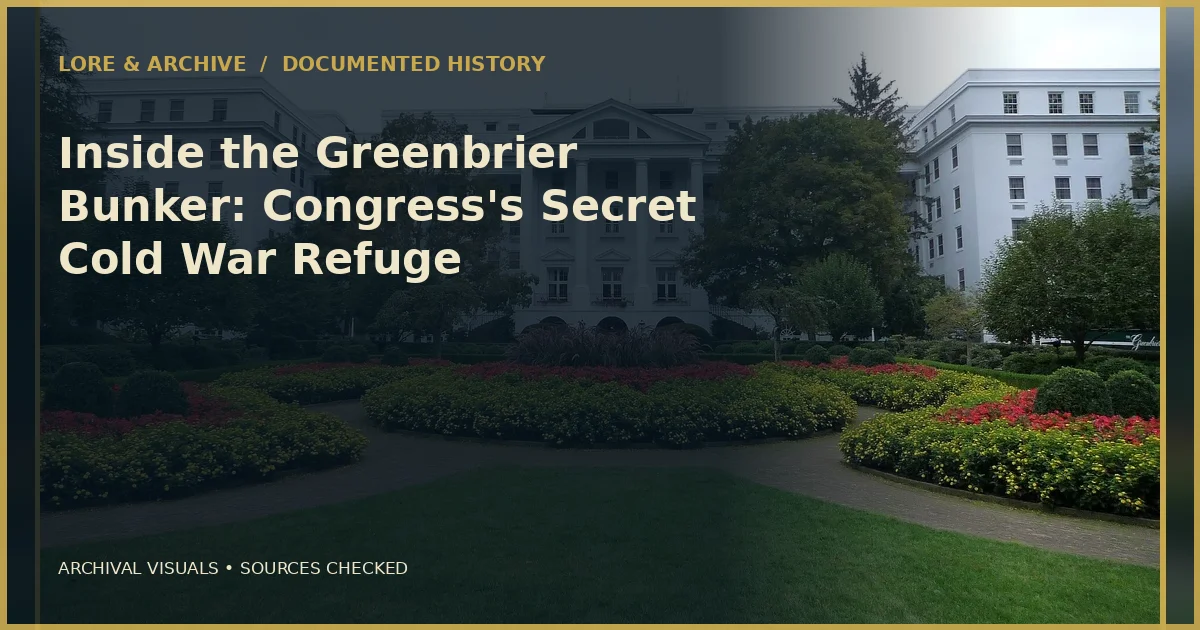
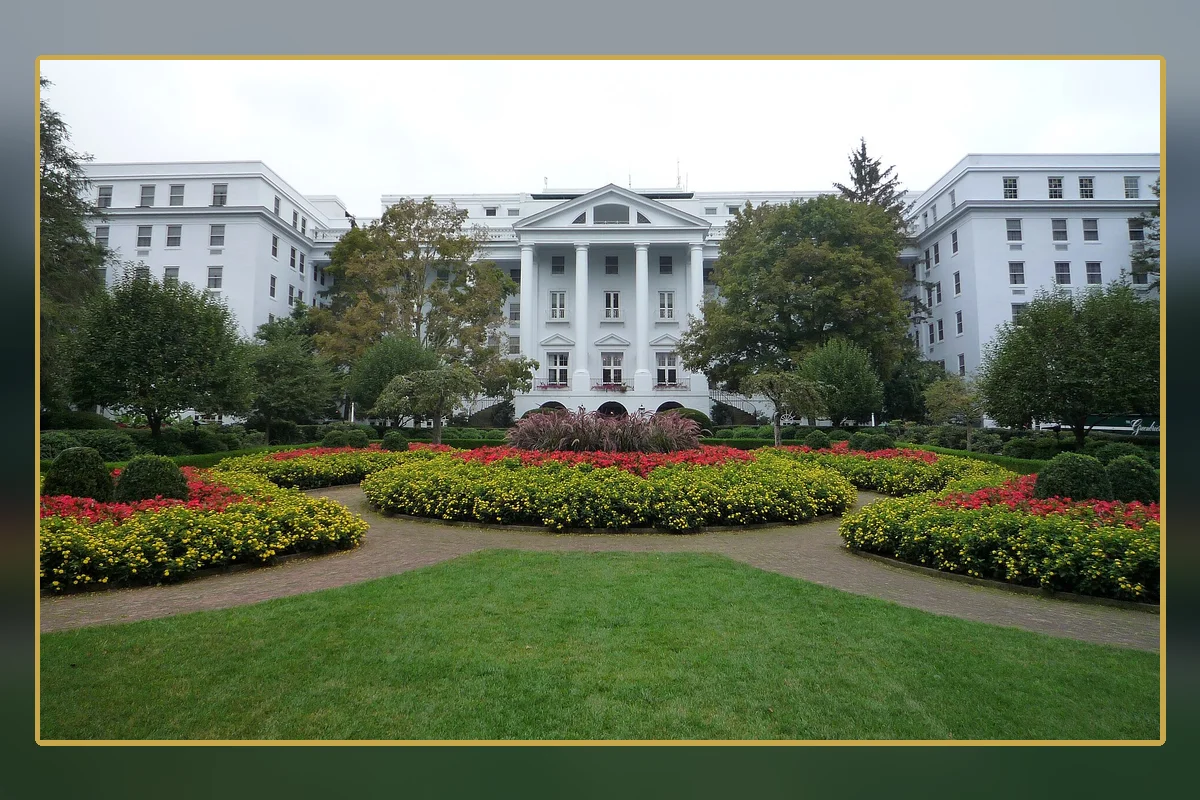
The bunker hid in plain sight because the resort needed to keep using the space. Hotel guests attended events inside rooms designed to become a post-attack legislature.
Archive record
- Location: The Greenbrier, White Sulphur Springs, West Virginia
- Construction: begun in the late 1950s; completed in 1961
- Cover name: Project Greek Island
- Declassified by exposure: 1992
A resort with a second purpose
The Greenbrier had long hosted presidents, diplomats, and government officials. During the Second World War, the U.S. government used the resort first to confine Axis diplomats and then as Ashford General Hospital. That history made the site familiar to federal planners and connected it by rail to Washington.
As nuclear fears intensified, the government arranged for a large new wing whose public hotel function concealed a relocation facility for the legislative branch. Construction unfolded alongside the West Virginia Wing. Contractors and staff could explain heavy work as expansion without advertising the secure complex within it.
What a post-attack Congress required
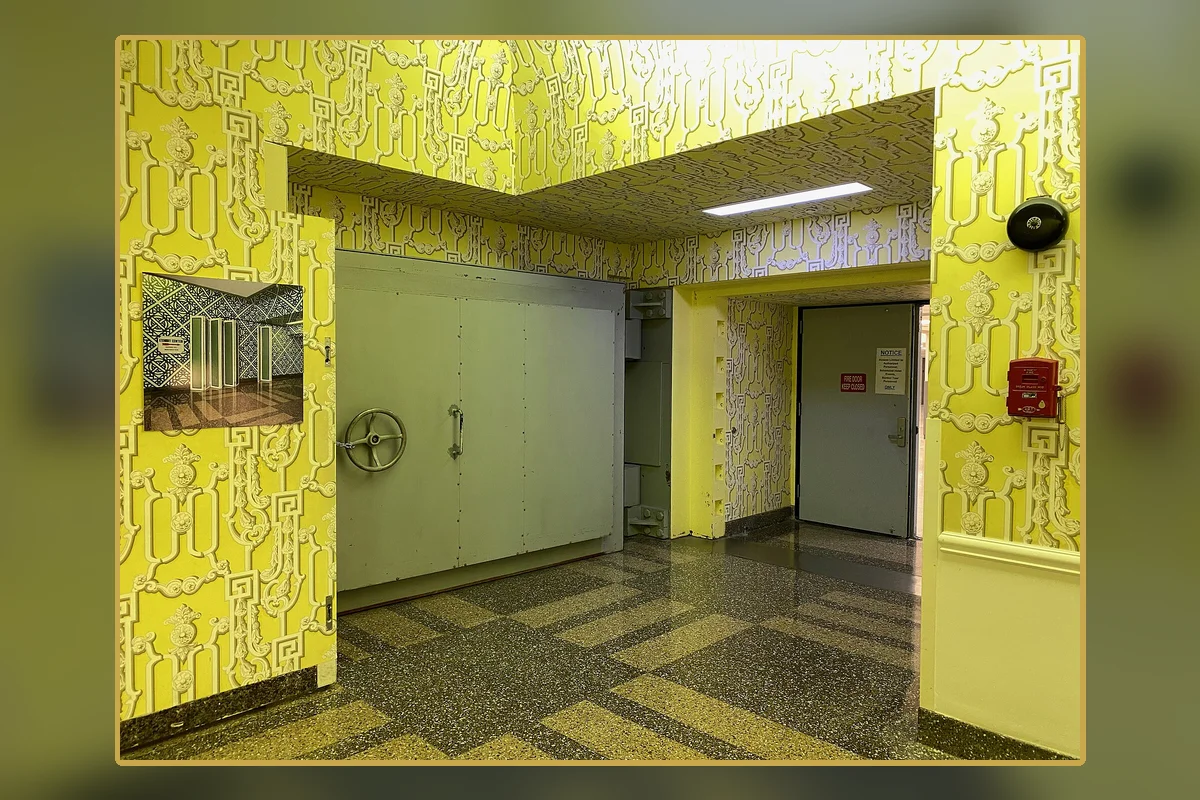
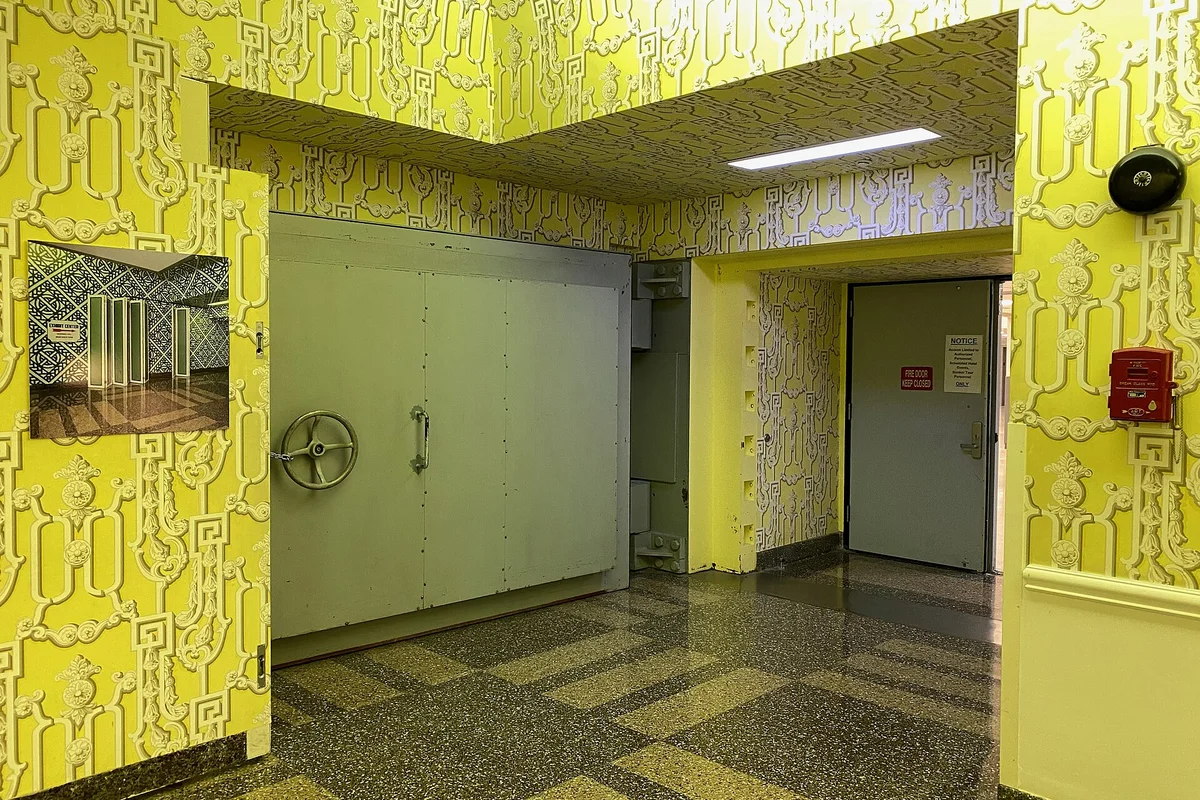
The bunker included decontamination areas, power generation, water storage, air filtration, kitchens, medical facilities, dormitories, and large chambers configured for the House and Senate. Massive blast doors could seal entrances. Communications systems were designed to reconnect lawmakers with the surviving government.
A crematory-style incinerator could dispose of waste and, in grim contingency plans, bodies. Supplies were updated, equipment maintained, and spaces held ready. The facility was not a luxury hideaway; it was an attempt to reproduce legislative function under isolation, crowding, and uncertain radiation outside.
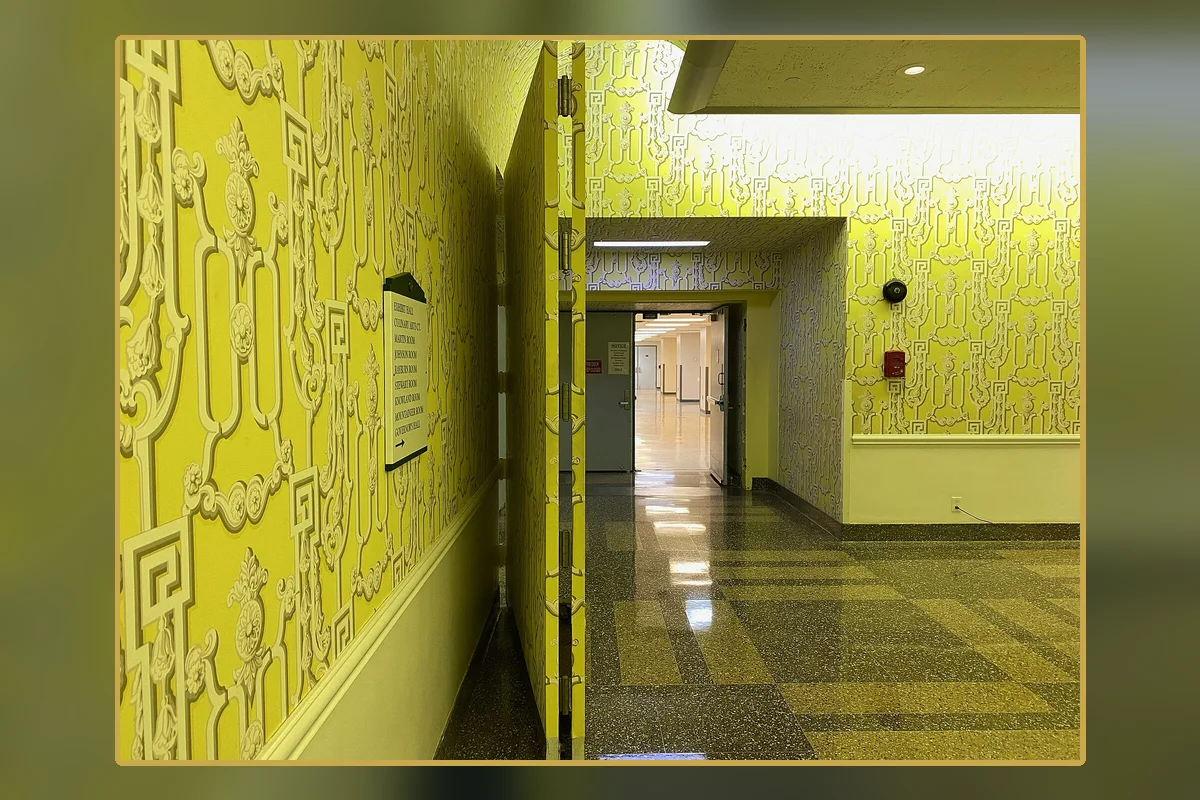
Hidden rooms used in public
Secrecy worked partly through dual use. Meeting rooms above or within the complex hosted conferences and exhibitions. Removable walls and stored furnishings could have transformed public spaces into government chambers. Hotel operations gave maintenance workers, deliveries, and ventilation a normal cover.
A private company, Forsythe Associates, maintained the facility with employees presented as television technicians. Only a limited circle understood the full mission. Local residents noticed odd features and rumors circulated, but a rumor is different from public confirmation supported by documents and official action.
Could lawmakers have reached it?
The shelter was designed to hold members of Congress and staff, yet an actual warning might have offered little time to move hundreds of people from Washington. Transportation, secrecy, family separation, and deciding who qualified for entry created unresolved human problems. A facility can be technically prepared while the evacuation plan remains fragile.
Continuity planning also raised constitutional questions. A surviving legislature would need quorum, leadership, information, and legitimacy amid massive national disruption. The chambers and bunks were physical answers to only part of that challenge.
The article that ended the secret
In May 1992, journalist Ted Gup published a detailed Washington Post report identifying the facility and its purpose. Once exposed, the government decommissioned the bunker. Critics argued that publication compromised security; defenders noted that the site had become outdated and that democratic oversight of continuity plans mattered.
The revelation did not mean every rumor about underground government cities was true. It confirmed one specific, documented installation whose cover depended on decades of discretion. The strongest evidence came from people, plans, and physical systems that could be inspected.
From contingency site to historical exhibit
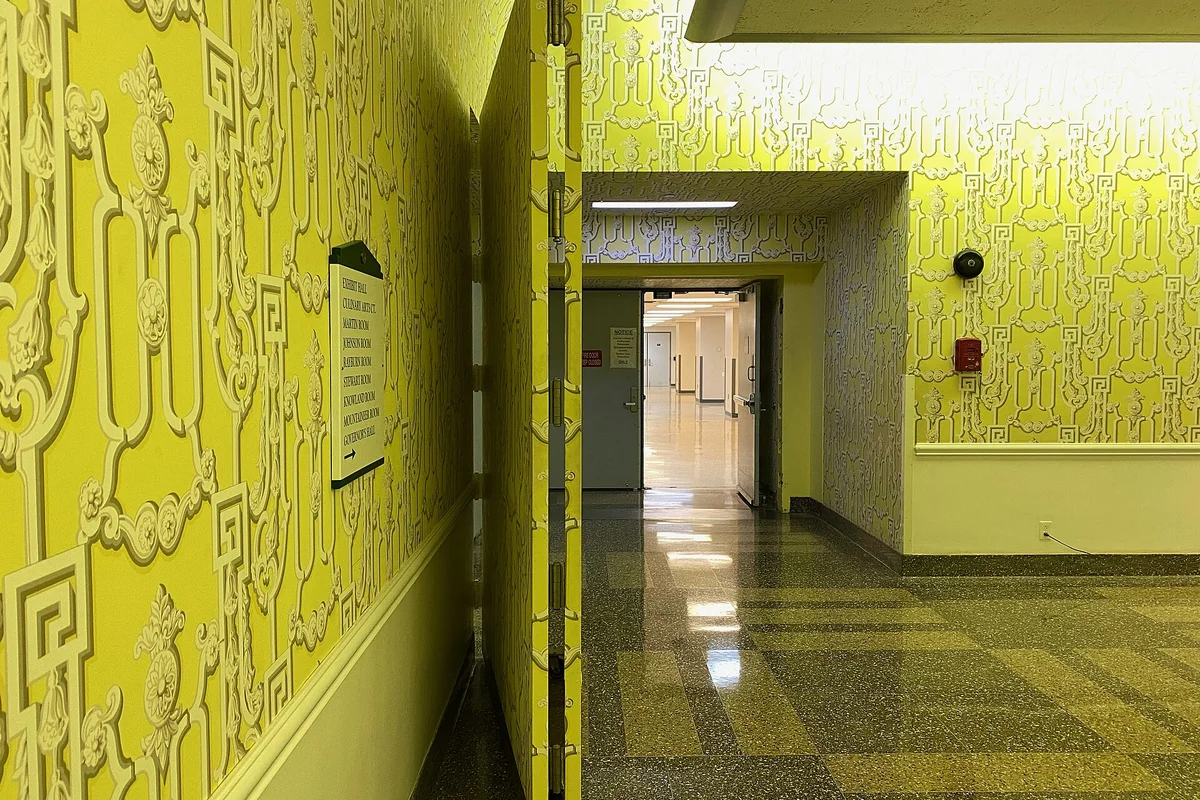
Today the Greenbrier offers tours of the declassified bunker, while parts of the complex serve commercial data-storage uses. Visitors can see blast doors, dormitories, meeting rooms, and infrastructure that once waited behind the resort's public life.
The bunker is striking because it was both elaborate and never activated. Its unused beds do not prove the plan was pointless; deterrence and continuity systems are built for events leaders hope will never occur. They do show how Cold War institutions translated unimaginable destruction into inventories, floor plans, and maintenance shifts.
What the record supports—and what it does not
The Greenbrier bunker was a real continuity facility for Congress, not a self-sufficient underground city for a permanent elite. It was hidden within a working resort, maintained for emergency use, and never activated. Its existence confirms a specific plan—not every claim about secret government shelters.
Evidence ledger
- COVER — A hotel wing with a second life: Construction of the West Virginia Wing concealed a federal relocation facility.
- MISSION — Preserve the legislative branch: The shelter was meant to house members of Congress and essential staff.
- SYSTEMS — Air, water, power, communications: The site could be sealed and operated independently for a limited emergency period.
- DUAL USE — Public meetings inside secret rooms: Movable partitions could convert ordinary event space into congressional chambers.
- EXPOSURE — Revealed in 1992: A detailed newspaper investigation ended the facility's operational secrecy.
- LEGACY — A plan never activated: The intact bunker records how Cold War continuity became architecture.
How this reconstruction was built
The Greenbrier can be tested against the surviving facility: blast doors, chambers, dormitories, air systems, communications, and dual-use event spaces. Testimony and declassified history explain the cover organization and maintenance. Harder questions—who could arrive in time, how lawmakers would be selected, and whether a post-attack Congress could function—belong to contingency analysis rather than claims about what the building physically contained. The distinction keeps an extraordinary verified site from becoming evidence for unrelated bunker folklore or a much larger hidden city.
To audit the account, open the source links below and compare dates, quantities, and the wording used by the institutions themselves. Look for the earliest recoverable record, then distinguish it from later summaries created after the story became famous. The five visuals in this article are archival photographs, maps, documents, objects, or clearly identified editorial diagrams selected to illuminate the surviving record. Each caption identifies its source and rights information; no reconstruction is presented as a historical photograph. That transparency is part of the Lore & Archive method.
Why this story matters
The facility reveals the bureaucratic texture of nuclear fear. Behind the drama of blast doors were ordinary questions about food, sanitation, voting, communications, and who could arrive before the warning expired.
Continue in the archive
- Vasa: Why Sweden's Great Warship Sank on Its First Voyage
- The Battle of Los Angeles: What Anti-Aircraft Guns Were Shooting At in 1942
- Mary Celeste: What the Evidence Says
Sources and further reading
Editorial note: Lore & Archive distinguishes contemporary evidence, later institutional synthesis, and unresolved inference. Where sources disagree or the record is incomplete, the uncertainty is stated rather than converted into a dramatic fact.