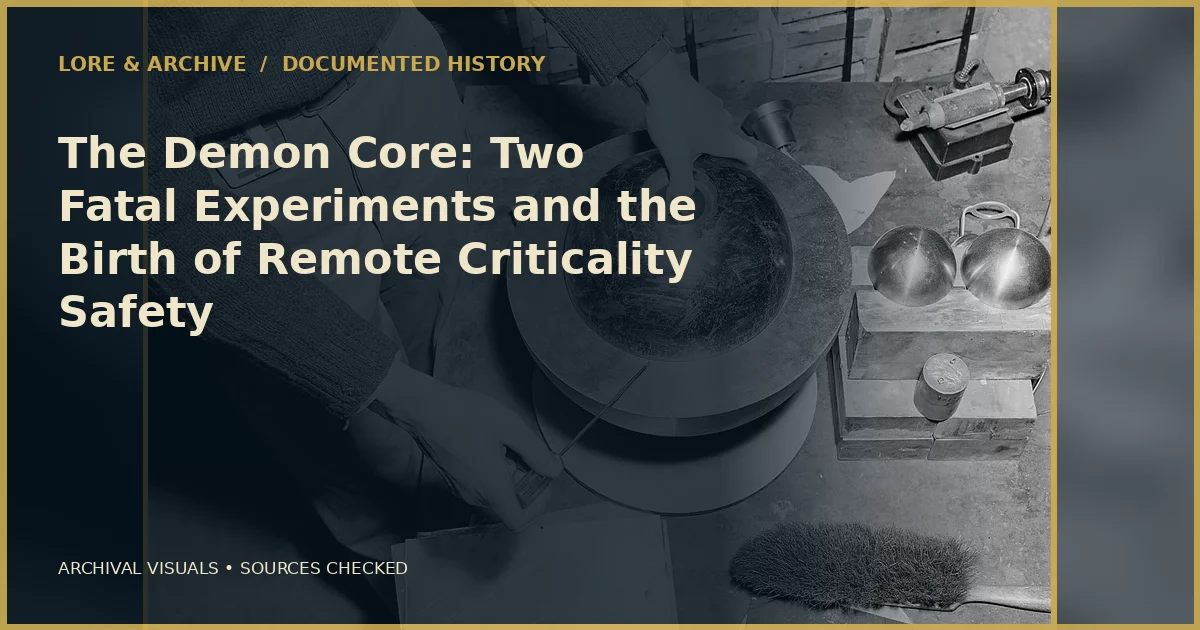
In less than a year, two scientists accidentally brought the same core supercritical by hand. Their deaths ended a culture of close-contact tests and forced distance into the laboratory.
Archive record
- Material: plutonium core weighing about 6.2 kilograms
- First accident: Harry Daghlian, August 21, 1945
- Second accident: Louis Slotin, May 21, 1946
- Result: hands-on criticality experiments replaced by remote methods
A third core after the war ended
Los Alamos produced a plutonium core for a possible third atomic bomb. Japan surrendered before it was used. The core remained available for criticality research—experiments measuring how reflectors around fissile material return escaping neutrons and move a system closer to a self-sustaining chain reaction.
Criticality is not the same as a nuclear detonation. In an accident, a brief power excursion can release an intense burst of neutron and gamma radiation without producing an atomic-bomb explosion. The danger is invisible and immediate; a nearby researcher may receive a lethal dose before moving a hand.
Harry Daghlian and the falling brick
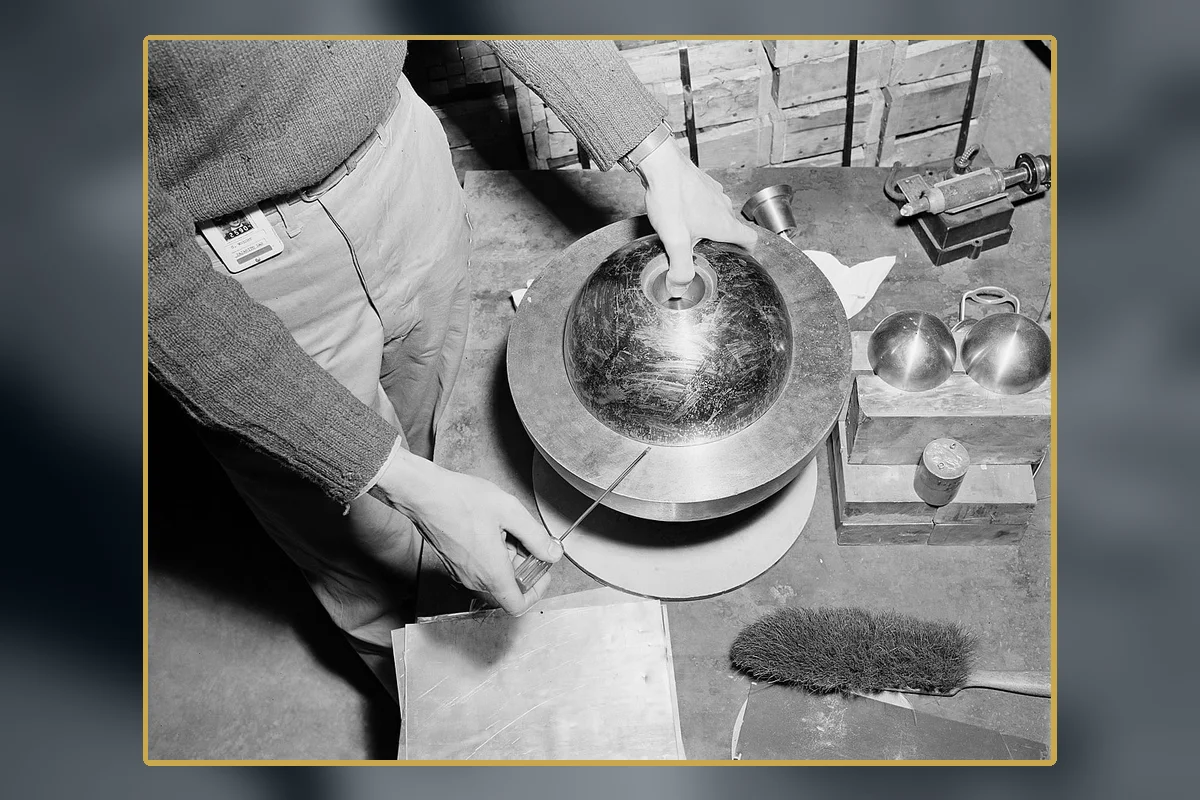
On August 21, 1945, physicist Harry Daghlian worked alone after hours, surrounding the core with tungsten-carbide bricks to measure neutron reflection. Instruments warned that one additional brick would bring the arrangement too close to critical. The brick slipped and fell onto the assembly.
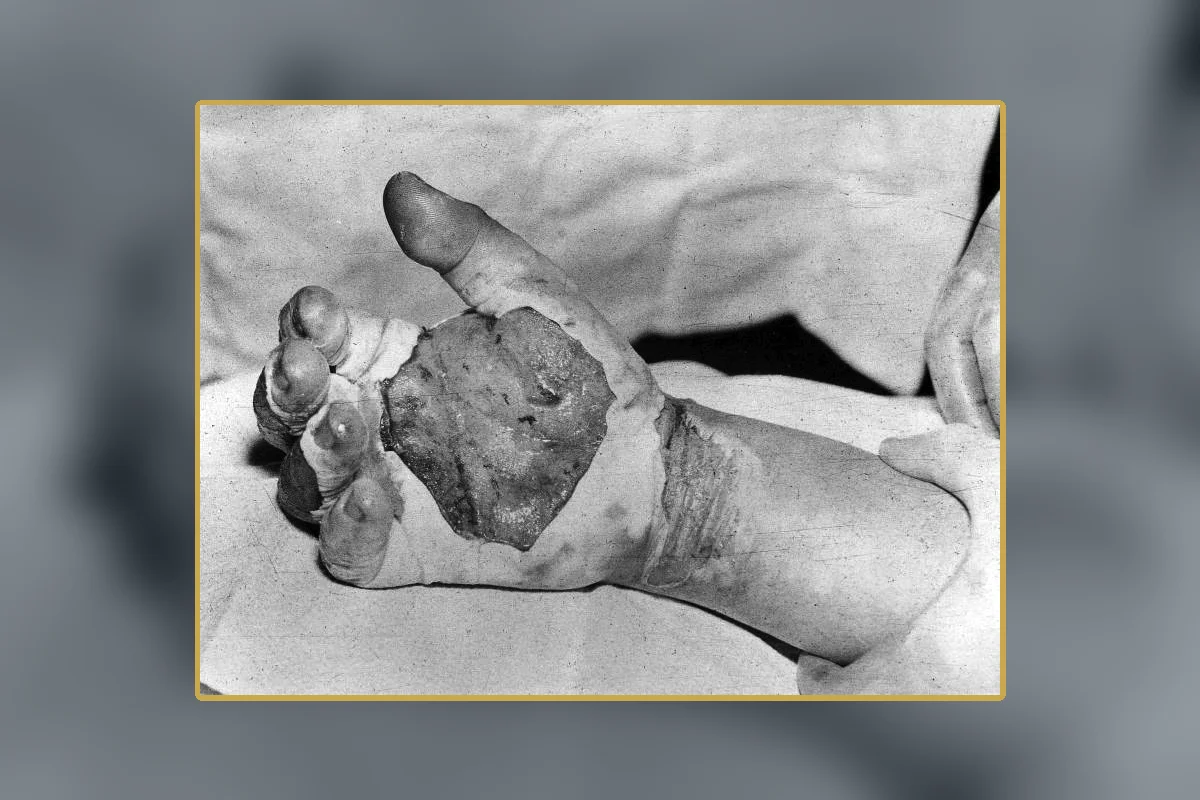
Daghlian removed it immediately, then disassembled the reflector by hand. The burst had already delivered a massive dose. He developed acute radiation syndrome and died twenty-five days later. A security guard nearby received a lower dose. The accident exposed failures in working alone, manual proximity, and reliance on a last-second hand movement.
Louis Slotin and the screwdriver
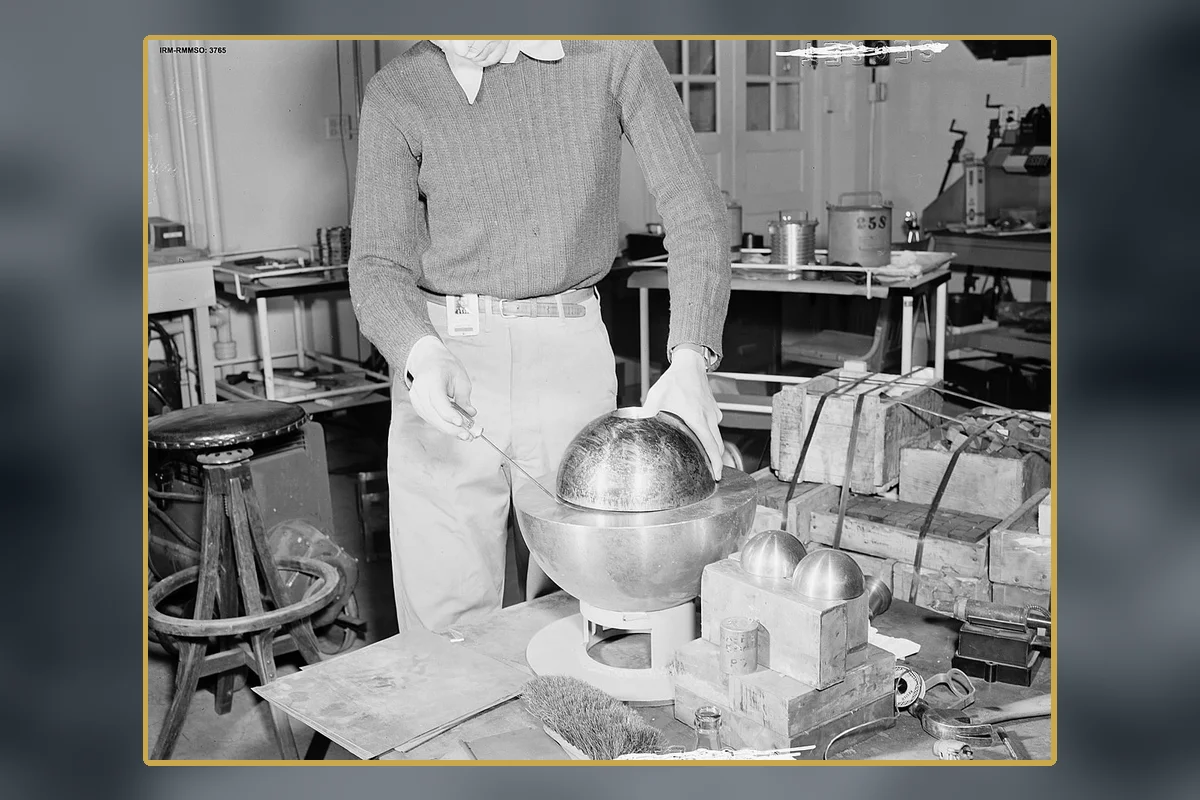
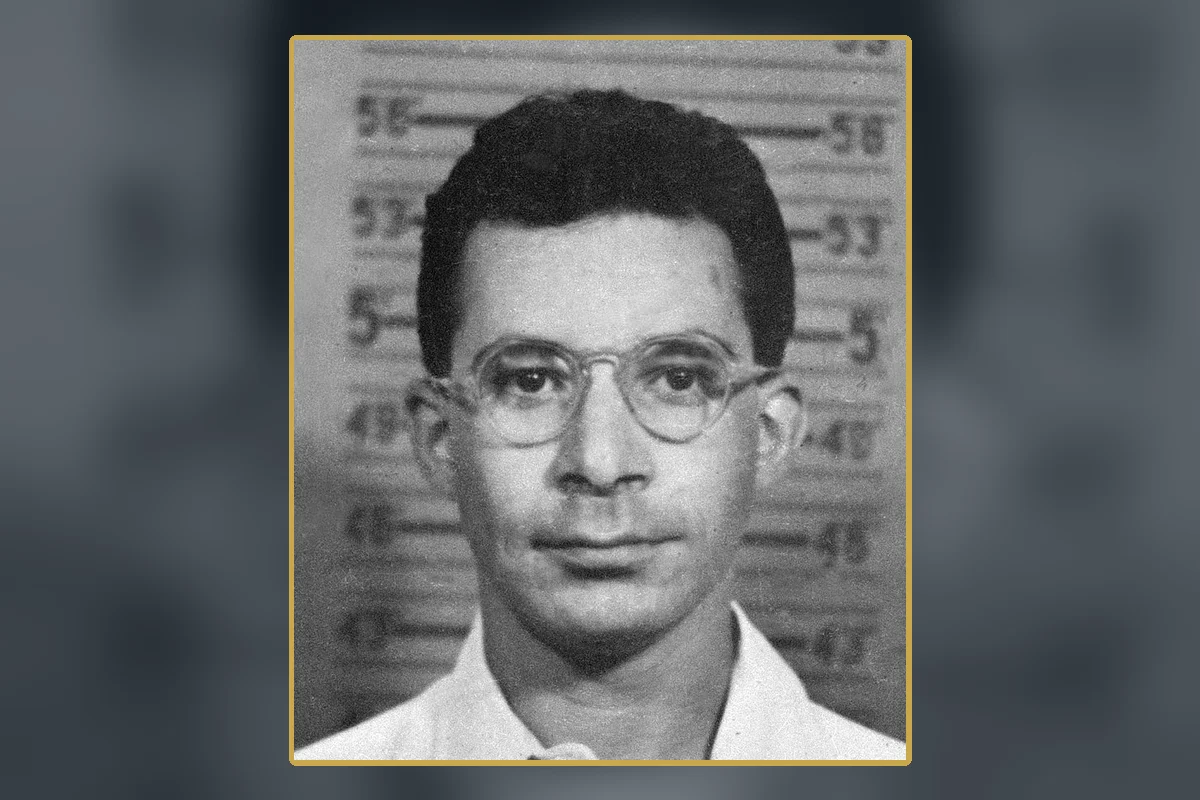
Nine months later, Louis Slotin demonstrated another criticality test to colleagues. Two beryllium hemispheres were positioned around the core; a flat-head screwdriver kept them from closing completely. By manually changing the gap, Slotin could approach criticality—a procedure colleagues called 'tickling the dragon's tail.'
The screwdriver slipped. The upper hemisphere dropped, the assembly became prompt critical, and observers reported a blue flash and sensation of heat. Slotin knocked the hemisphere away, ending the excursion. His body had shielded others from part of the radiation, but he received the largest dose and died nine days later.
The blue flash without mythology
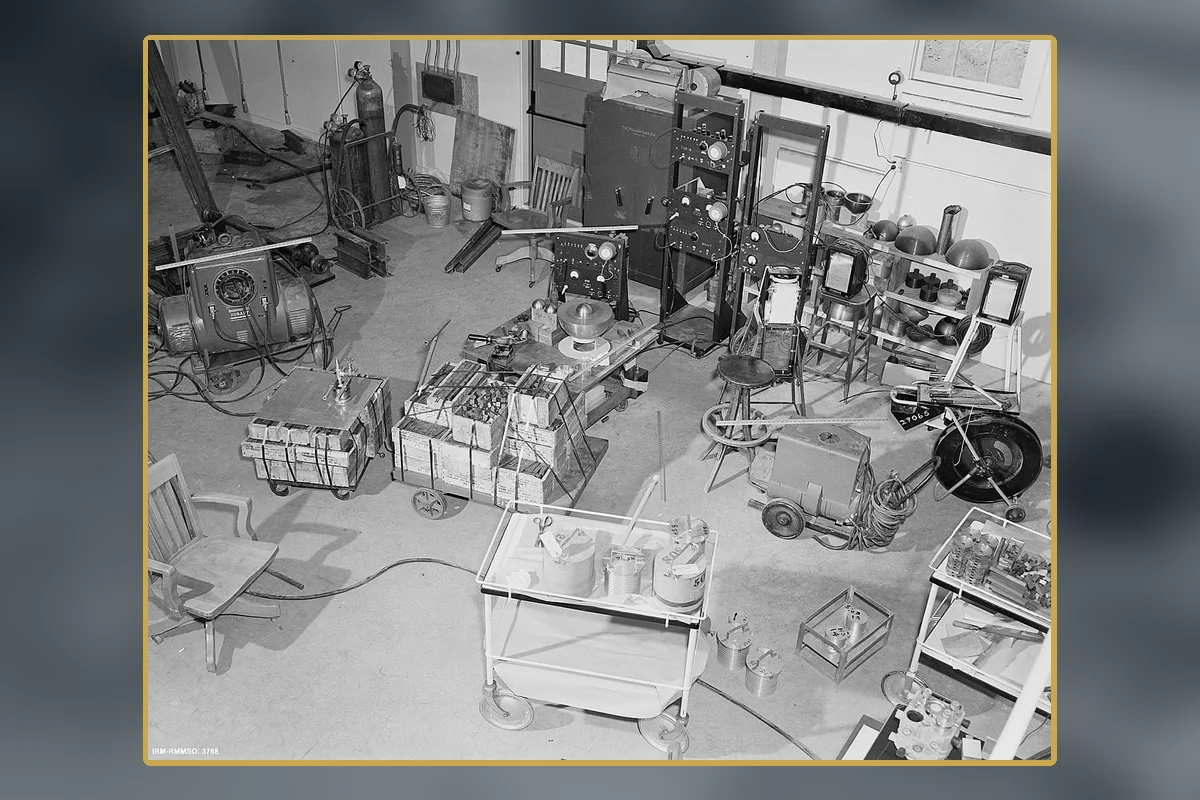
Popular versions make the flash a mystical signature of the core. Blue light can arise through several radiation-related processes in air or the eye, and witness descriptions were made during an instant of extreme stress. The important measurement is not the color but the intense neutron and gamma exposure.
The nickname 'demon core' was applied afterward. It gives the material agency, as though the sphere sought victims. The same core obeyed physics in both accidents. Human procedures repeatedly brought reflective material too close while depending on dexterity to prevent a dangerous configuration.
From performance to engineered distance
After Slotin's death, Los Alamos ended this style of hands-on assembly. Later criticality experiments used remote control, greater separation, barriers, and procedural controls. The change recognized that expertise is not an adequate substitute for engineering out a single-point failure.
Both men were highly knowledgeable. That is precisely why the accidents remain important. Familiarity can normalize risk, demonstrations can reward confidence, and a tool as ordinary as a screwdriver can become the only barrier between safe and supercritical. Robust systems assume that hands slip.
What happened to the core
Plans to use the core in an Operation Crossroads test were reconsidered. The material was eventually melted down and recycled into other cores, ending the physical continuity that legend often treats like a cursed artifact in storage.
The historical object is better understood as a process failure captured twice. Daghlian's solitary brick experiment and Slotin's crowded demonstration differed in geometry but shared the same vulnerability: dangerous proximity controlled manually. Their deaths converted an abstract safety argument into mandatory distance.
What the record supports—and what it does not
The core was not cursed, did not explode like a bomb, and did not kill through mysterious blue light. Two manual reflector experiments produced brief critical excursions and lethal radiation. The repeated design flaw was dependence on human precision at close range.
Evidence ledger
- CORE — About 6.2 kg of plutonium: The material had been prepared for a possible third wartime atomic bomb.
- ACCIDENT 1 — A reflector brick slipped: Harry Daghlian received a fatal dose in August 1945 and died 25 days later.
- ACCIDENT 2 — A screwdriver slipped: Louis Slotin ended the excursion by hand and died nine days later.
- PHYSICS — Criticality is not detonation: The brief chain reaction produced lethal radiation without a nuclear-bomb explosion.
- MYTH CHECK — The core had no agency: The ominous nickname hides repeated procedural dependence on manual precision.
- REFORM — Put distance in the system: Hands-on tests gave way to remote operation, separation, and stronger controls.
How this reconstruction was built
Criticality reports, witness accounts, dose reconstruction, and medical timelines provide the frame for both accidents. The reported blue flash is a sensory observation, not the causal explanation. Geometry and procedure matter more: reflector material moved too close, a brief excursion occurred, and hands restored a safer state after lethal exposure. Comparing the two events reveals the repeated control failure that later remote methods were designed to remove.
To audit the account, open the source links below and compare dates, quantities, and the wording used by the institutions themselves. Look for the earliest recoverable record, then distinguish it from later summaries created after the story became famous. The five visuals in this article are archival photographs, maps, documents, objects, or clearly identified editorial diagrams selected to illuminate the surviving record. Each caption identifies its source and rights information; no reconstruction is presented as a historical photograph. That transparency is part of the Lore & Archive method.
Why this story matters
The case is a foundational lesson in safety engineering: never make flawless performance the only barrier against catastrophe. Expertise matters, but distance, interlocks, remote operation, and procedures make expertise survivable.
Continue in the archive
- The Great Smog of London: Five Days That Made Dirty Air Impossible to Ignore
- The Great Moon Hoax: How a Newspaper Filled the Moon With Bat-People
- The Library of Alexandria Was Not Destroyed in One Night
Sources and further reading
- National Park Service — Louis Slotin
- National Park Service — Harry Daghlian
- National Park Service — Slotin Building
- Atomic Heritage Foundation — Atomic accidents
Editorial note: Lore & Archive distinguishes contemporary evidence, later institutional synthesis, and unresolved inference. Where sources disagree or the record is incomplete, the uncertainty is stated rather than converted into a dramatic fact.