The manuscript rewards restraint. Scientific tests can date its materials and reveal construction; they cannot translate a script whose language, encoding system, and author remain unknown.
Archive record
- Shelf mark: Beinecke MS 408
- Parchment dated: early fifteenth century
- Modern rediscovery: Wilfrid Voynich, 1912
- Status: undeciphered
A book that arrived without its key
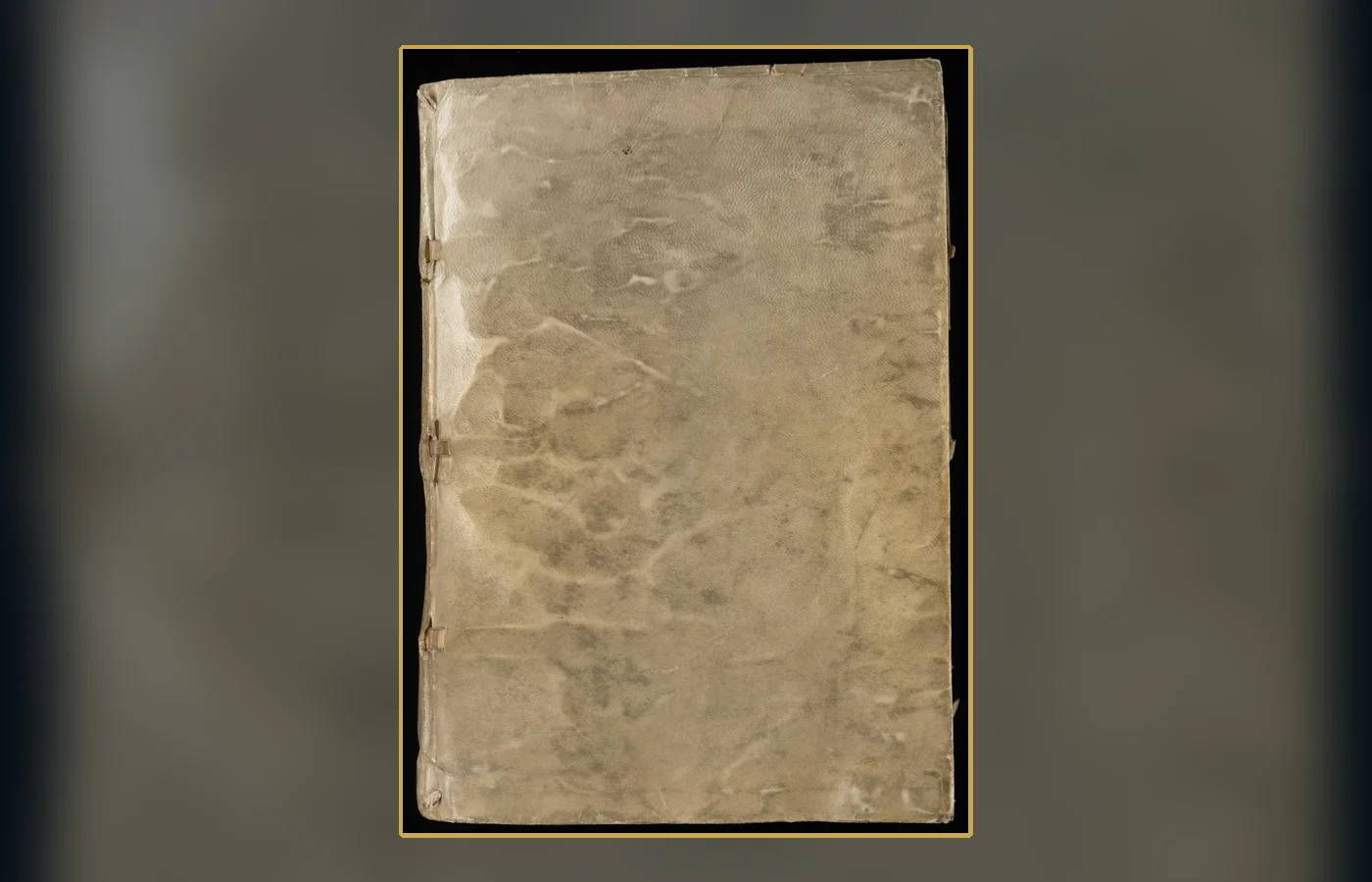
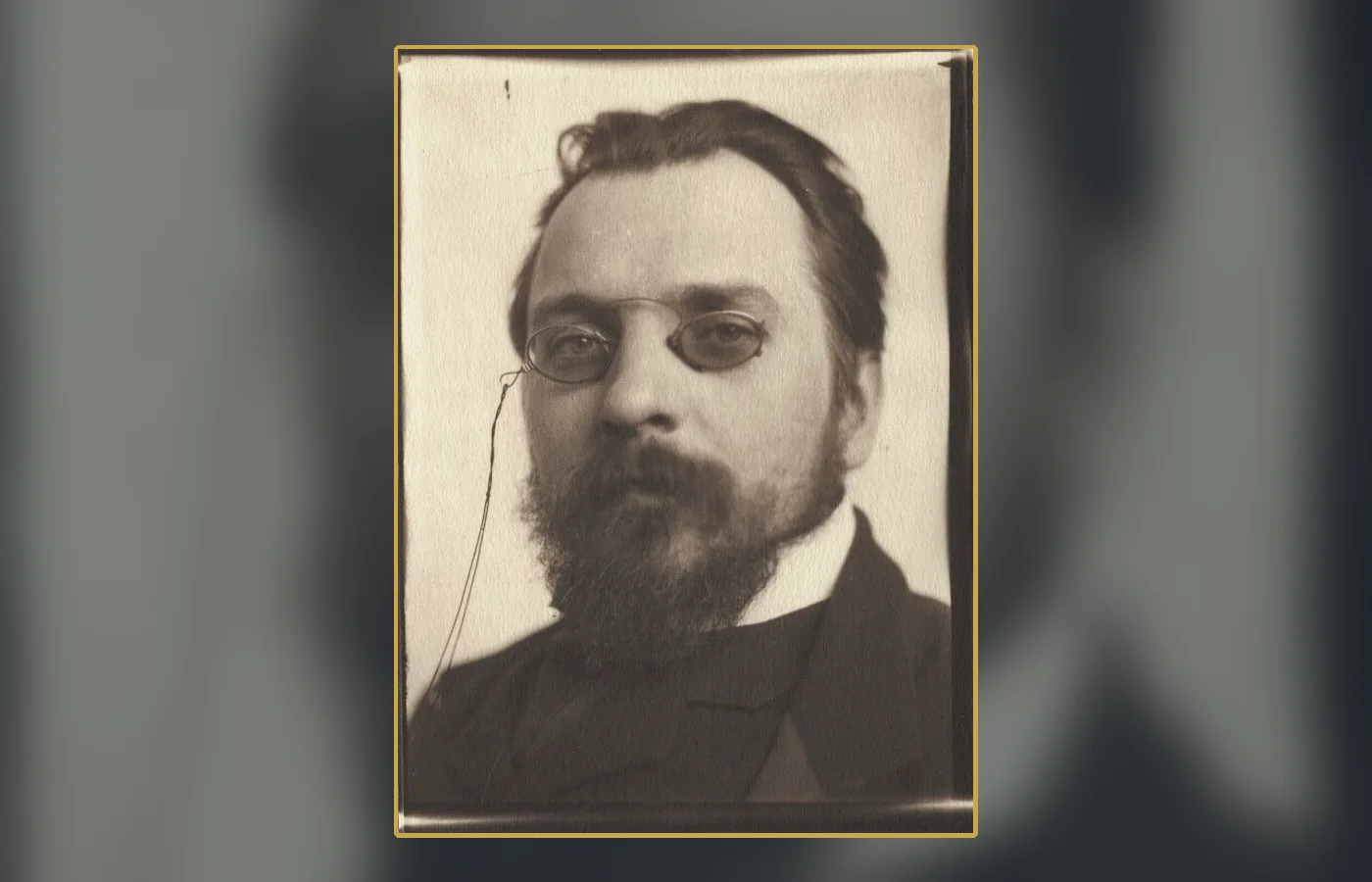
Rare-book dealer Wilfrid Voynich acquired the manuscript in 1912 from a Jesuit collection near Rome. Correspondence tucked with it linked the object to seventeenth-century scholar Athanasius Kircher and to an earlier owner who hoped Kircher could decipher it.
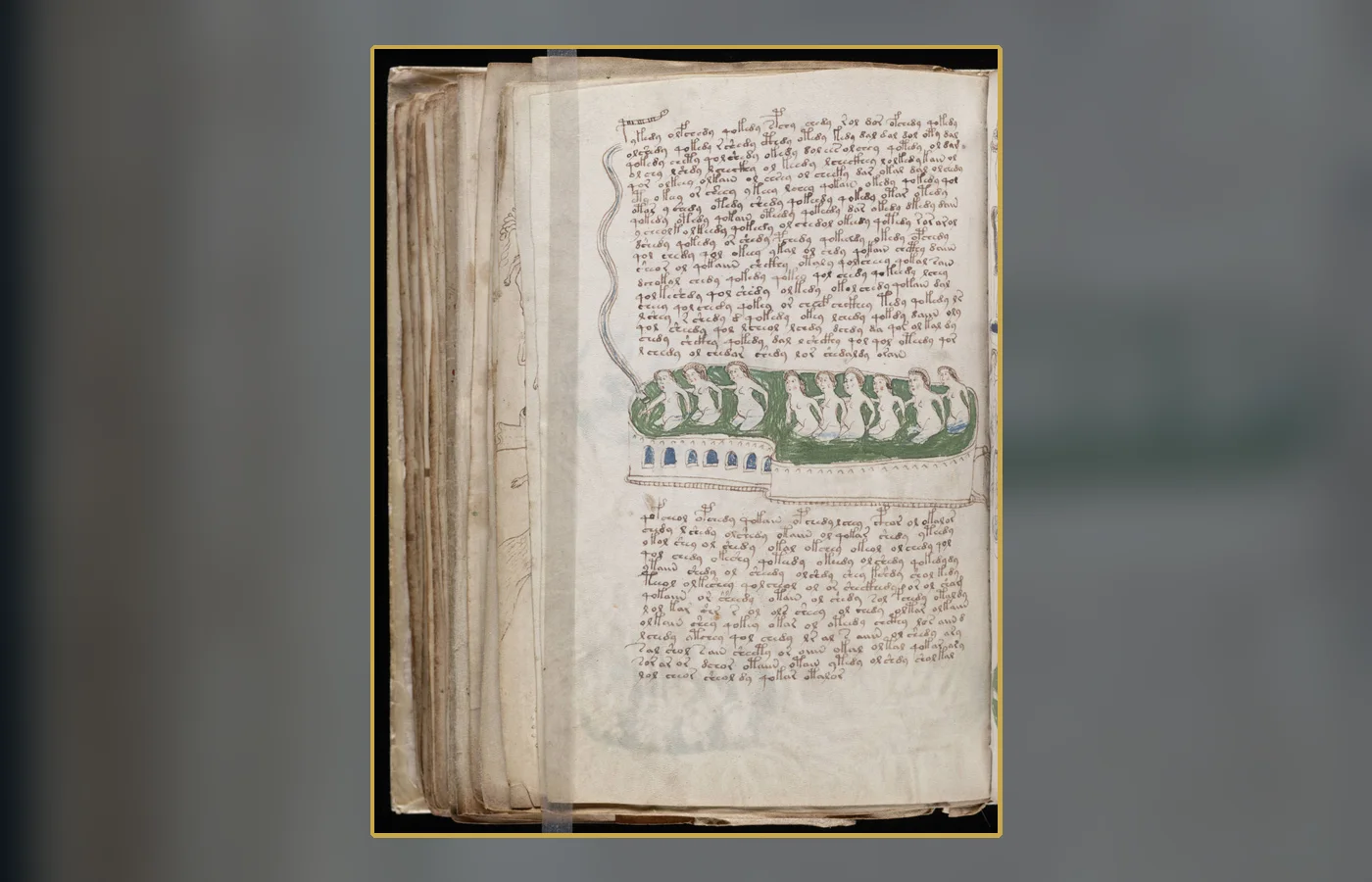
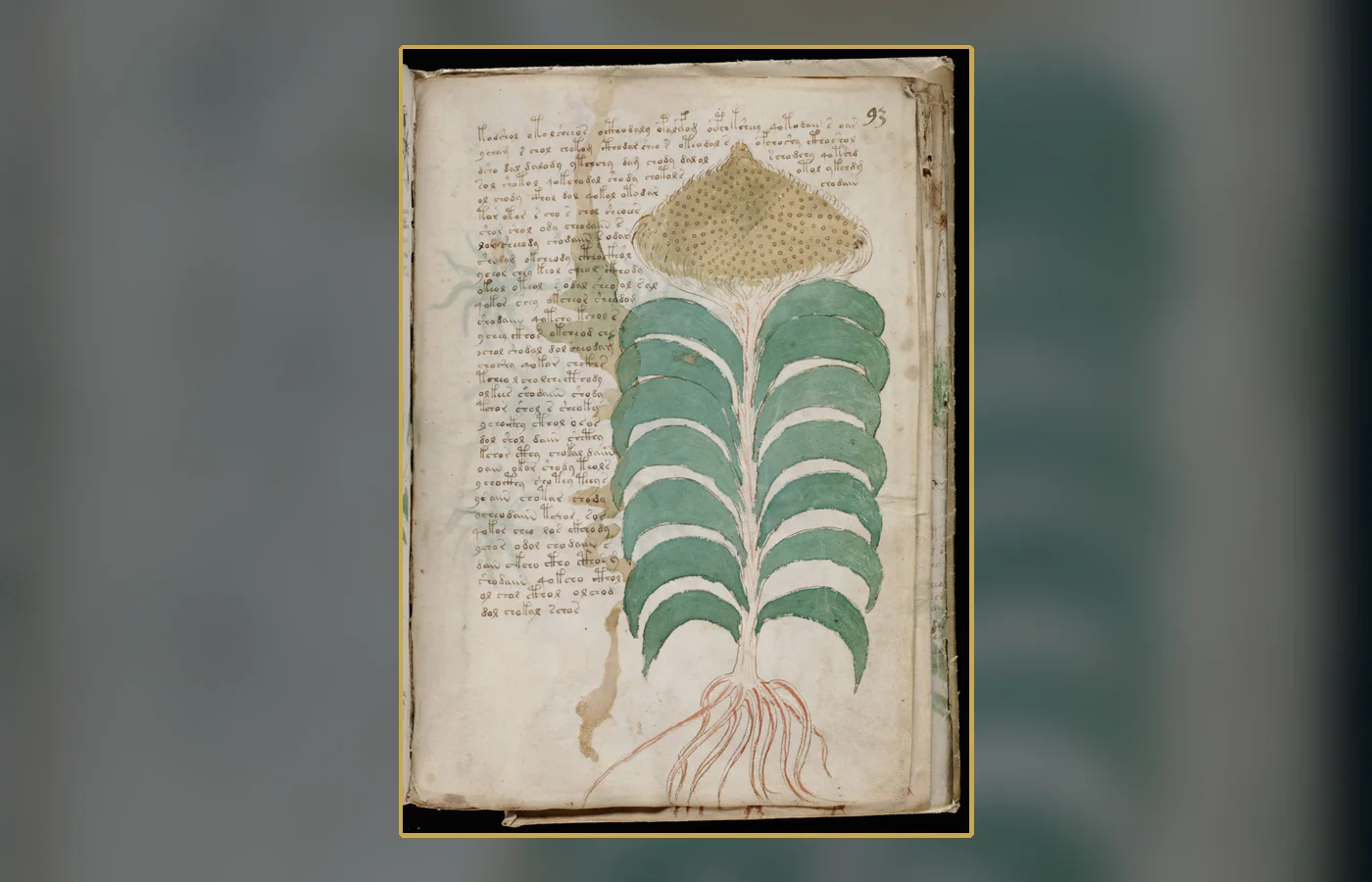
The volume is now held by Yale's Beinecke Rare Book and Manuscript Library as MS 408. Its pages contain flowing text in an unknown script, illustrations of plants, stars, circular cosmological forms, bathing figures, containers, roots, and recipe-like paragraphs marked with stars.
What laboratory tests can say
Radiocarbon analysis dated the parchment to the early fifteenth century, roughly 1404–1438. Ink and pigment studies have found materials broadly consistent with historical manuscript production rather than an obvious modern forgery. Page construction and missing leaves show that the book was rearranged or altered over time.
Dating parchment is not identical to dating every written mark, because skins can be stored before use. Still, the material evidence strongly undermines theories that Voynich himself manufactured the book in the twentieth century. It places the artifact within a real manuscript culture even if its words remain unread.
A script with patterns but no translation
The text contains recurring word forms, positional patterns, and statistical regularities. Different illustration sections show changes in vocabulary. Those features can resemble natural language, an artificial language, an enciphered text, or a carefully generated pseudo-text under some models.
Pattern is necessary for a solution but not sufficient. A valid decipherment must explain the system consistently across pages, produce meaningful grammar and vocabulary, predict unread passages, and fit the physical and historical context. Most public claims translate selected fragments without demonstrating that discipline.
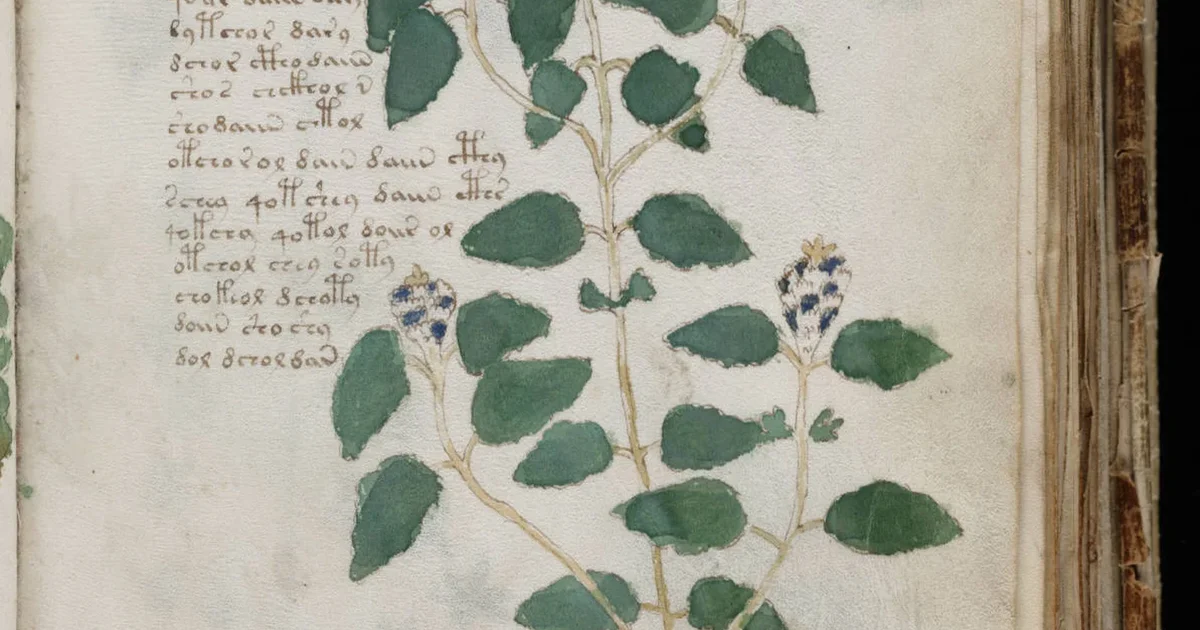
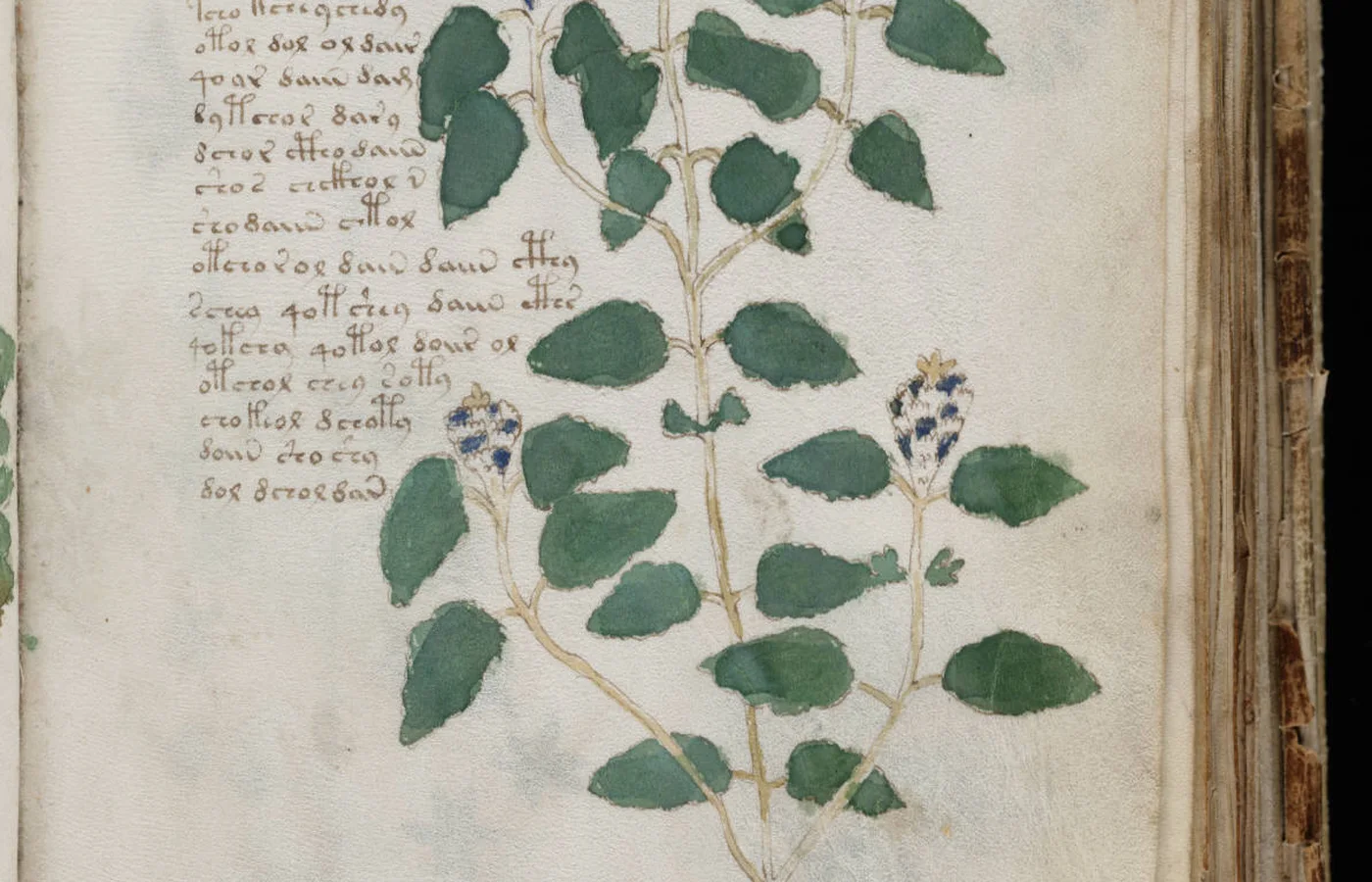
Plants that look almost familiar
Many botanical pages combine recognizable features in combinations that do not map cleanly to one species. Some may be stylized, copied, assembled, or misunderstood. Claims that a particular plant proves a New World, Asian, or Mediterranean origin often depend on choosing whichever feature supports the theory.
Illustrations can constrain interpretation, but they are not captions in a language we already know. Medieval herbals were not modern field guides. Copying traditions, symbolic conventions, and workshop practice can distort the connection between a drawn leaf and a living plant.
How to recognize the next false solution
Announced solutions have identified the text as Latin, Hebrew, proto-Romance, Nahuatl, Turkish, and more. Some rely on anagramming, flexible substitutions, or changing rules whenever a passage resists. Such methods can manufacture apparent meaning from almost any sufficiently long string.
The manuscript may eventually yield to a discovery about language, cipher, or production—or it may lack the kind of stable plaintext solvers expect. Until then, the honest achievement is cumulative: dating materials, mapping scribal hands, analyzing structure, and testing hypotheses without letting one attractive page carry an entire theory.
What the record supports—and what it does not
The Voynich Manuscript is not 'proven to be a hoax,' nor has any widely accepted translation solved it. Radiocarbon dating supports medieval parchment, and the text has structure. Those findings narrow possibilities but do not identify its language or purpose.
Evidence ledger
- OBJECT — Beinecke MS 408: Yale preserves and digitizes the manuscript.
- DATE — Early fifteenth-century parchment: Radiocarbon results place the skins around 1404–1438.
- TEXT — Recurring statistical structure: The script is organized but not translated.
- SECTIONS — Plants, stars, bodies, roots, recipes: Illustrations divide the book into apparent subjects.
- CLAIMS — Many incompatible 'solutions': Selected-word translations do not establish a system.
- STANDARD — A solution must predict: Consistent decoding across unseen passages is essential.
How this reconstruction was checked
This reconstruction begins with Yale Beinecke Library — The Cipher Manuscript, Yale News — The mystery of the Voynich Manuscript. Those records establish the dates, people, objects, and institutional findings used above. Later retellings are useful only when they can be traced back to that record. A repeated anecdote is not treated as independent confirmation simply because it appears on several websites.
The unresolved question is kept separate from the documented mechanism. In this case, the evidence supports the following boundary: The Voynich Manuscript is not 'proven to be a hoax,' nor has any widely accepted translation solved it. Radiocarbon dating supports medieval parchment, and the text has structure. Those findings narrow possibilities but do not identify its language or purpose. The purpose of that boundary is not to flatten the mystery. It prevents a vivid but unsupported detail from displacing the evidence that makes the story worth reading.
Every visual is either a historical photograph, document, map, object, site image, or an explicitly labeled contextual comparison. Captions identify the source and license. No AI reconstruction and no text-poster image is presented as historical evidence; the featured image is derived directly from the first archival visual without a headline overlay.
Why this story matters
The article can become a flagship 'sources checked' piece. It teaches readers how to evaluate solution claims and makes uncertainty feel like an active method rather than a failure.
Continue in the archive
Sources and further reading
Editorial note: Lore & Archive separates contemporary records, later institutional synthesis, and unresolved inference. When sources disagree or the archive is incomplete, the uncertainty is stated rather than converted into a dramatic fact.