The famous wave of molasses is only the surface of the story. Under it lies a tank built in haste, barely tested, repeatedly patched, and defended after failure with a claim of sabotage.
Archive record
- Date: January 15, 1919
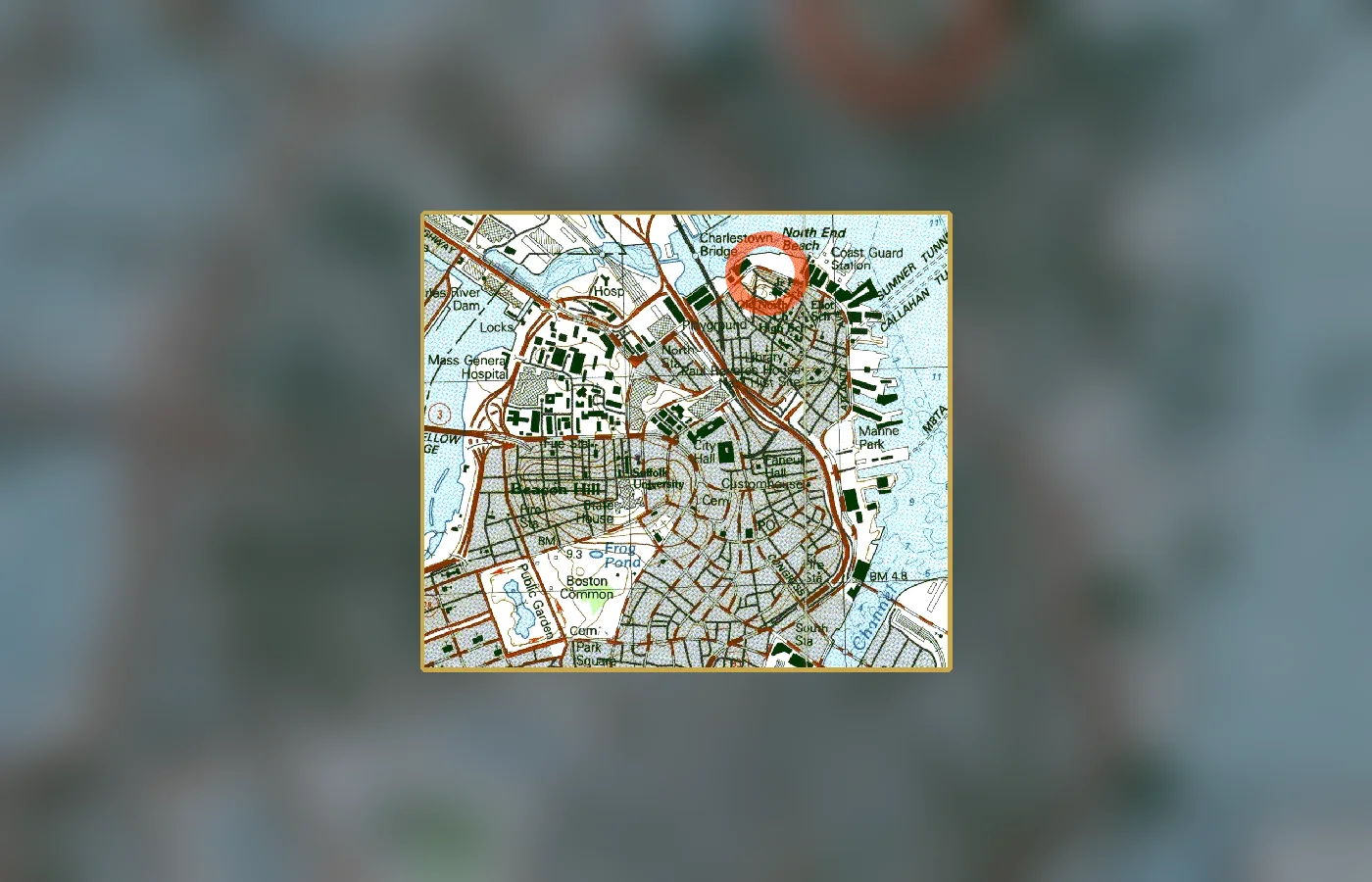
- Place: Commercial Street, Boston's North End
- Deaths: 21
- Injured: about 150
A sound like a machine gun
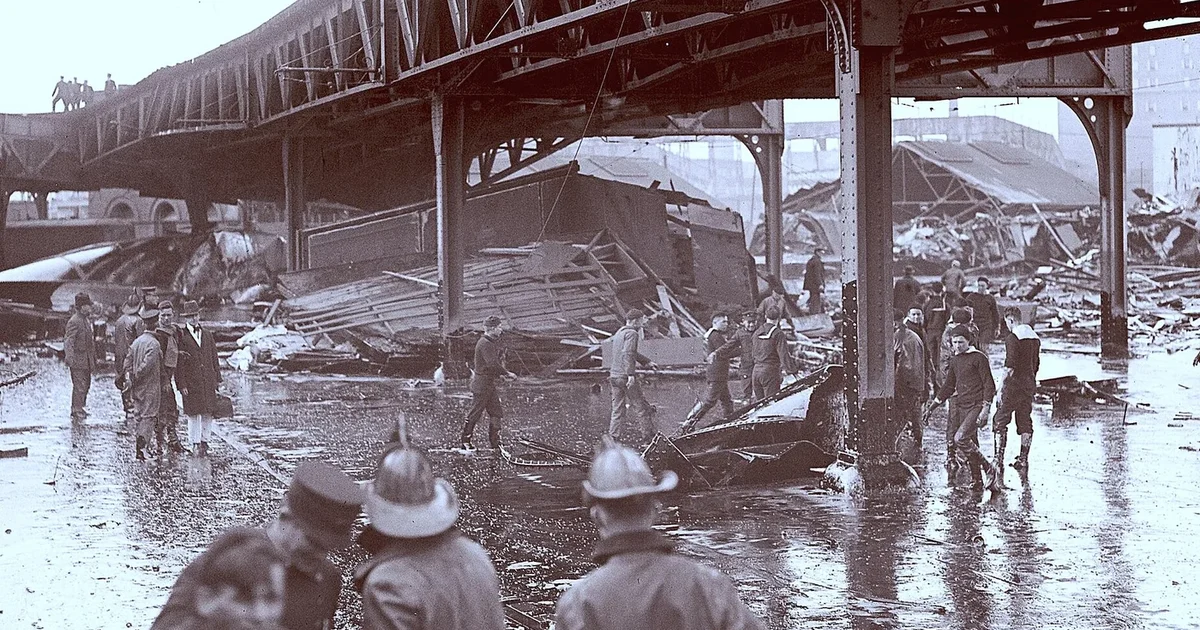
Shortly after noon on January 15, 1919, residents near Boston's waterfront heard sharp metallic reports. The enormous Purity Distilling Company tank split apart. More than two million gallons of molasses surged into streets, yards, rail structures, and buildings, carrying pieces of steel and timber with it.
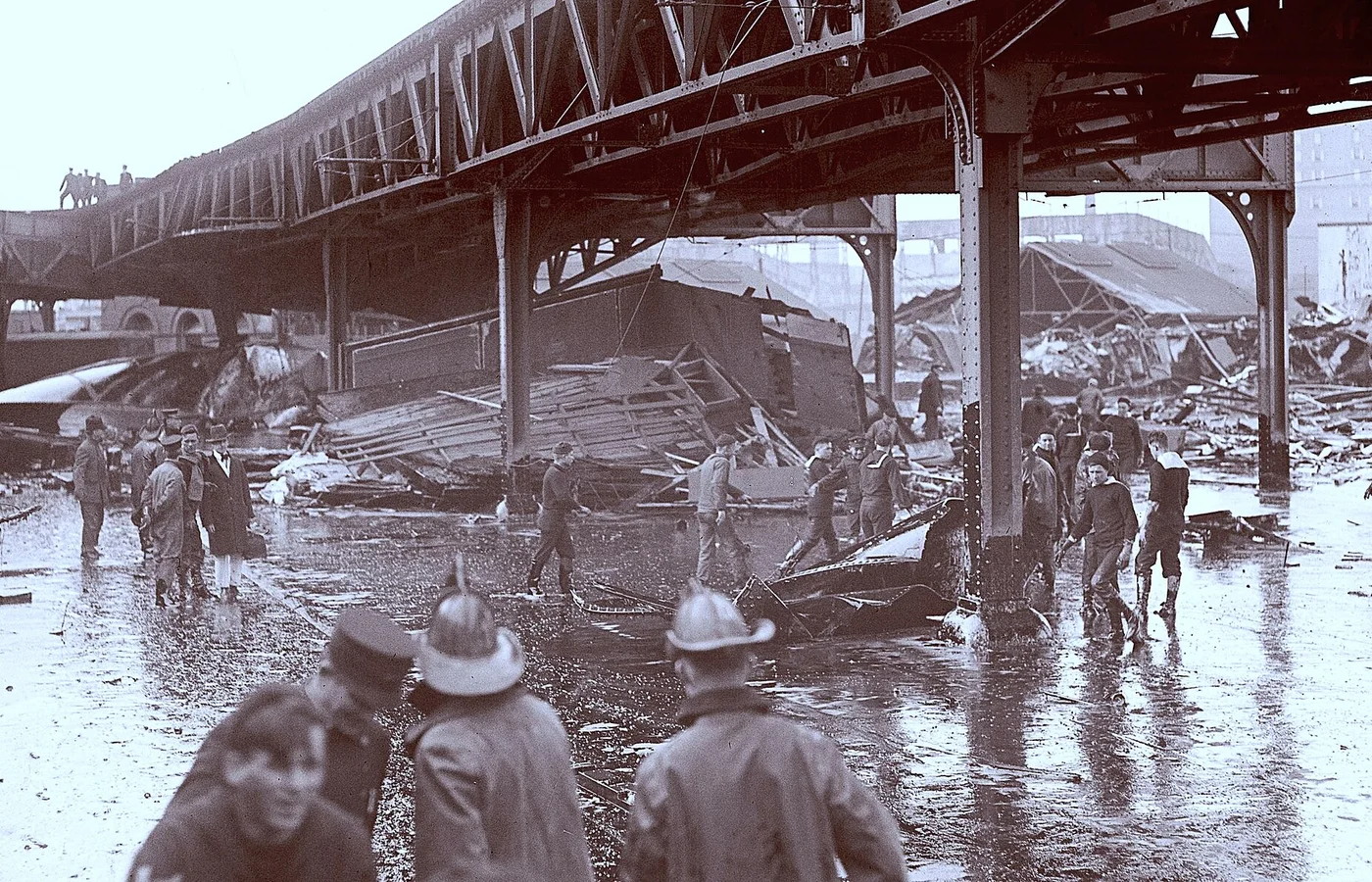
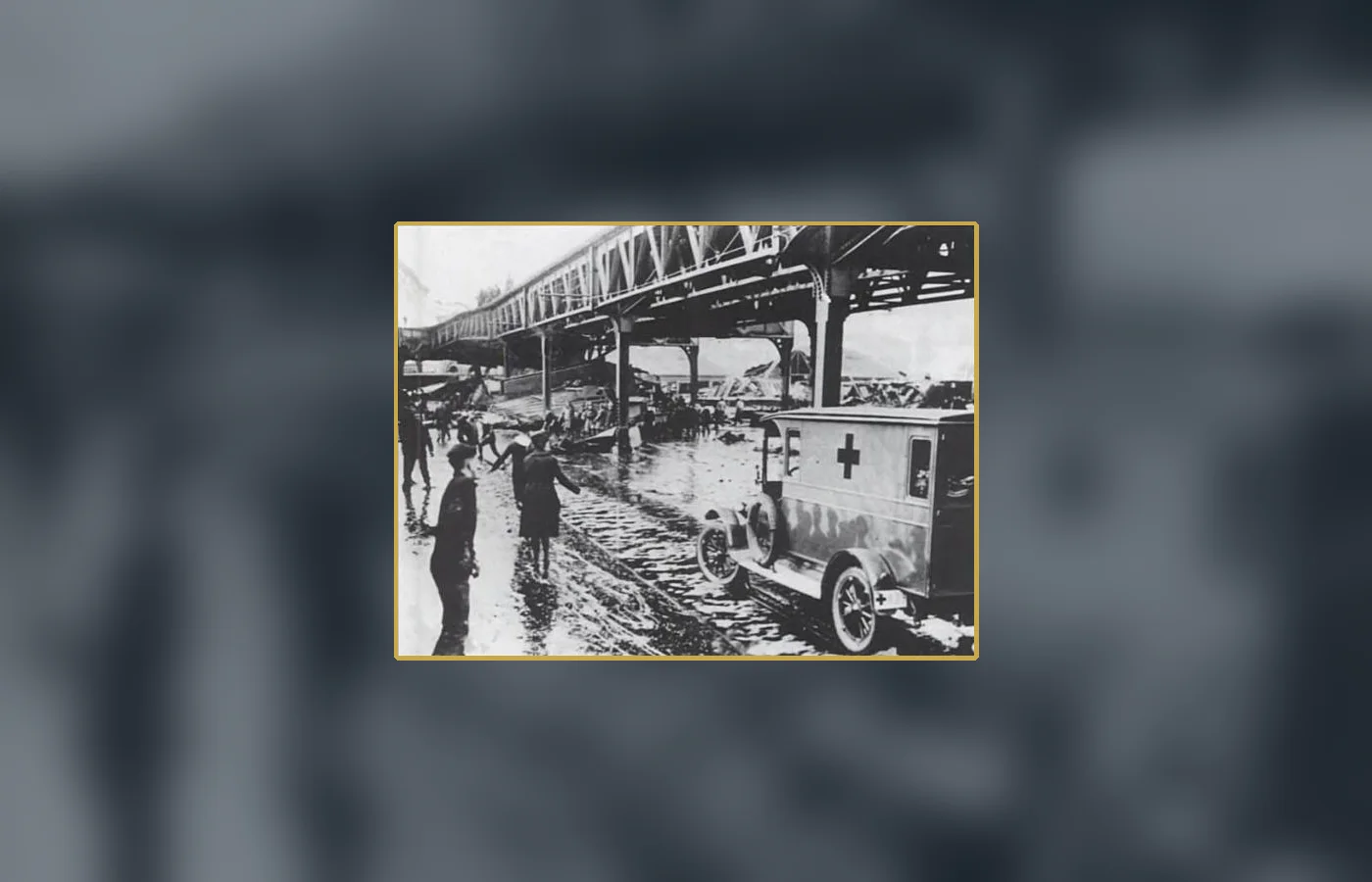
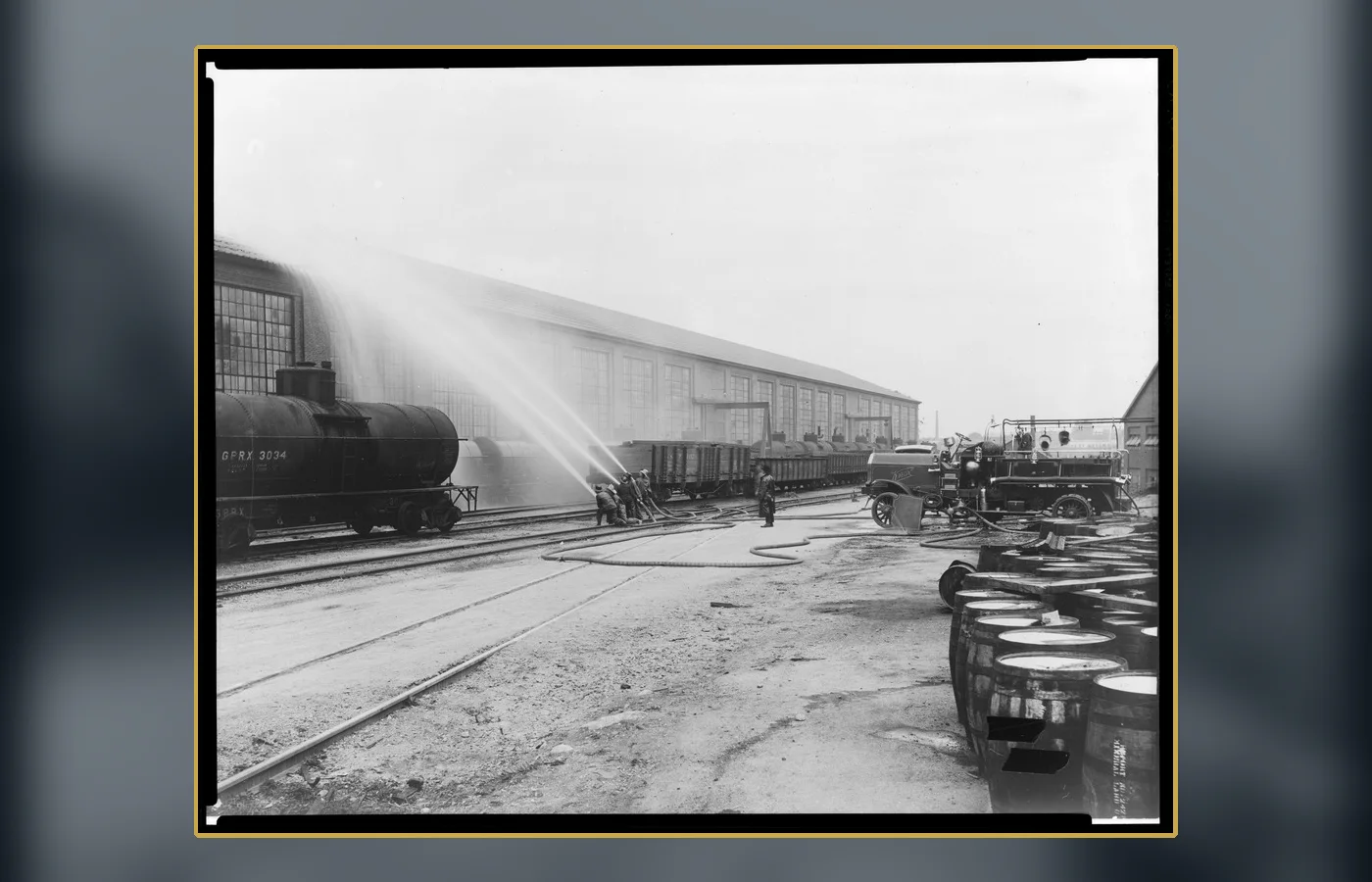
The wave is often described as moving at roughly 35 miles per hour near the rupture. Exact local speeds varied, but witnesses agreed on its sudden force. People and horses were knocked down and trapped as the syrup cooled and thickened. Twenty-one people died, about 150 were injured, and rescue workers struggled through a landscape that resisted every movement.
The tank had been telling on itself
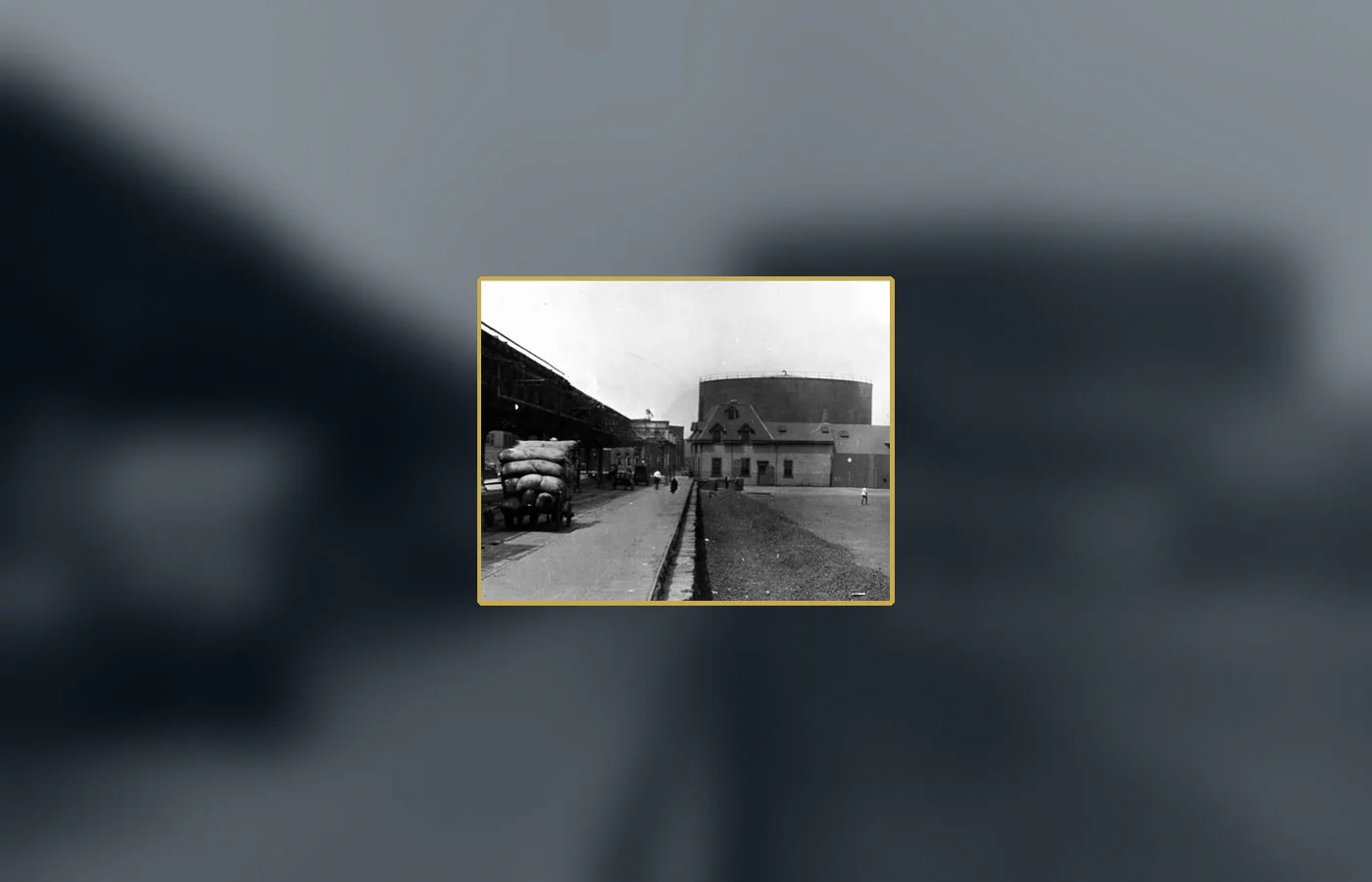
The tank was erected rapidly in 1915 to meet wartime demand. It was filled before construction was fully complete and was not subjected to the kind of full water test engineers would expect today. From early in its life, molasses leaked through seams. Children collected it in pails, and the company reportedly painted the tank brown, making the staining less visible.
Residents also heard groaning and popping. Repairs focused on caulking leaks rather than establishing whether the shell was strong enough for repeated loads and temperature changes. A conspicuous defect became neighborhood background noise—one of the most dangerous transformations in industrial history.
Why a mild day mattered
Boston had recently experienced very cold weather before temperatures rose quickly on the day of the failure. Warmer molasses flows more readily, while fermentation can produce carbon dioxide and internal pressure. Those conditions may have increased stress, but they did not create a sound tank failure from nothing.
Later engineering analysis found that the steel was too thin, rivet holes and joints concentrated stress, and the material was vulnerable to brittle fracture in cold conditions. The tank had been built before modern welding standards and without adequate calculation or inspection. Temperature explains timing; design and oversight explain vulnerability.
The sabotage defense meets a long hearing
United States Industrial Alcohol suggested that anarchists had bombed the tank, a claim made plausible to some by the political violence of the period. Hundreds of plaintiffs sued. A court-appointed auditor heard years of testimony from engineers, workers, residents, and company officials in one of the era's most complex civil proceedings.
The finding placed responsibility on the company rather than saboteurs. The settlement compensated victims and reinforced the principle that large industrial structures required professional design review and public oversight. Boston strengthened permitting practices; engineers increasingly had to sign and defend structural plans.
Why the absurd detail should not become the lesson
Molasses makes the catastrophe sound almost comic, and the strangeness has kept the event alive. Yet the material made rescue harder, not lighter. It hid debris, immobilized victims, clogged equipment, and spread contamination through a dense working neighborhood occupied by immigrants and laborers.
The most useful memory is not that Boston once suffered a freak syrup wave. It is that warnings had become familiar: leaking seams, noises, rushed construction, and patchwork repair. The tank failed in seconds after institutions had years to notice it.
What the record supports—and what it does not
The disaster was not a freak accident caused only by a warm day, and the sabotage theory was not proved. Temperature and fermentation may have affected timing, but inadequate design, rushed construction, poor testing, and ignored leaks created the conditions for failure.
Evidence ledger
- DATE — January 15, 1919: The tank ruptured shortly after noon.
- VOLUME — More than two million gallons: Molasses and steel swept through the North End.
- WARNING — Leaks were routine: Children collected syrup from seams before the failure.
- ENGINEERING — Thin steel and stressed rivets: Later analysis explains why the tank was vulnerable.
- COURT — Sabotage was not established: A long civil inquiry assigned responsibility to the company.
- LEGACY — Plans required scrutiny: The case strengthened expectations for permits and professional review.
How this reconstruction was checked
This reconstruction begins with Boston Public Library — Boston's Great Molasses Flood, Library of Congress — Newspaper and photographic records. Those records establish the dates, people, objects, and institutional findings used above. Later retellings are useful only when they can be traced back to that record. A repeated anecdote is not treated as independent confirmation simply because it appears on several websites.
The unresolved question is kept separate from the documented mechanism. In this case, the evidence supports the following boundary: The disaster was not a freak accident caused only by a warm day, and the sabotage theory was not proved. Temperature and fermentation may have affected timing, but inadequate design, rushed construction, poor testing, and ignored leaks created the conditions for failure. The purpose of that boundary is not to flatten the mystery. It prevents a vivid but unsupported detail from displacing the evidence that makes the story worth reading.
Every visual is either a historical photograph, document, map, object, site image, or an explicitly labeled contextual comparison. Captions identify the source and license. No AI reconstruction and no text-poster image is presented as historical evidence; the featured image is derived directly from the first archival visual without a headline overlay.
Why this story matters
The flood shows how normalization turns visible warning signs into scenery. It also helped push American cities toward engineering review, permits, and accountability for industrial structures.
Continue in the archive
- The B-25 That Crashed Into the Empire State Building
- The General Slocum Disaster: The Safety Equipment That Failed in Children's Hands
- The Halifax Explosion
Sources and further reading
- Boston Public Library — Boston's Great Molasses Flood
- Library of Congress — Newspaper and photographic records
Editorial note: Lore & Archive separates contemporary records, later institutional synthesis, and unresolved inference. When sources disagree or the archive is incomplete, the uncertainty is stated rather than converted into a dramatic fact.