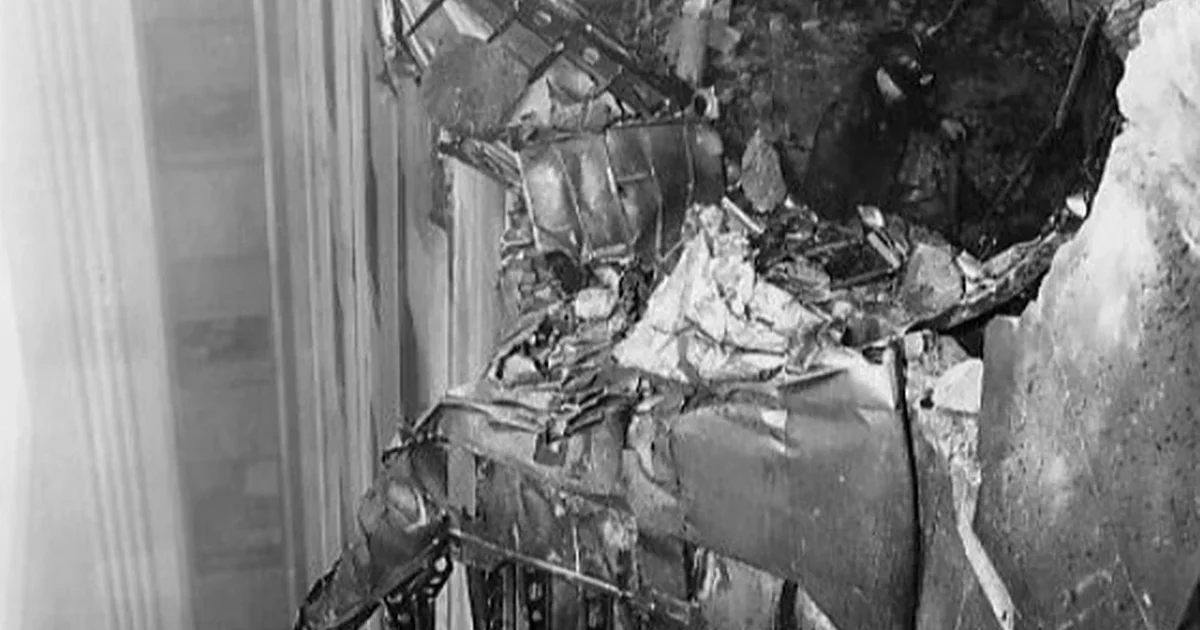
The crash is remembered through one impossible survival story. The wider record shows wartime navigation under poor visibility, fourteen deaths, and a steel frame that confined catastrophic damage to a few floors.
Archive record
- Date: July 28, 1945
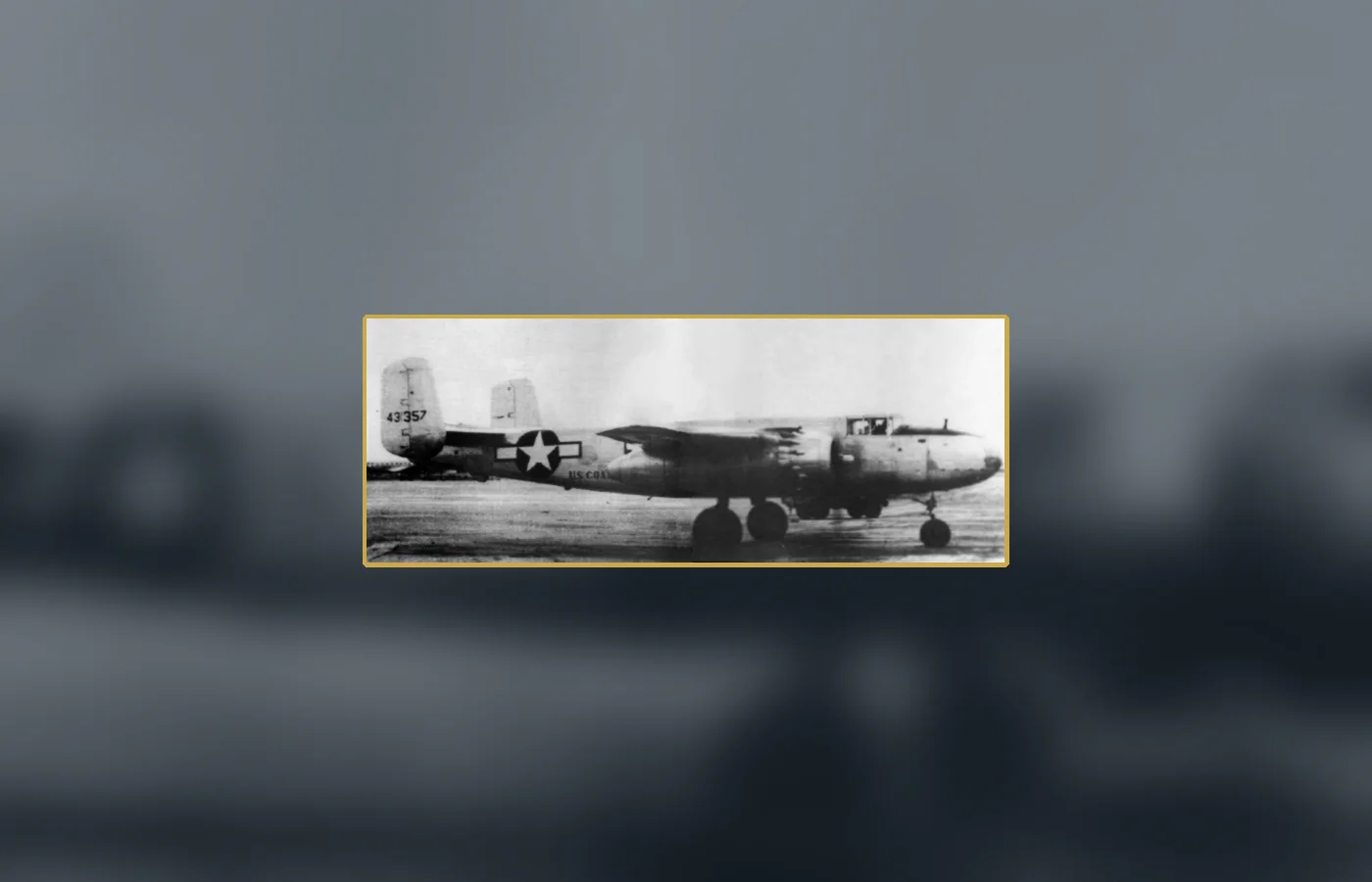
- Aircraft: North American B-25D Mitchell
- Impact: north side near the 79th floor
- Deaths: 14
A routine flight enters a wall of cloud
Lieutenant Colonel William Smith was flying a B-25 from Massachusetts toward Newark with two other men aboard. Weather over New York had deteriorated into low cloud and fog. Air-traffic personnel advised that visibility was poor and suggested another airport, but the flight continued under visual conditions toward Newark.
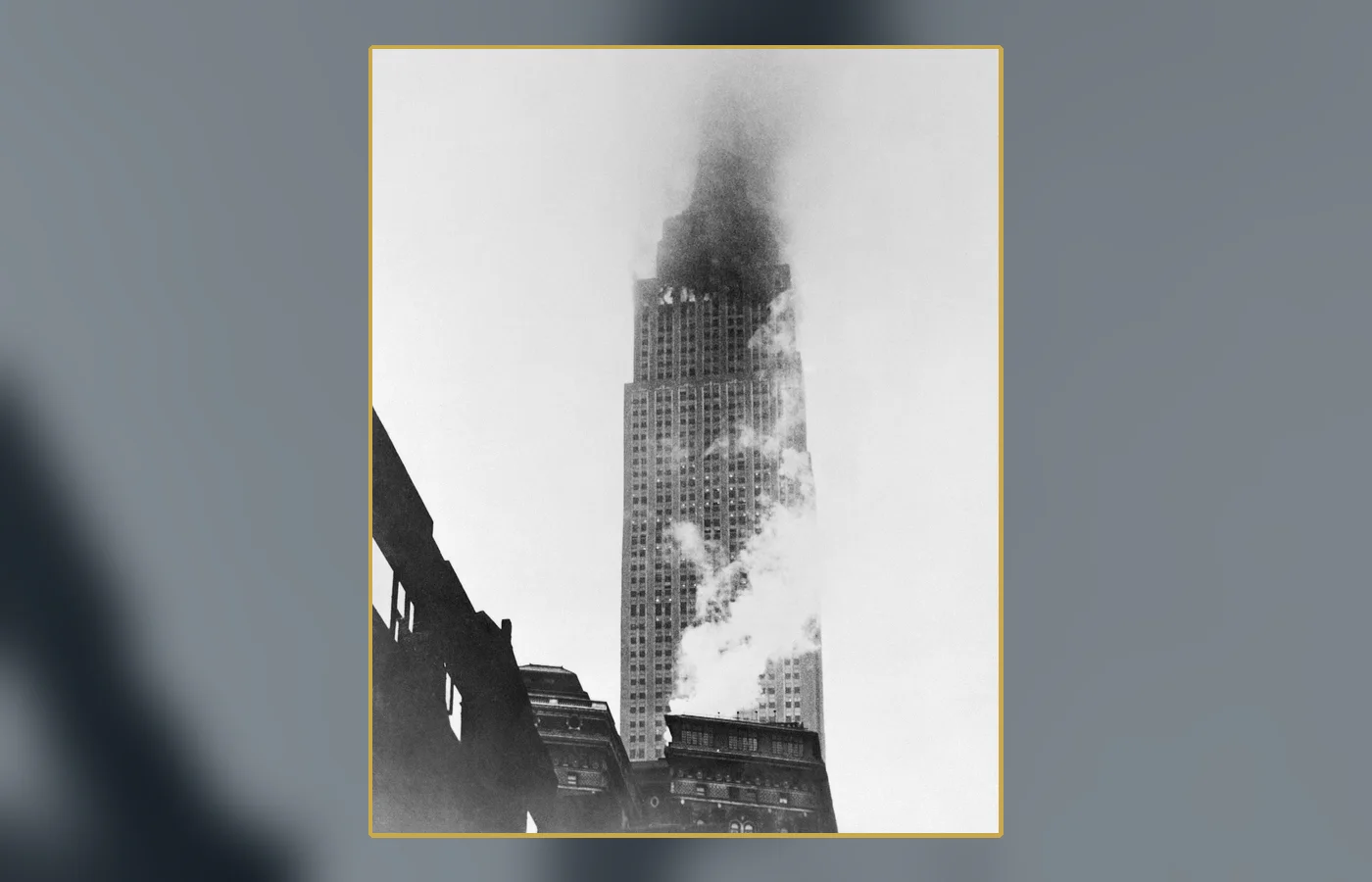
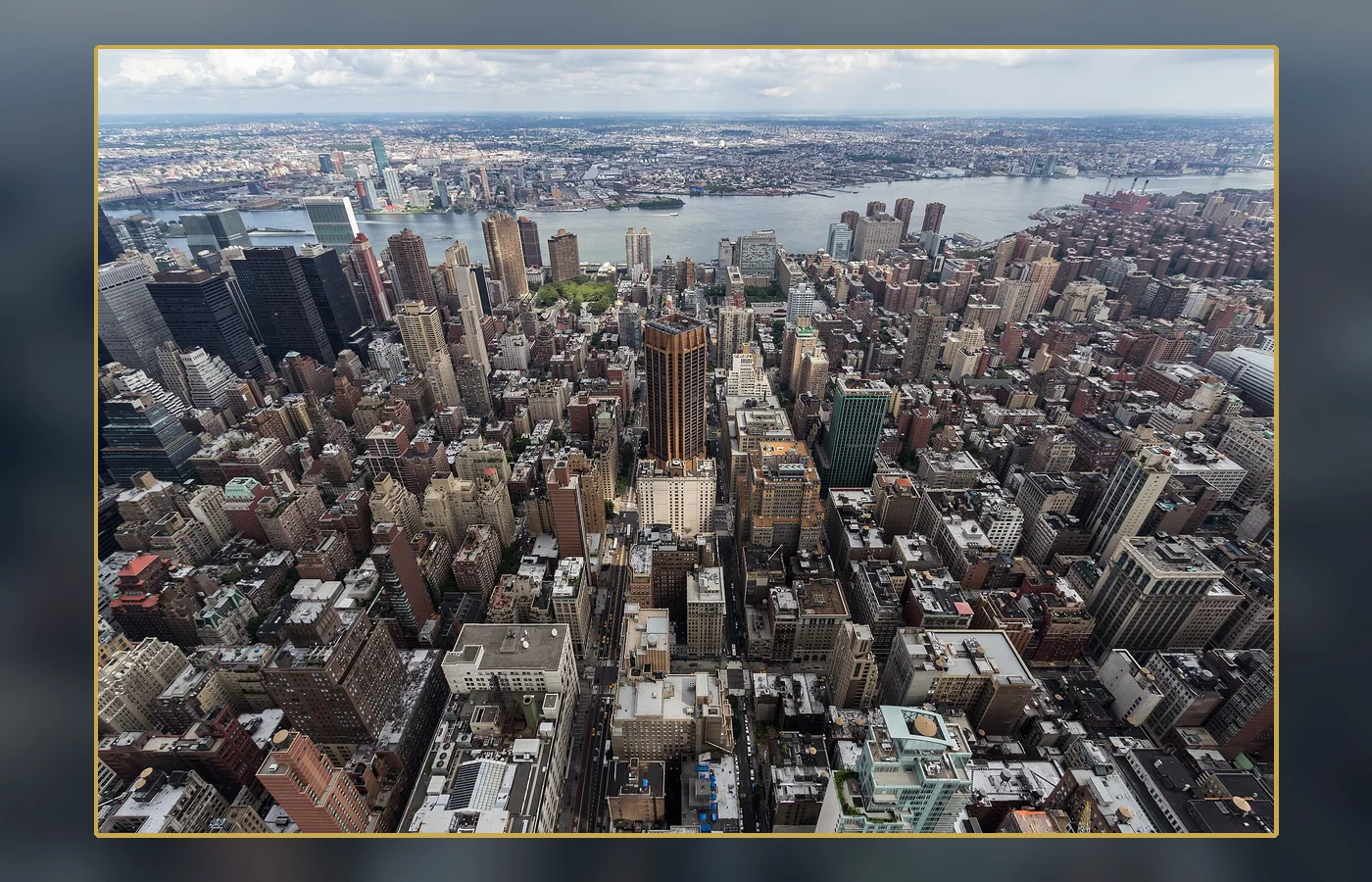
Manhattan's towers appeared with little margin for correction. The bomber narrowly avoided the Chrysler Building, then struck the north side of the Empire State Building around the 79th floor at approximately 9:40 a.m. All three aboard and eleven people in the building were killed.
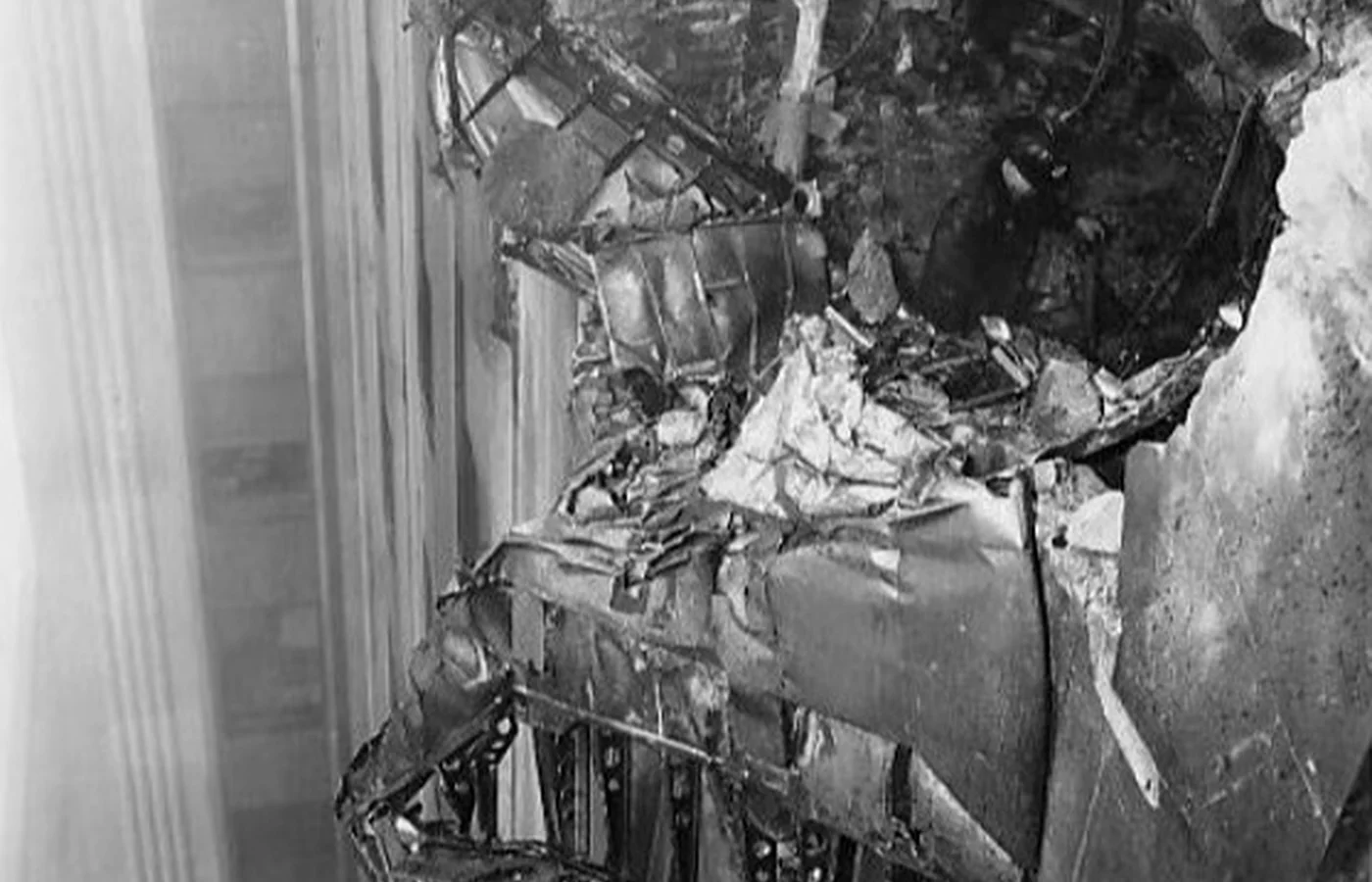
Engines, fire, and a hole through offices
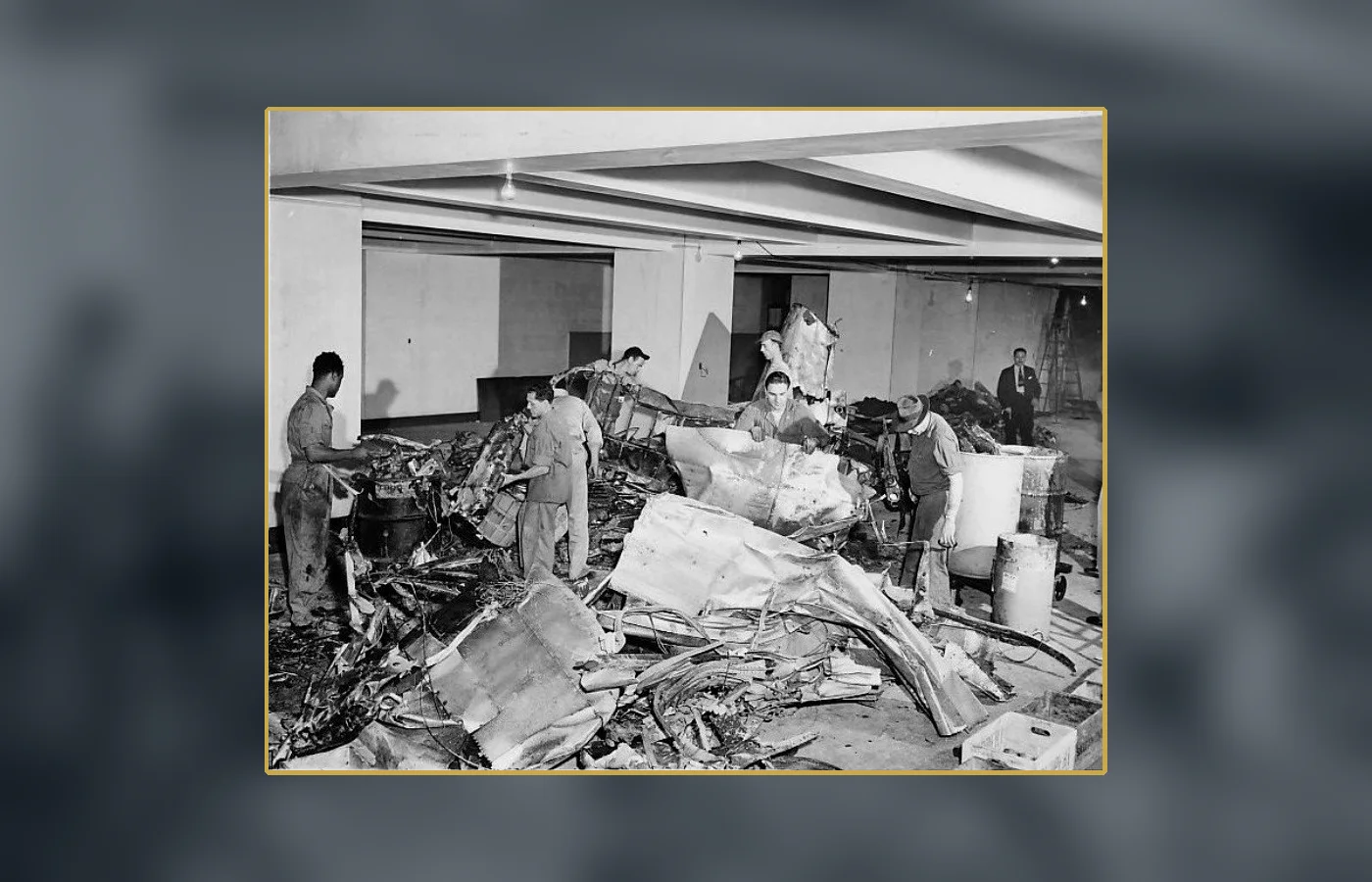
Fuel ignited through Catholic War Relief Services offices. One engine and landing gear tore through walls and fell to lower roofs; another engine passed through the building and emerged on the opposite side. Debris struck streets and nearby structures while firefighters climbed toward the impact floors.
The plane did not slice the tower in half. The building's steel frame and masonry compartmentalized much of the damage, while the crash occurred high enough that the structure below remained stable. Firefighters brought the blaze under control rapidly by the standards of a high-rise emergency.
Betty Lou Oliver and the falling elevator
Elevator operator Betty Lou Oliver was injured near the impact. Rescuers placed her in an elevator to descend, but damaged cables failed and the car fell dozens of stories into the basement. She survived with serious injuries.
The fall is often simplified into a single miracle. Several factors may have reduced the impact: coiled cable accumulated beneath the car, air compressed in the shaft, and emergency braking or structural resistance could have slowed descent. The exact contribution of each is uncertain, but survival did not require the elevator to violate physics.
Why the crash faded so quickly
The accident occurred in the final weeks of World War II, when news was dominated by military events and mass casualties. The Empire State Building reopened many unaffected offices soon afterward. Repairs erased the most visible damage, helping the crash become a surprising footnote rather than a permanent city landmark.
For victims' families, the return to business could not make the event small. Eleven office workers died at their desks in a disaster unrelated to enemy action. The tension between structural resilience and human loss is central: the building performed remarkably, but the floors struck were devastated.
The lesson before modern cockpit systems
The B-25 lacked the terrain-awareness, navigation displays, and air-traffic systems available today. Yet technology alone does not explain the accident. Continuing into poor visibility near known obstacles created a shrinking set of safe options.
The crash remains a clear case of controlled flight into terrain: a functioning aircraft, under a pilot's control, encounters an unseen obstacle. Its archive turns a familiar skyline into a record of fog, decision pressure, and the difference between a building surviving and people being safe.
What the record supports—and what it does not
The Empire State Building did not narrowly collapse. Damage was severe locally but the steel frame remained stable. Betty Lou Oliver did survive a long elevator fall, although popular accounts often state an exact distance and a single explanation more confidently than the record allows.
Evidence ledger
- WEATHER — Dense fog over Manhattan: The flight continued despite poor visibility.
- IMPACT — Near the 79th floor: The bomber struck the north side around 9:40 a.m.
- LOSS — Fourteen people: Three aboard and eleven in the building died.
- STRUCTURE — Damage stayed localized: The skyscraper's frame remained stable.
- SURVIVAL — An elevator fell: Operator Betty Lou Oliver survived serious injuries.
- LESSON — A functioning plane, an unseen obstacle: The accident fits controlled flight into terrain.
How this reconstruction was checked
This reconstruction begins with Library of Congress — Today in History: Empire State Building, Library of Congress — Crash damage photograph. Those records establish the dates, people, objects, and institutional findings used above. Later retellings are useful only when they can be traced back to that record. A repeated anecdote is not treated as independent confirmation simply because it appears on several websites.
The unresolved question is kept separate from the documented mechanism. In this case, the evidence supports the following boundary: The Empire State Building did not narrowly collapse. Damage was severe locally but the steel frame remained stable. Betty Lou Oliver did survive a long elevator fall, although popular accounts often state an exact distance and a single explanation more confidently than the record allows. The purpose of that boundary is not to flatten the mystery. It prevents a vivid but unsupported detail from displacing the evidence that makes the story worth reading.
Every visual is either a historical photograph, document, map, object, site image, or an explicitly labeled contextual comparison. Captions identify the source and license. No AI reconstruction and no text-poster image is presented as historical evidence; the featured image is derived directly from the first archival visual without a headline overlay.
Why this story matters
The story offers both a powerful link-preview image and a responsible lesson about visibility and decision-making. It also makes structural resilience concrete without treating fourteen deaths as a spectacle.
Continue in the archive
- The Great Molasses Flood: The Warning Sounds Boston Was Told to Ignore
- The General Slocum Disaster: The Safety Equipment That Failed in Children's Hands
- The Battle of Los Angeles
Sources and further reading
- Library of Congress — Today in History: Empire State Building
- Library of Congress — Crash damage photograph
Editorial note: Lore & Archive separates contemporary records, later institutional synthesis, and unresolved inference. When sources disagree or the archive is incomplete, the uncertainty is stated rather than converted into a dramatic fact.