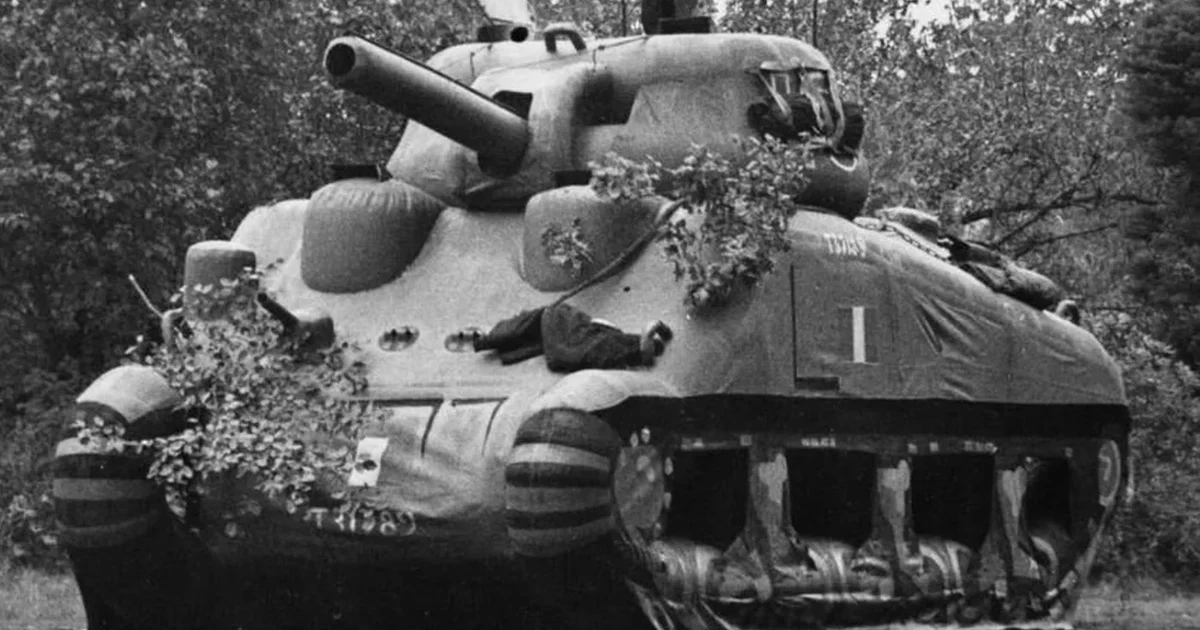
The unit did not merely place rubber vehicles in a field. It staged a complete military identity—visual, sonic, radio, and human—close enough to danger that enemy observers could believe it.
Archive record
- Unit: 23rd Headquarters Special Troops
- Activated: January 1944
- Strength: about 1,100 men
- Operations: more than twenty in the European Theater
A unit designed to be mistaken for another
The 23rd Headquarters Special Troops was assembled from camouflage specialists, radio operators, sound engineers, and soldiers with artistic or theatrical skill. Its mission was not to defeat an enemy formation directly. It was to impersonate larger American forces, altering what German reconnaissance believed about Allied strength and location.
The men served close to the front, where deception could draw artillery toward them. They borrowed shoulder patches, painted vehicle markings, and circulated believable gossip. A false division had to exist not only from the air but in the minds of civilians, enemy agents, and anyone watching road traffic.
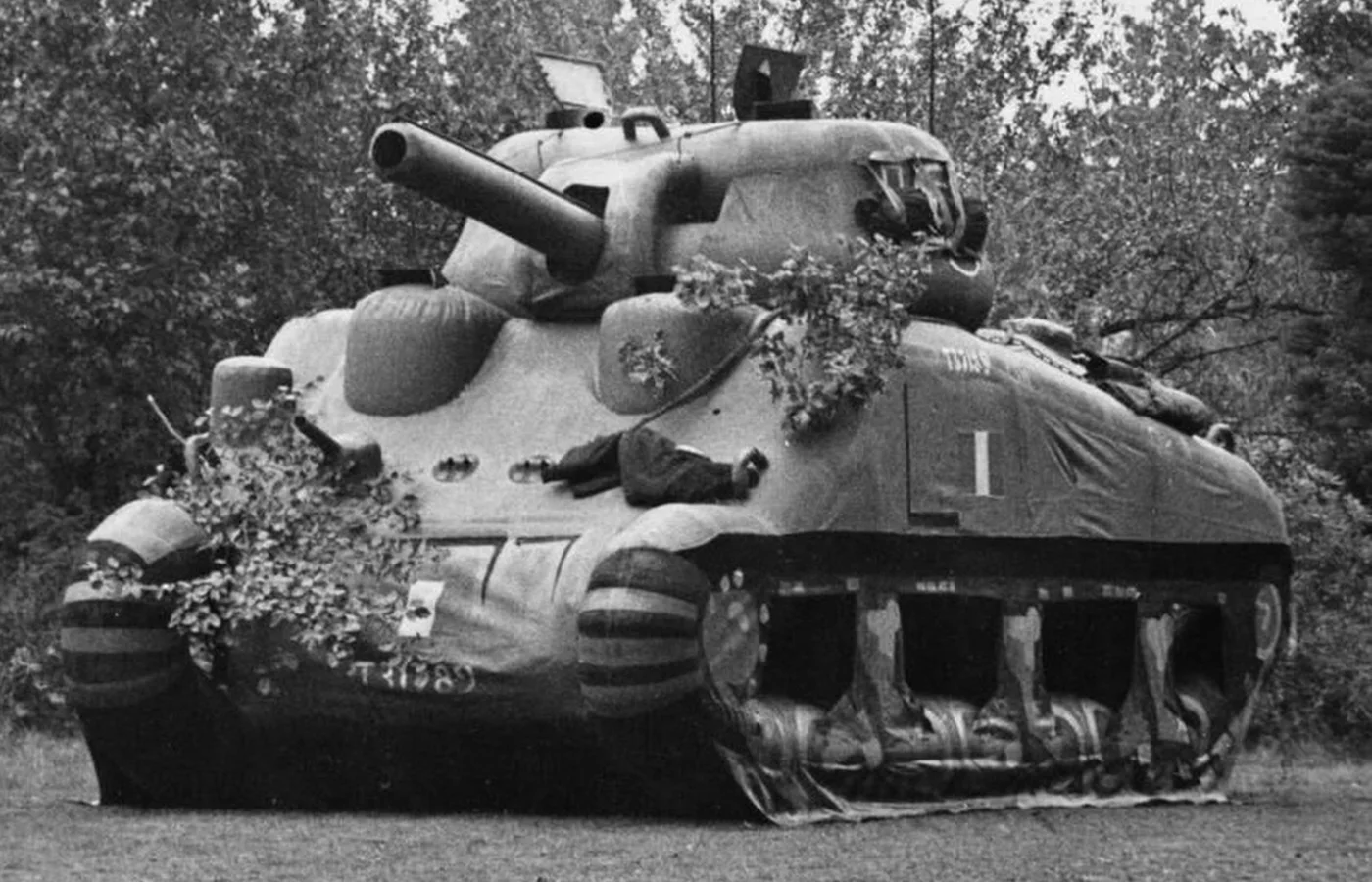
Rubber armor under camouflage nets
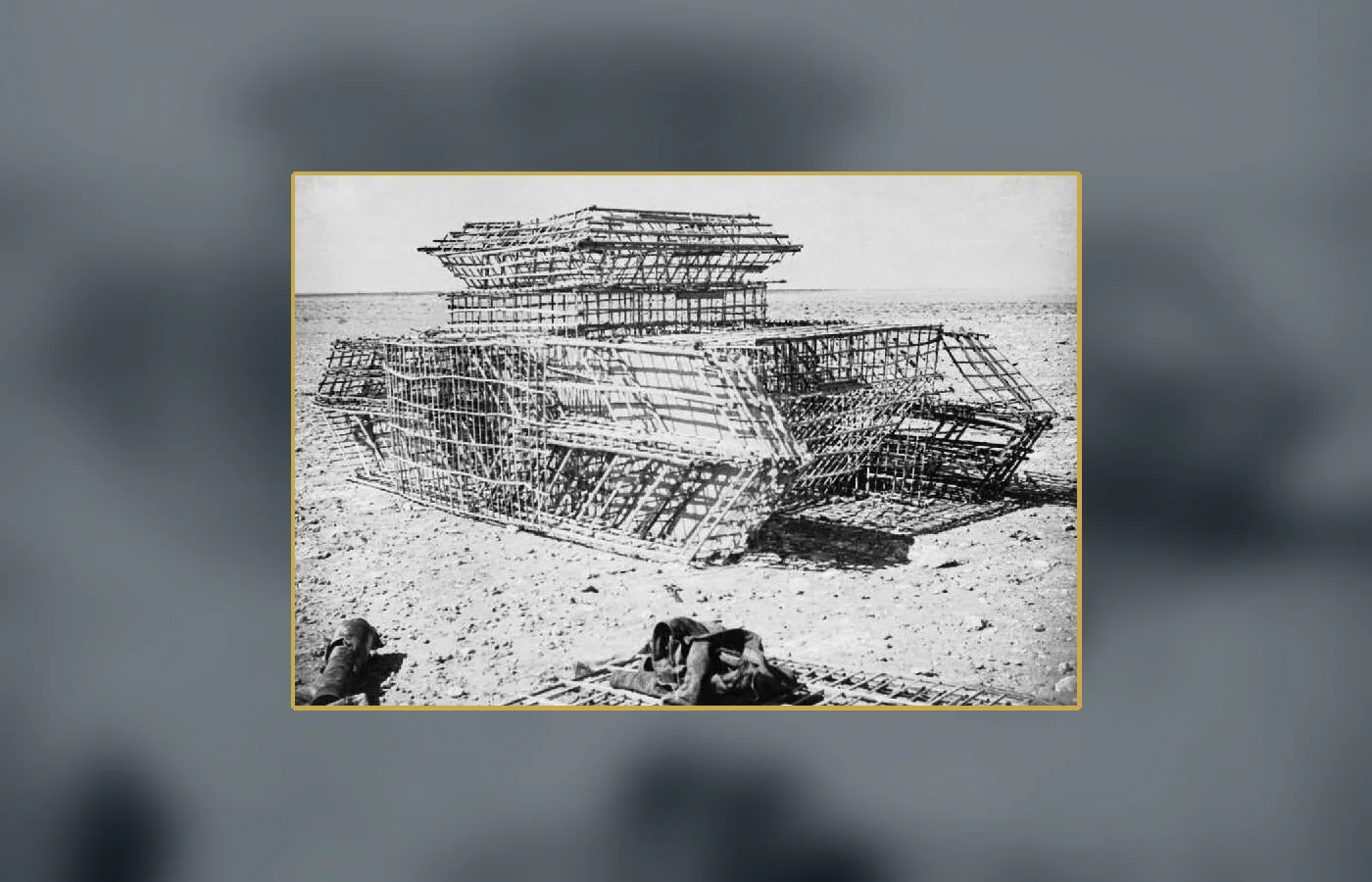
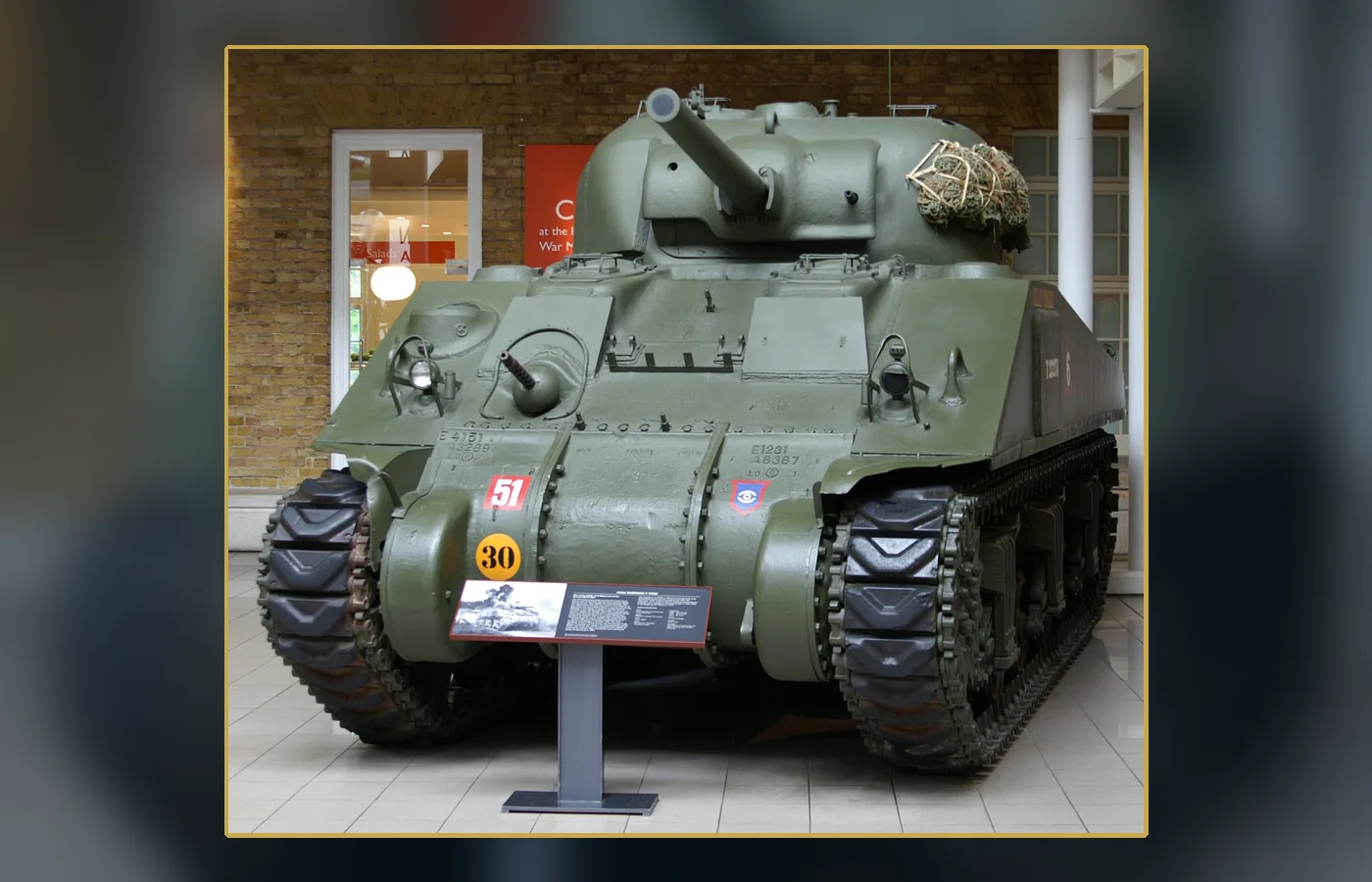
Visual deception used inflatable tanks, trucks, artillery, aircraft, and dummy positions. From a distance or reconnaissance photograph, shape, shadow, tracks, and camouflage could suggest an armored concentration. Soldiers used bulldozers or real vehicles to create track marks and concealed poor viewing angles.
The inflatables were tools, not magic. A close observer could recognize them, and wind could create absurd scenes. Their effectiveness depended on controlling distance and combining them with other evidence. A tank silhouette is more persuasive when radios, engine noise, signs, and uniformed personnel all tell the same story.
An armored division on a wire recorder
The sonic company recorded real military movements at Fort Knox: engines starting, bridges being crossed, equipment being assembled, and columns moving. Powerful speakers mounted on half-tracks played edited sequences that could be heard many miles away under favorable conditions.
Sound was choreographed to geography and time. An approaching column needed to grow louder in the right order; a bridge operation had to match visible activity. The technique did not simply add noise. It created a plausible event for listening posts and troops beyond visual range.

The radio operators who copied a fist
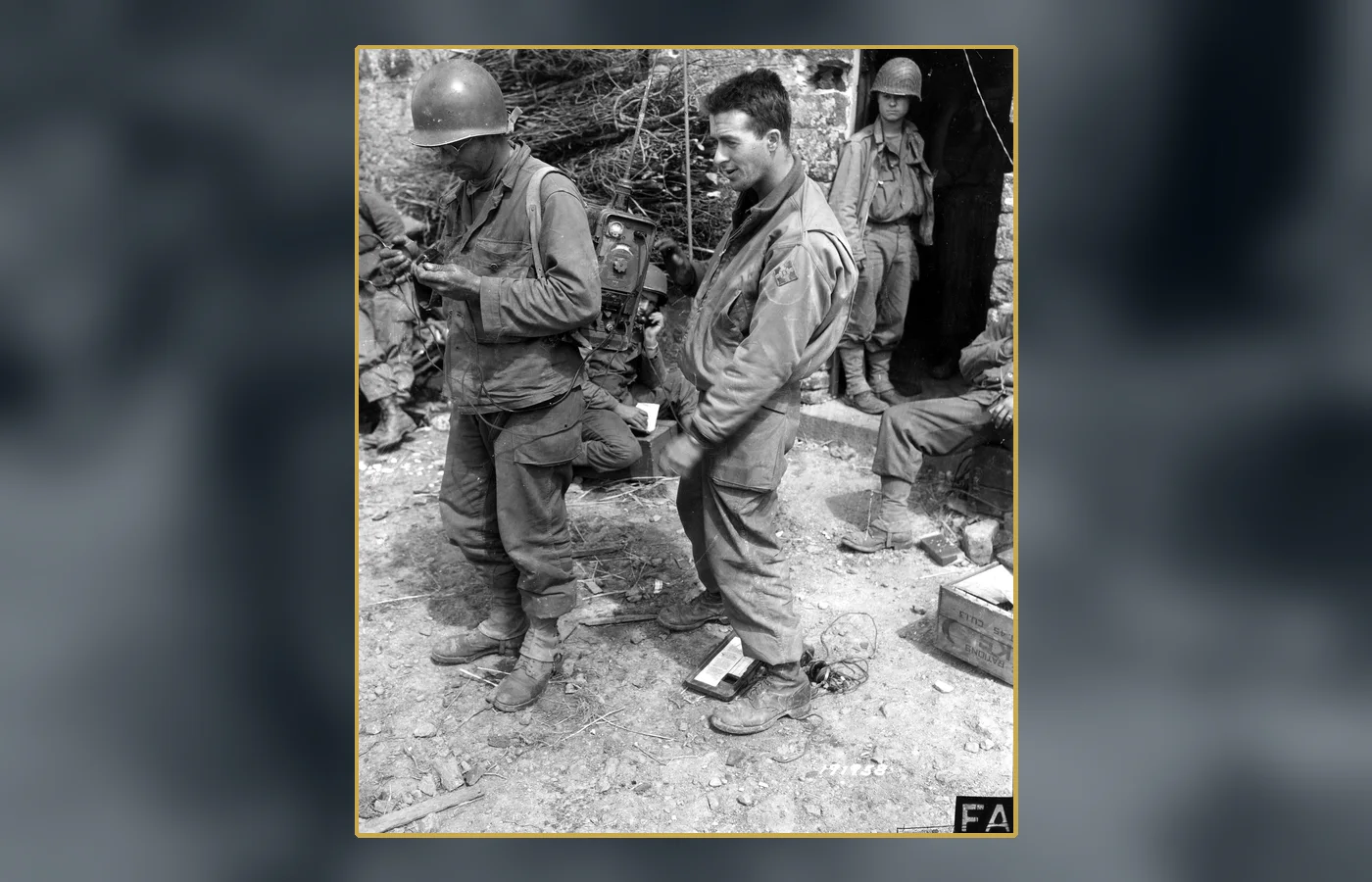
Every unit generated distinctive radio traffic. Ghost Army operators imitated the networks and transmission habits of formations they portrayed. Morse operators could recognize one another by rhythm—their 'fist'—so imitation demanded more than copying call signs.
False messages were coordinated with real headquarters while genuine units observed radio silence or moved elsewhere. This made the deception legible to German signals intelligence. The performance worked because it entered the opponent's collection system rather than waiting to be seen by chance.
From secrecy to recognition
Operations such as Viersen, Bettembourg, and the final deception near the Rhine used different combinations of the unit's tools. Military estimates credit the Ghost Army with influencing enemy deployments and reducing risk to real troops, although the effect of each operation is not always measurable from surviving German records.
The unit's work remained classified for decades. Veterans who became artists, designers, and photographers could not fully explain their service. In 2022, members of the 23rd and the related 3133rd Signal Service Company received the Congressional Gold Medal, recognizing deception as a disciplined combat contribution rather than a collection of clever props.
What the record supports—and what it does not
The Ghost Army did not fool the enemy with inflatable tanks alone. Its deceptions integrated visual props, recorded sound, counterfeit radio traffic, markings, rumors, and soldier performance. The unit's success depended on consistency across all those channels.
Evidence ledger
- UNIT — About 1,100 men: The 23rd impersonated formations far larger than itself.
- VISUAL — Inflatable armor: Shape, shadows, markings, tracks, and distance sold the scene.
- SONIC — Recorded military movement: Speaker trucks could project a false column miles away.
- RADIO — Operators copied networks and rhythm: Signals had to resemble the unit being impersonated.
- RISK — Deception near the front: The performance could attract enemy fire to the decoy.
- HONOR — Congressional Gold Medal: The units received national recognition in 2022.
How this reconstruction was checked
This reconstruction begins with The National WWII Museum — Ghost Army exhibition, U.S. Army — Ghost Army Congressional Gold Medal. Those records establish the dates, people, objects, and institutional findings used above. Later retellings are useful only when they can be traced back to that record. A repeated anecdote is not treated as independent confirmation simply because it appears on several websites.
The unresolved question is kept separate from the documented mechanism. In this case, the evidence supports the following boundary: The Ghost Army did not fool the enemy with inflatable tanks alone. Its deceptions integrated visual props, recorded sound, counterfeit radio traffic, markings, rumors, and soldier performance. The unit's success depended on consistency across all those channels. The purpose of that boundary is not to flatten the mystery. It prevents a vivid but unsupported detail from displacing the evidence that makes the story worth reading.
Every visual is either a historical photograph, document, map, object, site image, or an explicitly labeled contextual comparison. Captions identify the source and license. No AI reconstruction and no text-poster image is presented as historical evidence; the featured image is derived directly from the first archival visual without a headline overlay.
Why this story matters
The story is a durable lesson in information: one spectacular clue is fragile, but several modest clues that corroborate one another can create a convincing reality.
Continue in the archive
- Operation Mincemeat
- Project Azorian: The CIA Ship Built to Lift a Soviet Submarine
- Hedy Lamarr's Secret Communication Patent—and the Wi-Fi Myth
Sources and further reading
Editorial note: Lore & Archive separates contemporary records, later institutional synthesis, and unresolved inference. When sources disagree or the archive is incomplete, the uncertainty is stated rather than converted into a dramatic fact.