The nineteenth-century network was small enough to survive. Its failure is now a benchmark for what a strong geomagnetic storm could do to a planet wrapped in electrical infrastructure.
Archive record
- Solar observation: September 1, 1859
- Geomagnetic storm: September 1–2
- Observer: Richard Carrington
- Effects: brilliant auroras and telegraph disruption
Two patches of white light on the Sun
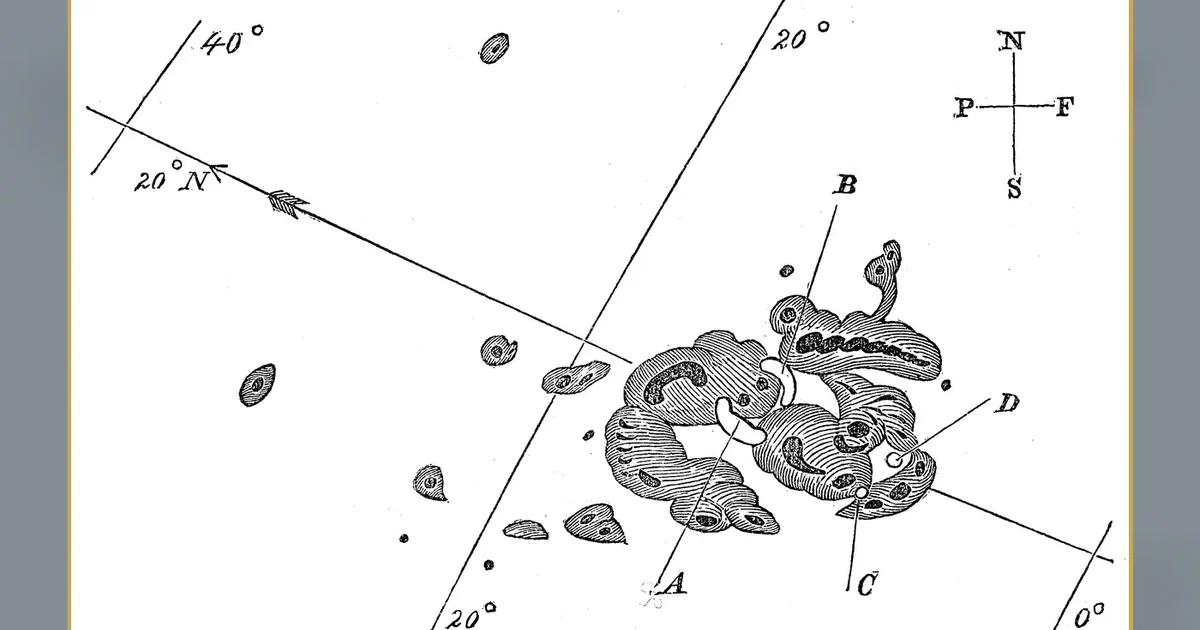
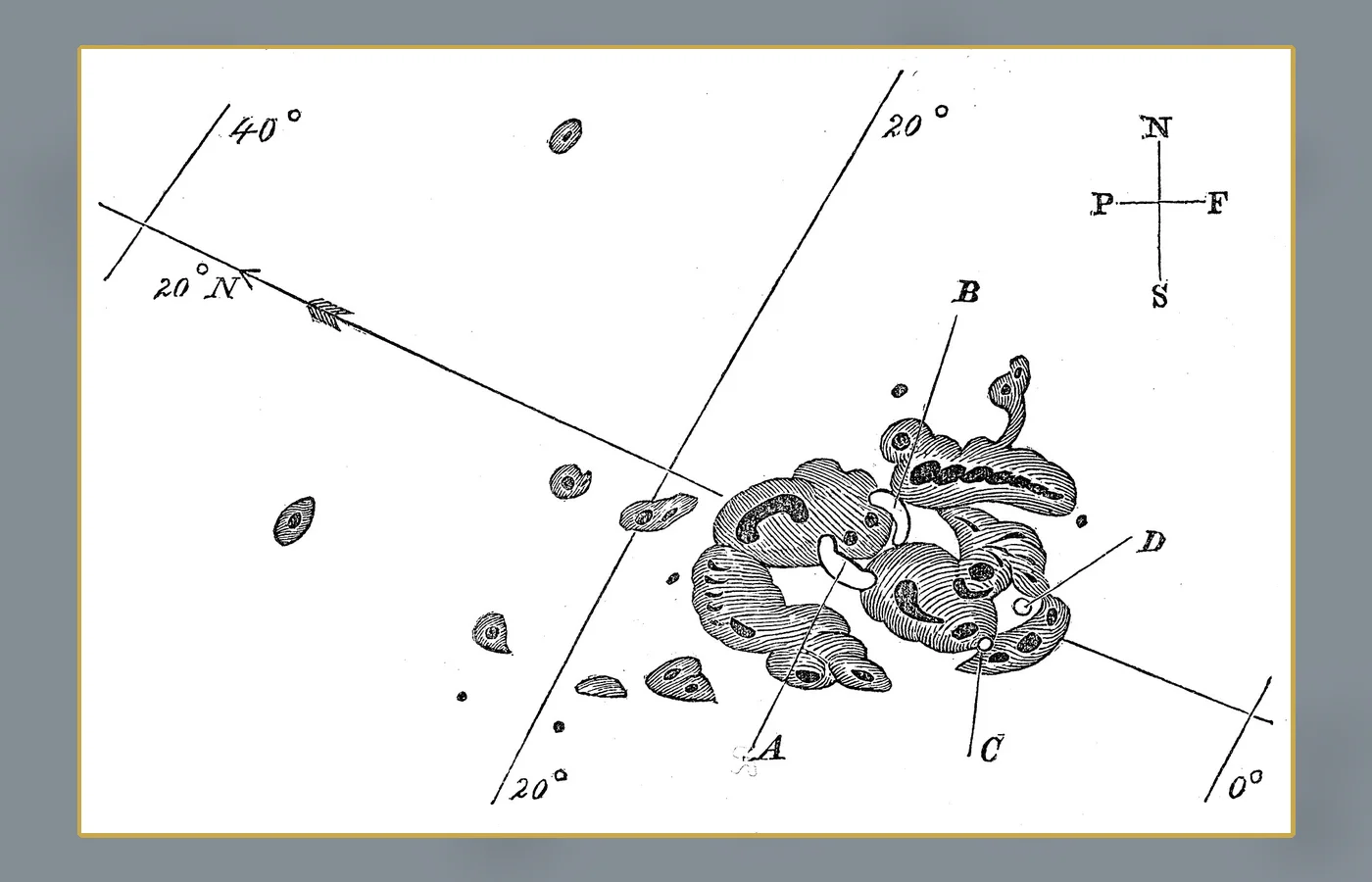
British astronomer Richard Carrington was projecting an image of the Sun and sketching sunspots on September 1, 1859, when two brilliant patches appeared. He noted their rapid change and sought another witness. Independently, Richard Hodgson observed the same flare.
About seventeen hours later, Earth's magnetic field convulsed. The unusually short interval suggests a fast coronal mass ejection, likely traveling through a path already disturbed by earlier solar activity. Carrington did not see material crossing space; he recorded the optical event that became linked to the storm.
Night bright enough to read
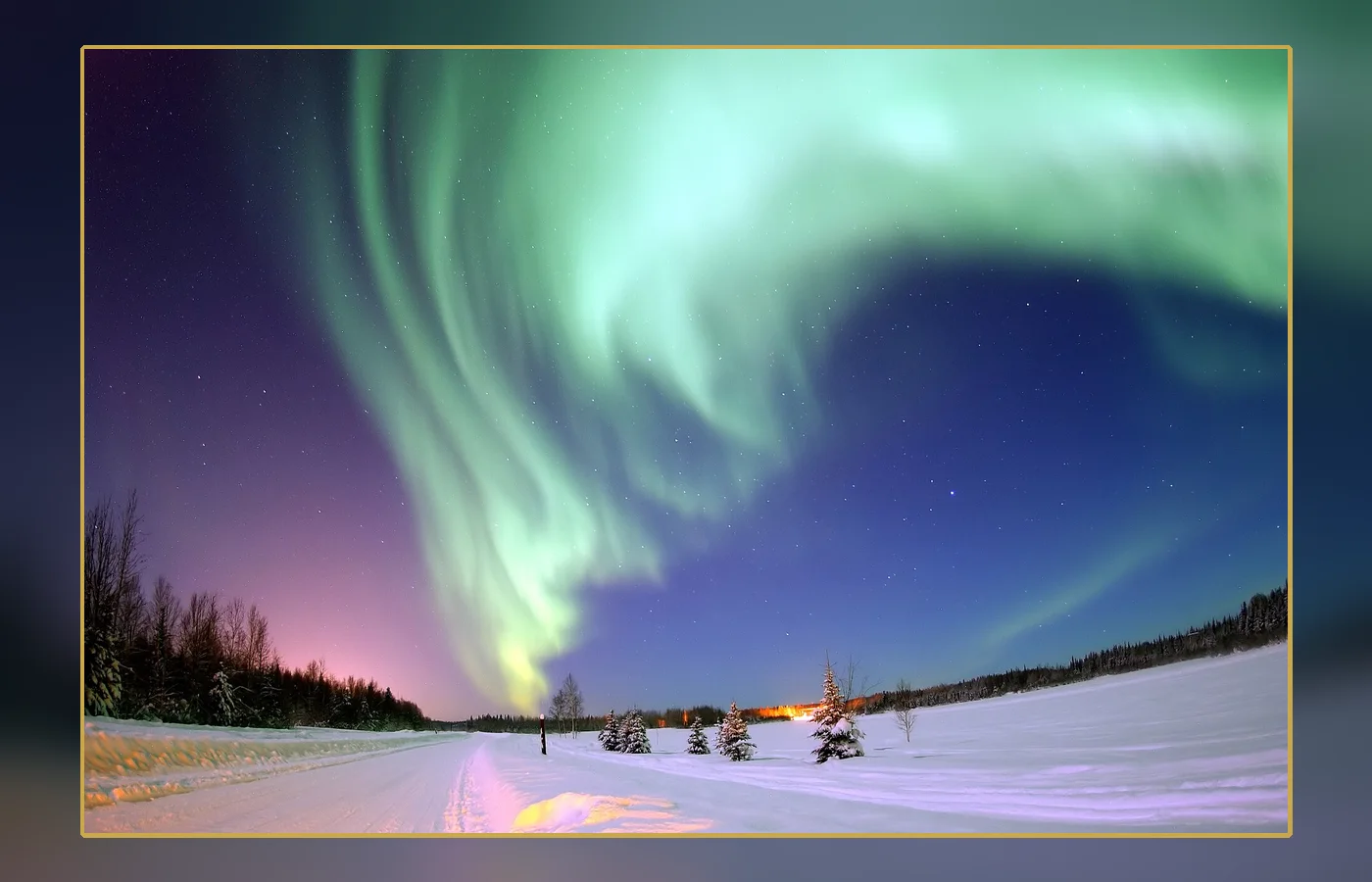
Auroras appeared far beyond their usual latitudes, with reports from the Caribbean, Mexico, and other regions closer to the equator. In some places the sky became so bright that people read newspapers outdoors or mistook dawn for morning. Colors and moving forms frightened observers unfamiliar with intense aurora.
Historical reports vary in precision, but their geographic spread matches a severe geomagnetic disturbance. Magnetometers recorded abrupt changes, giving researchers an instrumental record alongside newspapers, diaries, and ship logs.
Messages powered after the batteries came off
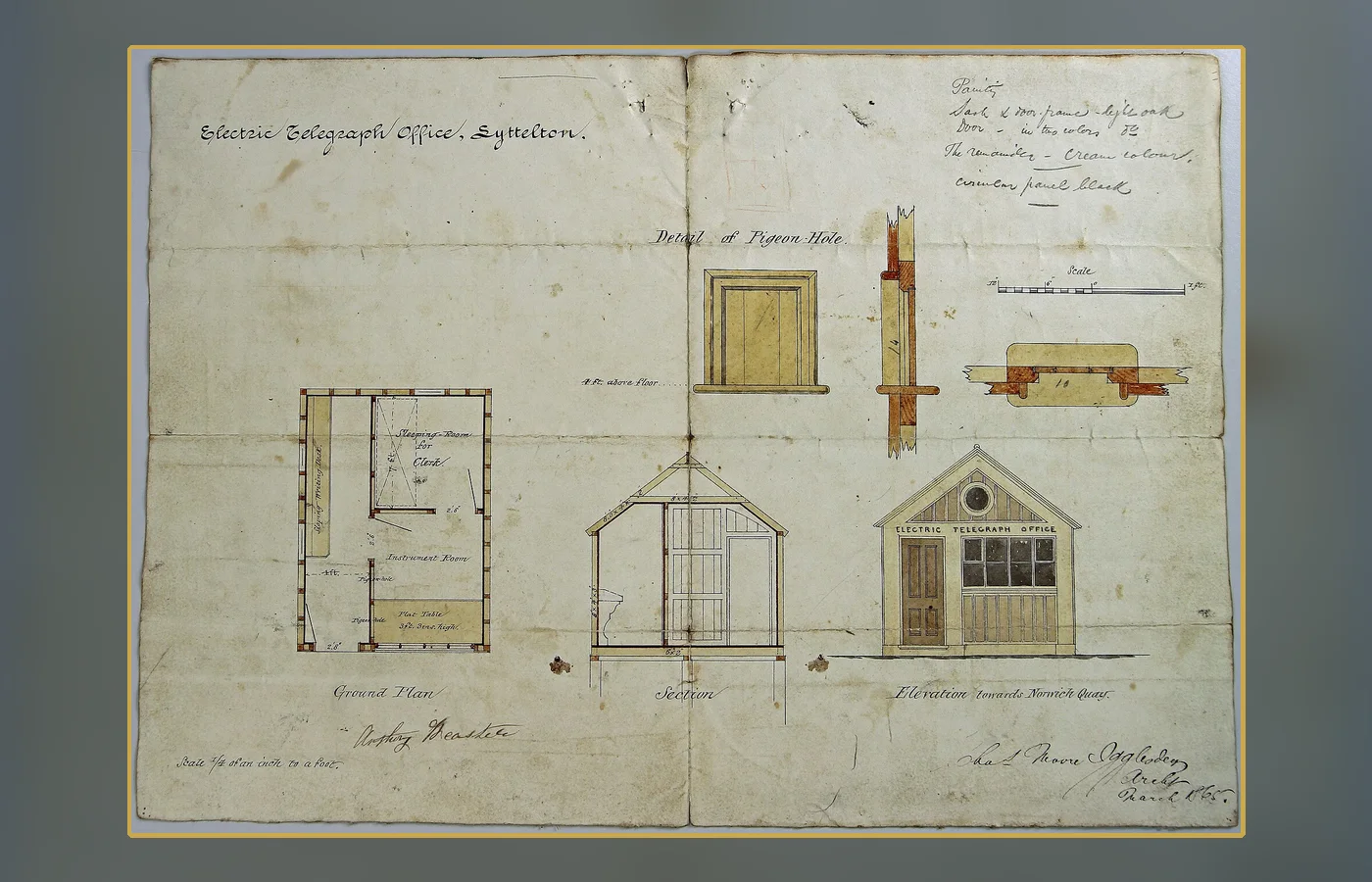
Changing magnetic fields induced electrical currents in long telegraph wires. Operators reported shocks, sparking equipment, disrupted messages, and fires in telegraph paper. Some lines continued operating for a time with their batteries disconnected because geomagnetically induced current supplied enough energy.
The effect was not mysterious electricity pouring from empty air. The telegraph network acted like a vast conductor through a changing magnetic environment. Length, orientation, grounding, and local conditions determined whether a circuit failed, sparked, or briefly benefited from the induced current.
How large was it really?
The Carrington Event is often labeled the strongest solar storm in recorded history. It was certainly extreme, but nineteenth-century measurements were sparse and modern indices must be reconstructed. Other storms, including the 1921 event, may have rivaled aspects of it.
Researchers use ice cores, magnetic records, auroral boundaries, and telegraph reports to estimate intensity. The uncertainty does not make the event less useful; it defines a range of plausible scenarios rather than a single perfect number.
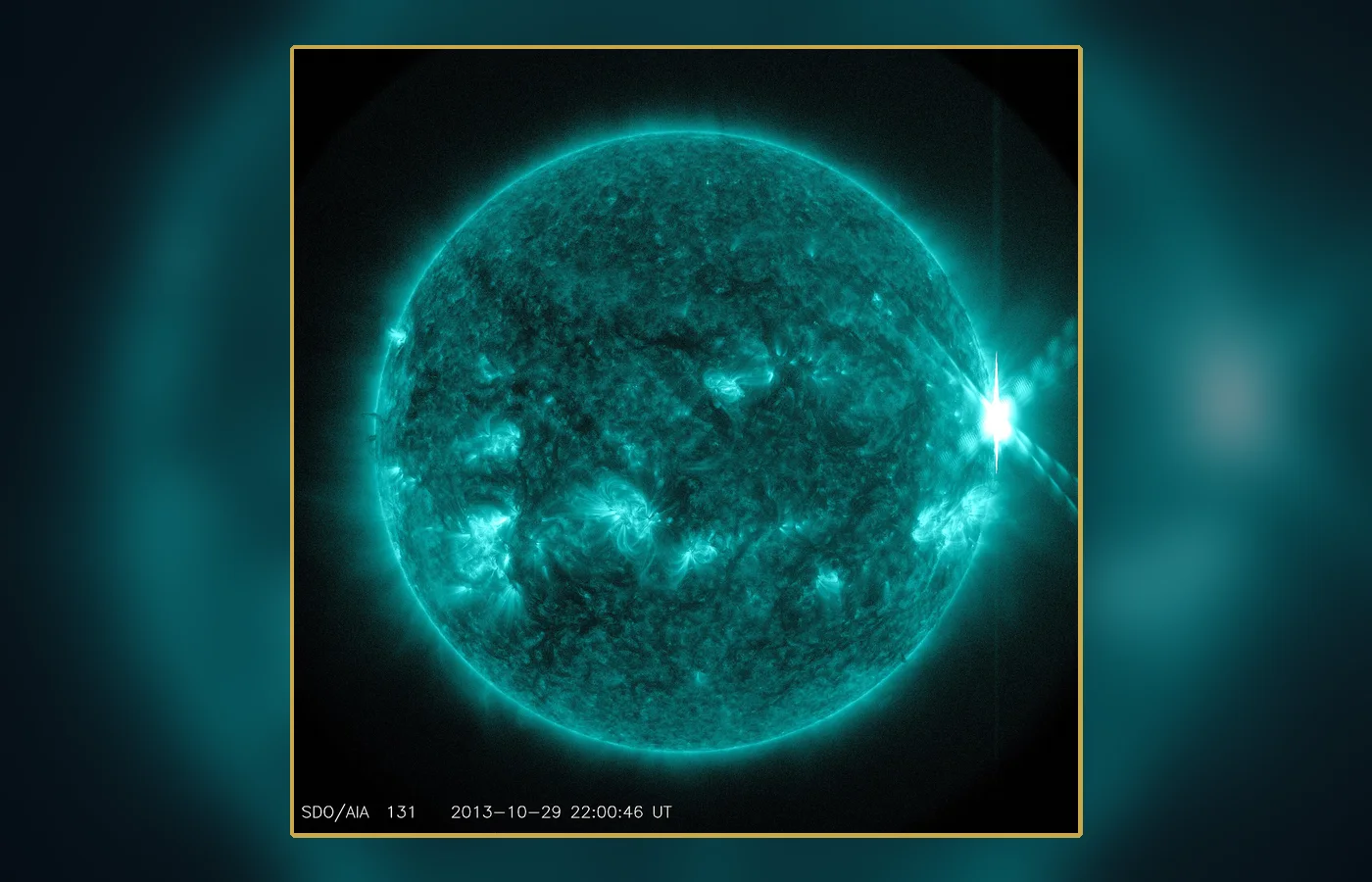
A nineteenth-century warning for a digital planet
Modern systems offer more pathways for damage: high-voltage transformers, satellites, radio communication, navigation, aviation, and pipelines can all be affected by space weather. Not every electronic device would instantly fail, and internet collapse is not automatic. Vulnerability concentrates in systems that are long, conductive, exposed, or dependent on satellites.
Forecasting and operational safeguards now provide options Carrington's world lacked. Grid operators can change configurations, satellite owners can protect equipment, and agencies monitor the Sun. The historical storm is valuable not as an apocalypse script but as evidence that extreme space weather belongs in practical infrastructure planning.
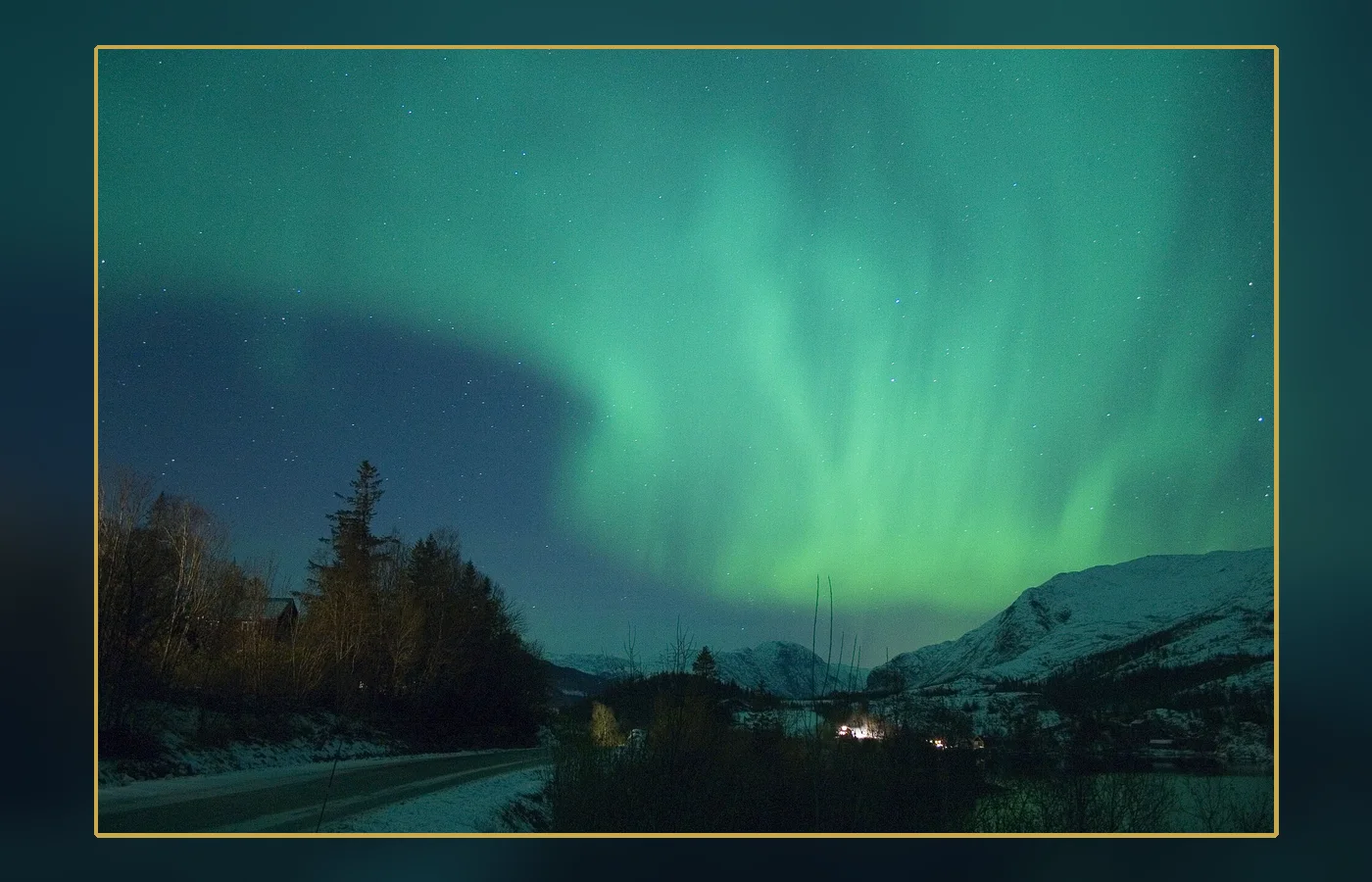
What the record supports—and what it does not
The Carrington Event did not make every telegraph system work without batteries, nor does a repeat guarantee the instant end of the internet. It produced severe, uneven electromagnetic effects whose modern consequences would depend on equipment, geography, preparation, and storm details.
Evidence ledger
- OBSERVATION — A white-light solar flare: Carrington and Hodgson independently recorded the bright event.
- ARRIVAL — About seventeen hours: A fast eruption reached Earth's magnetic environment.
- AURORA — Seen far toward the tropics: Brilliant displays were reported well outside normal latitudes.
- NETWORK — Telegraph shocks and fires: Long wires carried induced current.
- ODDITY — Some batteries were disconnected: Geomagnetic current briefly powered certain circuits.
- TODAY — A benchmark, not a prophecy: Modern risk depends on infrastructure and preparation.
How this reconstruction was checked
This reconstruction begins with NASA — Solar science timeline and Carrington Event, NOAA Space Weather Prediction Center — Geomagnetic storms. Those records establish the dates, people, objects, and institutional findings used above. Later retellings are useful only when they can be traced back to that record. A repeated anecdote is not treated as independent confirmation simply because it appears on several websites.
The unresolved question is kept separate from the documented mechanism. In this case, the evidence supports the following boundary: The Carrington Event did not make every telegraph system work without batteries, nor does a repeat guarantee the instant end of the internet. It produced severe, uneven electromagnetic effects whose modern consequences would depend on equipment, geography, preparation, and storm details. The purpose of that boundary is not to flatten the mystery. It prevents a vivid but unsupported detail from displacing the evidence that makes the story worth reading.
Every visual is either a historical photograph, document, map, object, site image, or an explicitly labeled contextual comparison. Captions identify the source and license. No AI reconstruction and no text-poster image is presented as historical evidence; the featured image is derived directly from the first archival visual without a headline overlay.
Why this story matters
The event connects a vivid archival record to a current systems question. It lets readers understand space weather through sparks, shocks, and messages before considering modern grids and satellites.
Continue in the archive
- New England's Dark Day: When Noon Required Candles
- The Tunguska Event
- 1816, the Year Without a Summer: How Tambora Changed Weather Around the World
Sources and further reading
- NASA — Solar science timeline and Carrington Event
- NOAA Space Weather Prediction Center — Geomagnetic storms
Editorial note: Lore & Archive separates contemporary records, later institutional synthesis, and unresolved inference. When sources disagree or the archive is incomplete, the uncertainty is stated rather than converted into a dramatic fact.