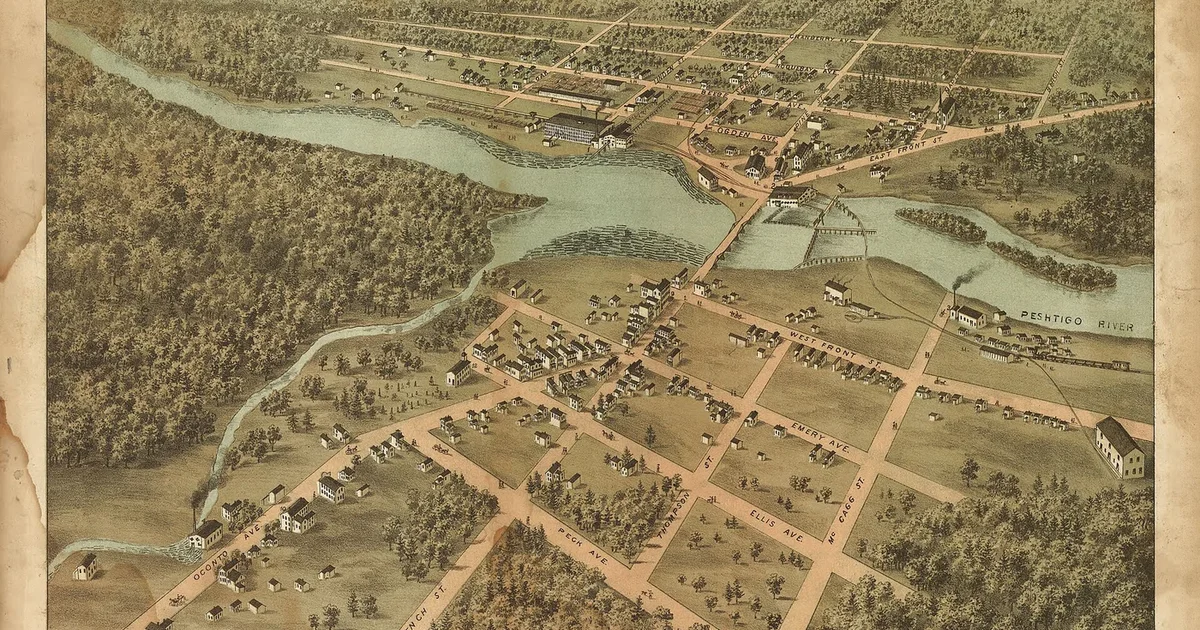
There is no reliable single death toll because the fire destroyed families, records, and settlements at once. That uncertainty is not an invitation to inflate numbers; it is evidence of the scale of erasure.
Archive record
- Date: October 8, 1871
- Region: northeastern Wisconsin and parts of Michigan
- Estimated deaths: at least 1,200, possibly more
- Area burned: roughly 1.2 million acres in Wisconsin
A landscape prepared to burn
Months of drought dried forests, fields, wooden buildings, sawdust, bark, and logging slash across northeastern Wisconsin. Small land-clearing fires were common. On October 8, a strong weather system brought high winds that drove scattered fires together and pushed flame through the region.
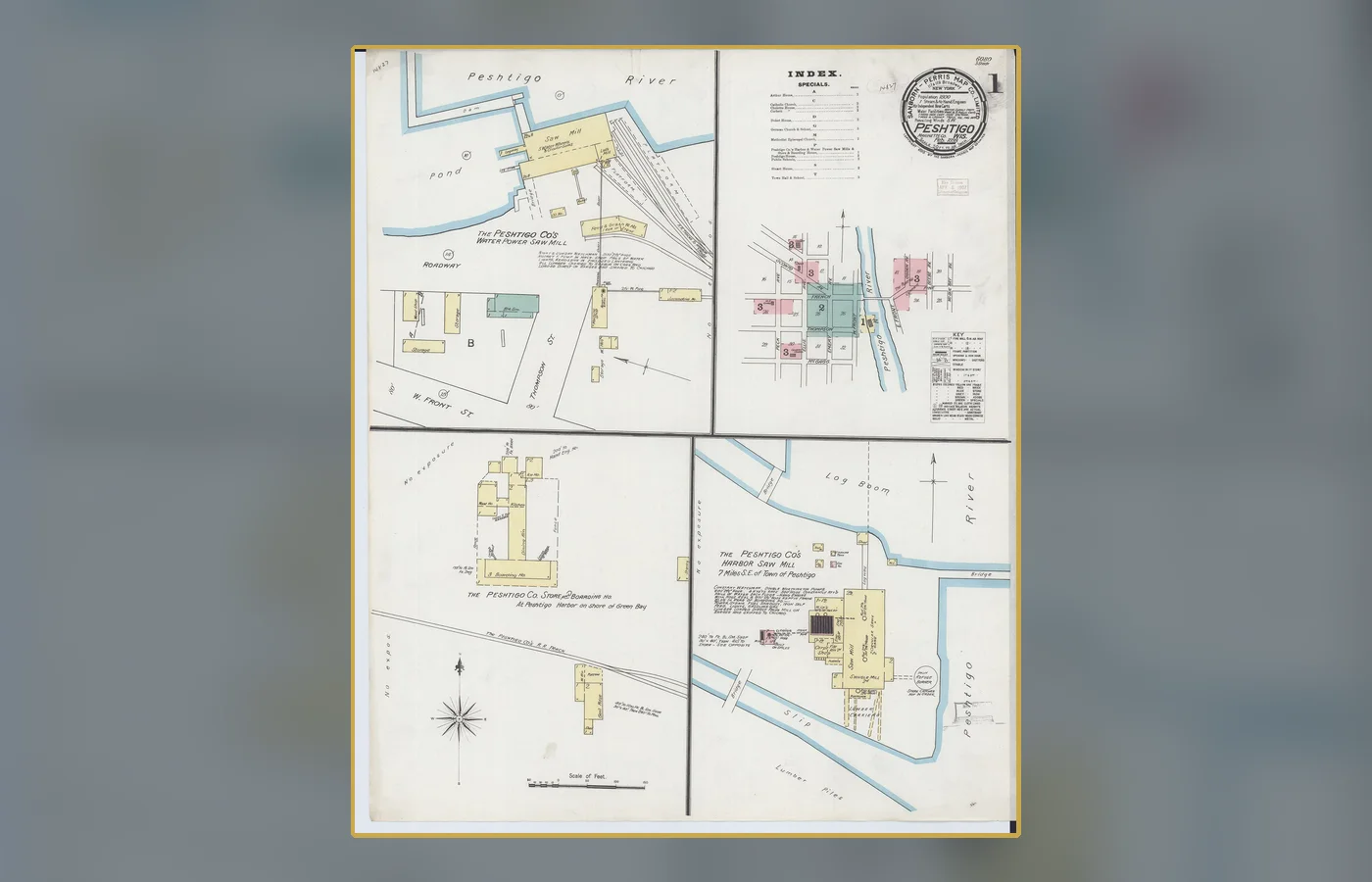
Peshtigo was a lumber town filled with combustible material. Roads and rail lines created corridors without creating safety. Once the fire intensified, embers crossed open ground faster than people could prepare, and every wooden surface became part of the fuel.
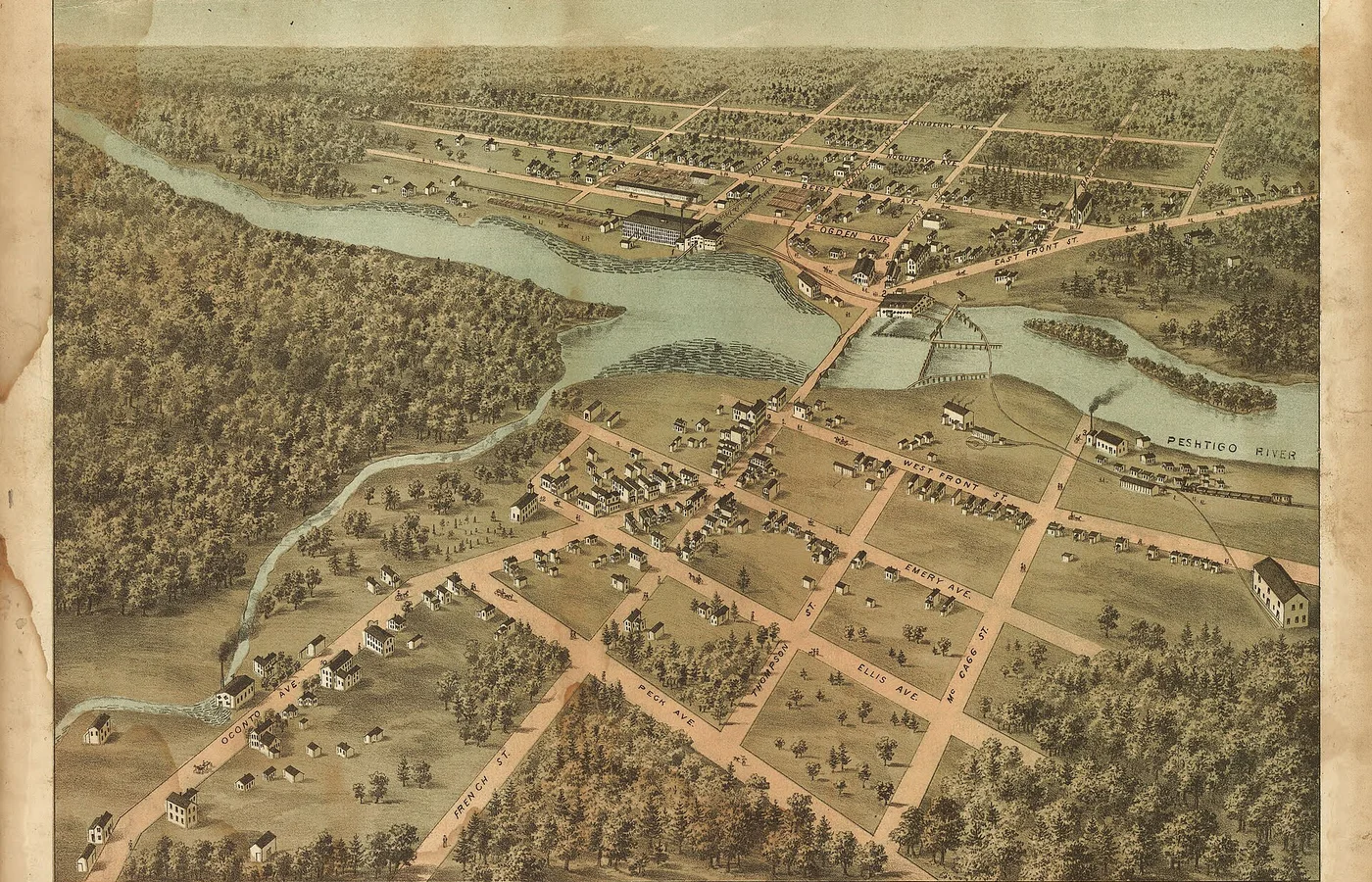
When a fire becomes a firestorm
Survivors described a roar, airborne debris, sudden darkness, and wind powerful enough to move objects. Intense heating can create rising columns that draw surrounding air inward, accelerating flame and producing fire-whirl behavior. The result was not simply a line of trees burning toward town but an atmosphere organized by combustion.
People fled to wells, open fields, and the Peshtigo River. Water saved some but did not guarantee survival; smoke, heat, falling debris, and panic remained dangerous. Animals and humans crowded together in the dark while buildings on both banks burned.
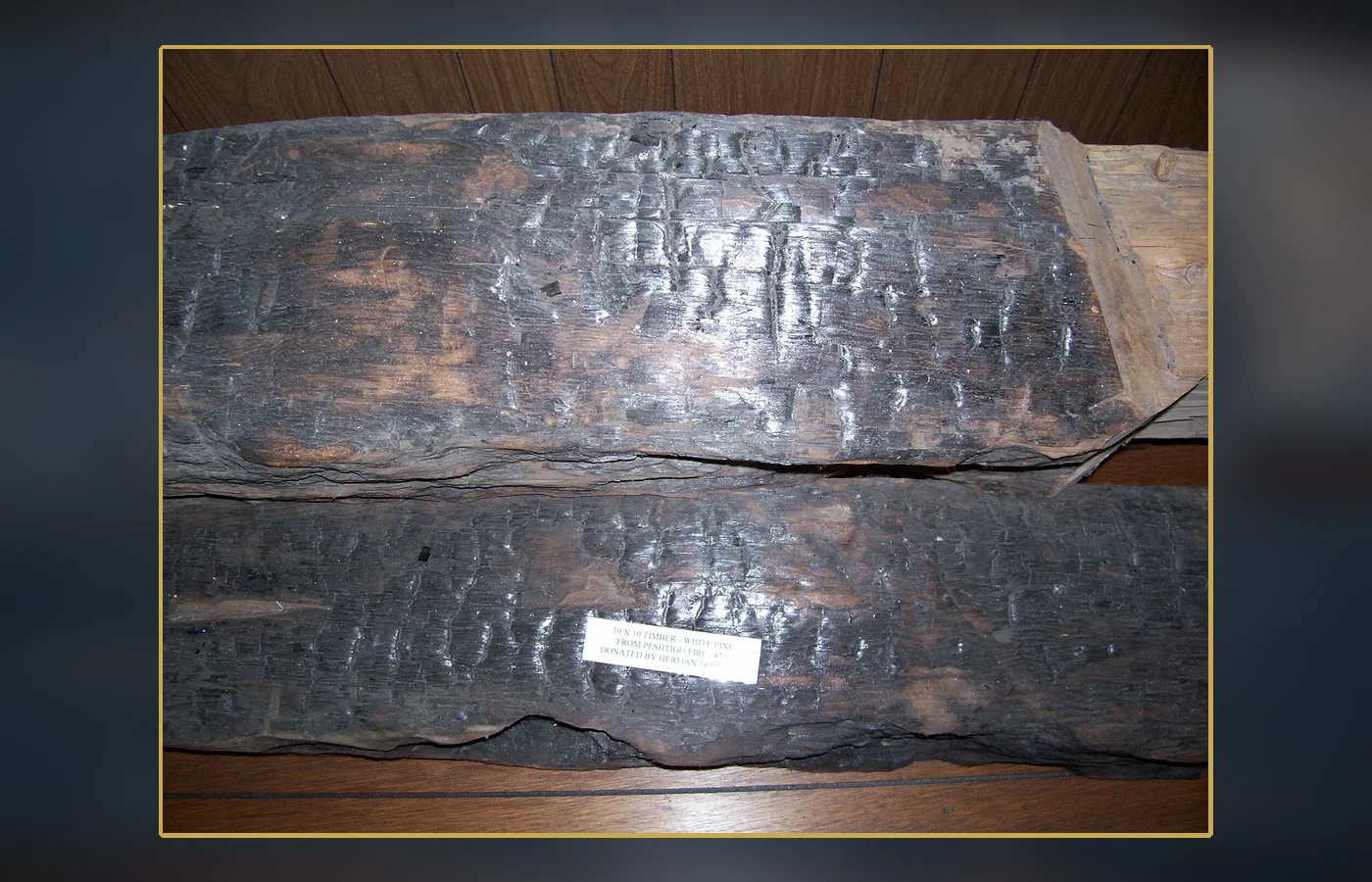
A death toll the fire made impossible to count
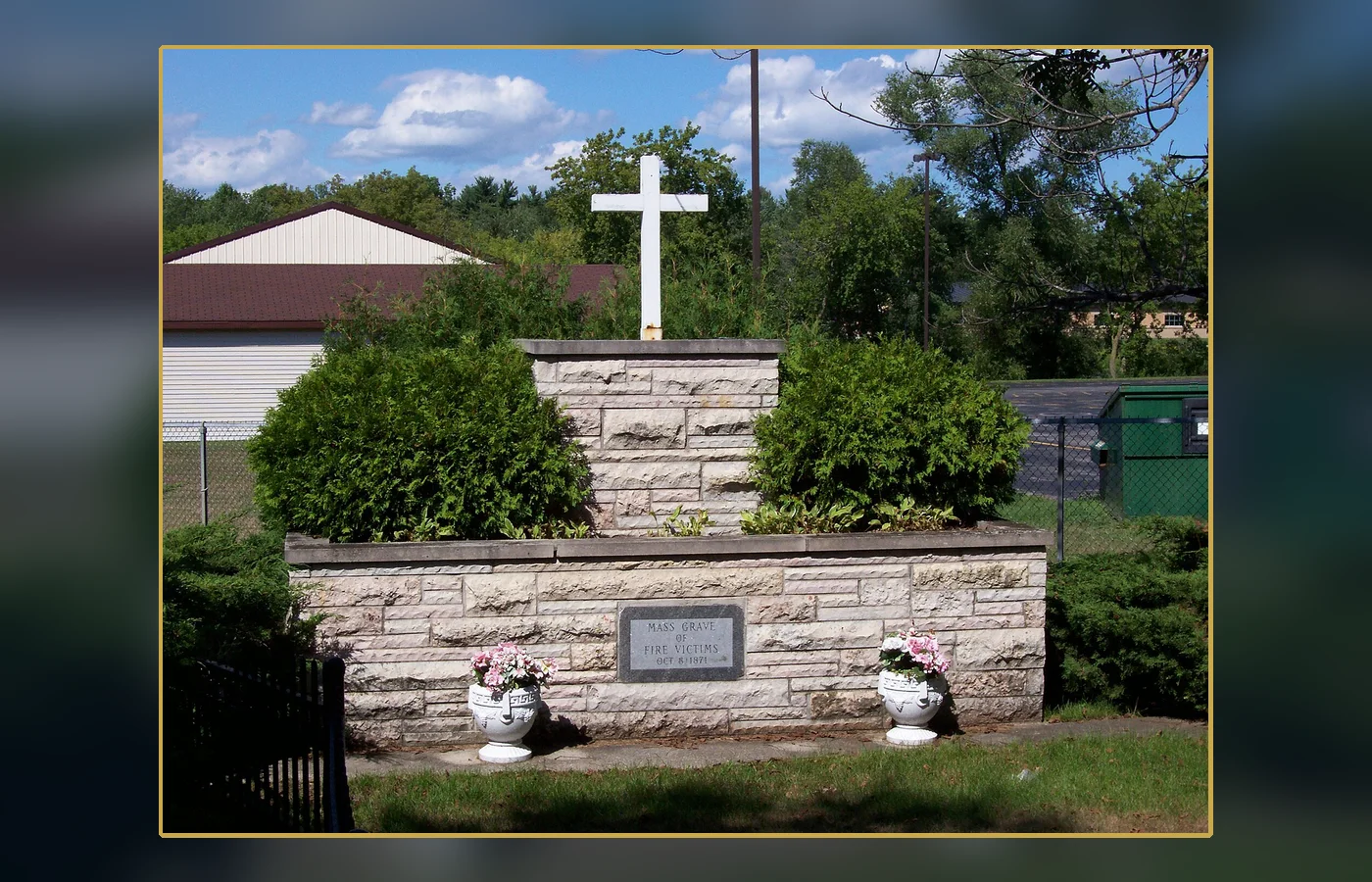
At least 1,200 deaths are commonly cited across the affected region, with higher estimates reaching around 2,500. Whole families died, travelers were unknown, remote communities kept incomplete records, and bodies could not always be identified. The fire destroyed the documents that would have made a precise count possible.
Responsible history therefore gives a range and explains its limits. The event remains the deadliest wildfire in recorded U.S. history without needing a falsely exact number. Uncertainty here is not weakness; it records who was absent from formal lists before disaster struck.
Why Chicago captured the national memory
The Great Chicago Fire began the same night. Chicago was a major city with dense press connections, nationally recognized buildings, and immediate political significance. Peshtigo's telegraph lines and roads were disrupted, and the rural scale was harder for outside newspapers to visualize.
Relief efforts overlapped, and news from Wisconsin arrived slowly. The coincidence produced a memory imbalance: Chicago's fire became a national symbol while the larger death toll to the north remained regional knowledge. Remembering Peshtigo does not require diminishing Chicago; it reveals how communication shapes disaster fame.
The comet story and the documented cause
A later theory proposed that fragments of Biela's Comet ignited fires across the Midwest. It persists because several major fires occurred that night. No physical evidence supports extraterrestrial ignition, and meteor fragments do not explain the drought, land-clearing fires, logging debris, and wind documented across the region.
The stronger explanation is cumulative and human-scaled: extreme dryness, abundant slash, routine burning, vulnerable settlements, and a wind event. Peshtigo was not unlucky in one instant. It was a landscape carrying months and years of risk into one night.
What the record supports—and what it does not
There is no evidence that a comet caused the Peshtigo Fire. Multiple fires across the region grew under the same drought and wind conditions. The exact death toll is also unknowable; a range is more honest than a sensational precise number.
Evidence ledger
- CONDITIONS — Drought and logging slash: The region held enormous dry fuel before October 8.
- WIND — Scattered fires merged: A weather system rapidly expanded existing burns.
- FIRESTORM — The fire shaped its own airflow: Heat and inflow intensified destructive behavior.
- DEATHS — At least 1,200: Destroyed records prevent a final exact count.
- MEMORY — Chicago burned the same night: Faster communication gave the urban disaster greater attention.
- MYTH CHECK — No comet evidence: Terrestrial fuel and weather explain the event.
How this reconstruction was checked
This reconstruction begins with Wisconsin Historical Society — Peshtigo Fire, National Weather Service — October 8, 1871 fires. Those records establish the dates, people, objects, and institutional findings used above. Later retellings are useful only when they can be traced back to that record. A repeated anecdote is not treated as independent confirmation simply because it appears on several websites.
The unresolved question is kept separate from the documented mechanism. In this case, the evidence supports the following boundary: There is no evidence that a comet caused the Peshtigo Fire. Multiple fires across the region grew under the same drought and wind conditions. The exact death toll is also unknowable; a range is more honest than a sensational precise number. The purpose of that boundary is not to flatten the mystery. It prevents a vivid but unsupported detail from displacing the evidence that makes the story worth reading.
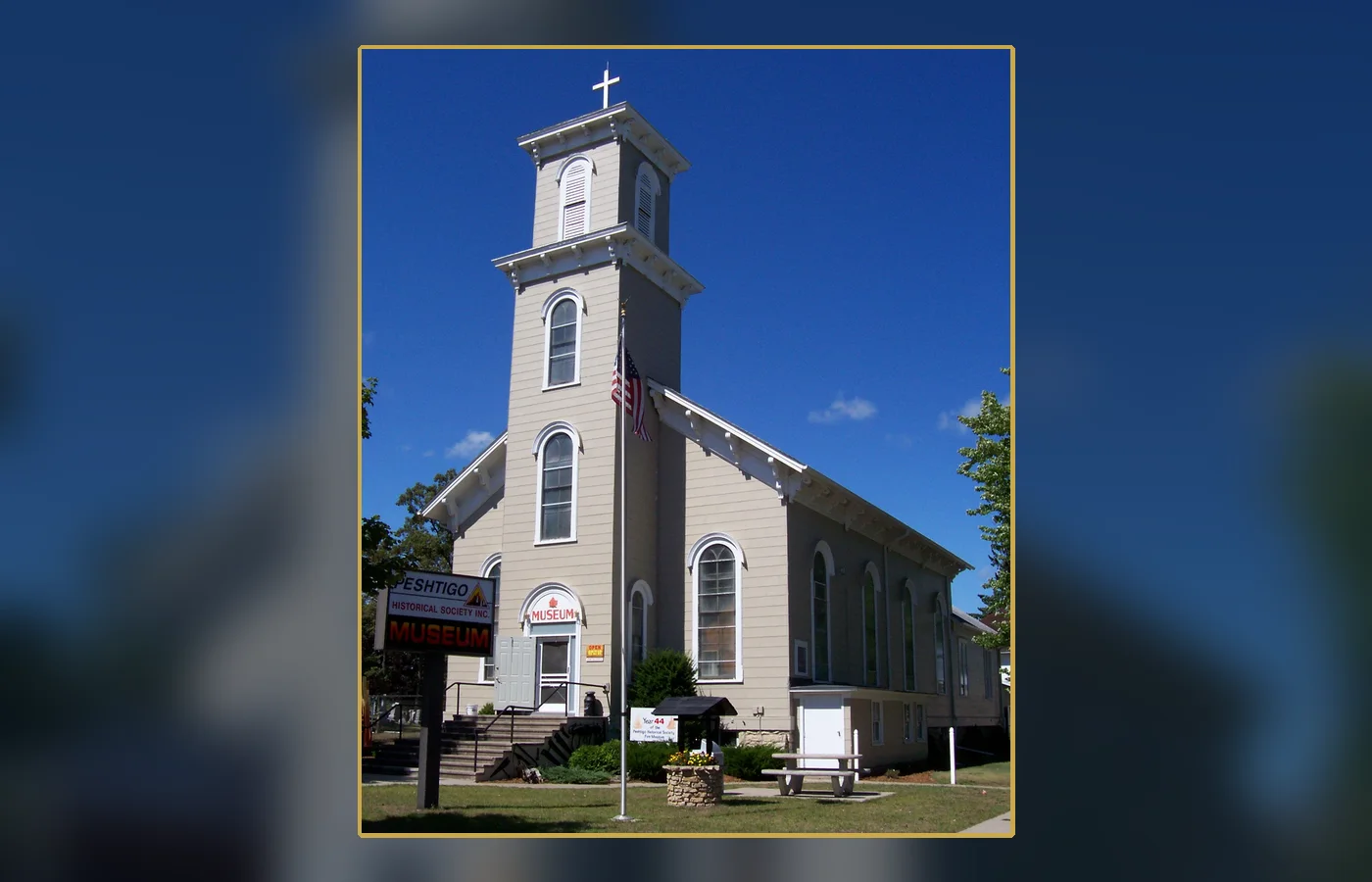
Every visual is either a historical photograph, document, map, object, site image, or an explicitly labeled contextual comparison. Captions identify the source and license. No AI reconstruction and no text-poster image is presented as historical evidence; the featured image is derived directly from the first archival visual without a headline overlay.
Why this story matters
Peshtigo explains both fire behavior and memory behavior: how a firestorm forms, and how a catastrophe can be eclipsed when another city owns the communications network and the national imagination.
Continue in the archive
- 1816, the Year Without a Summer: How Tambora Changed Weather Around the World
- New England's Dark Day: When Noon Required Candles
- The Great Smog of London
Sources and further reading
Editorial note: Lore & Archive separates contemporary records, later institutional synthesis, and unresolved inference. When sources disagree or the archive is incomplete, the uncertainty is stated rather than converted into a dramatic fact.