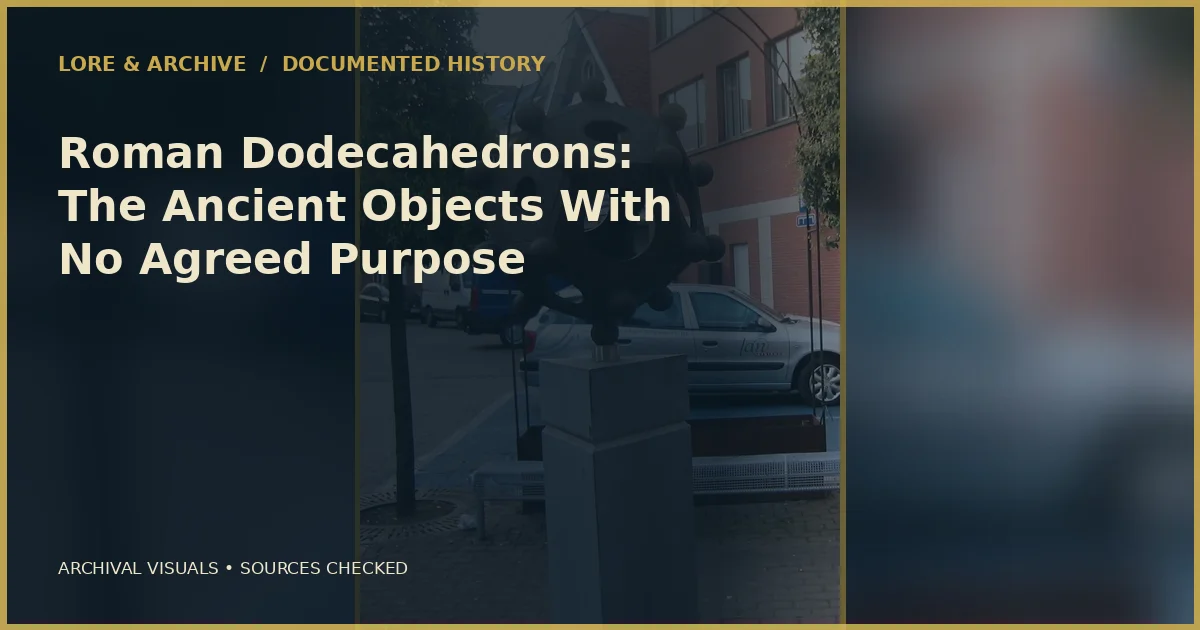
Each face has a circular opening, each corner a knob, and almost every proposed function has a modern demonstration. The problem is proving what Romans themselves did with them.
Archive record
- Material: copper alloy
- Date: broadly second to fourth centuries CE
- Known examples: more than 100
- Distribution: concentrated in northwestern Roman provinces
An object that refuses to name itself
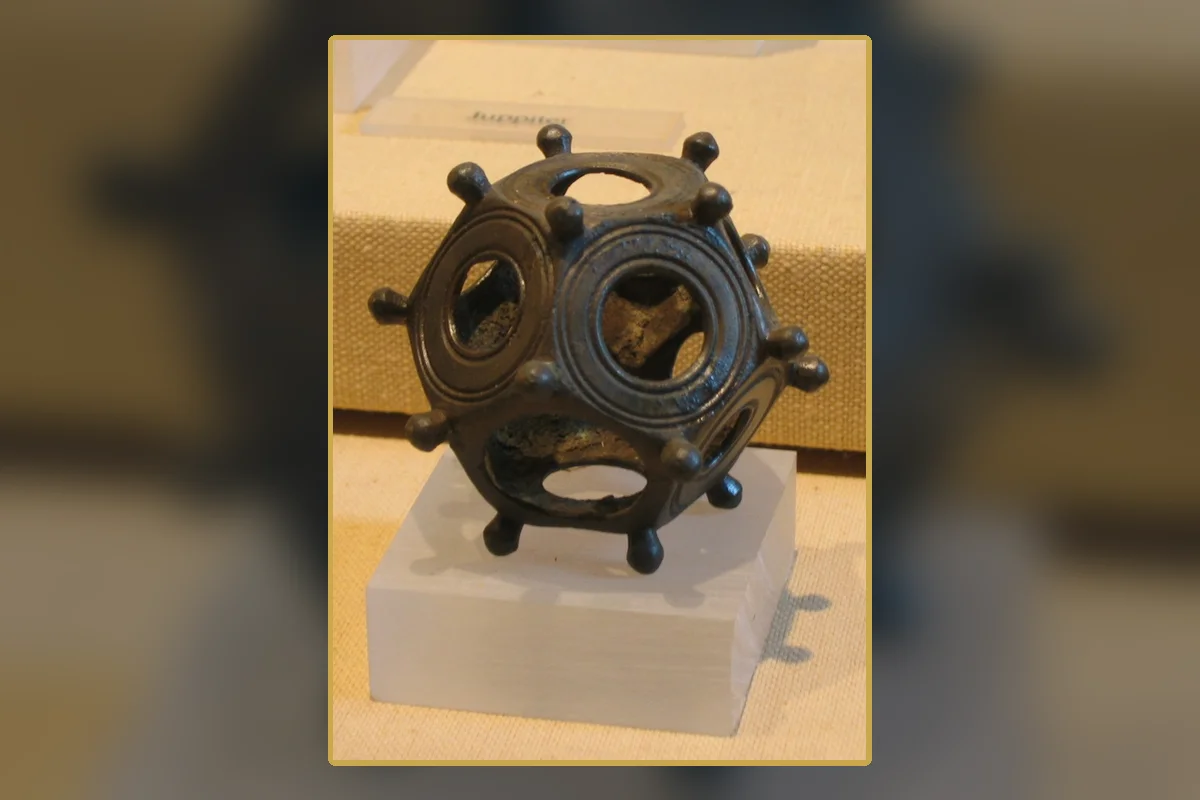
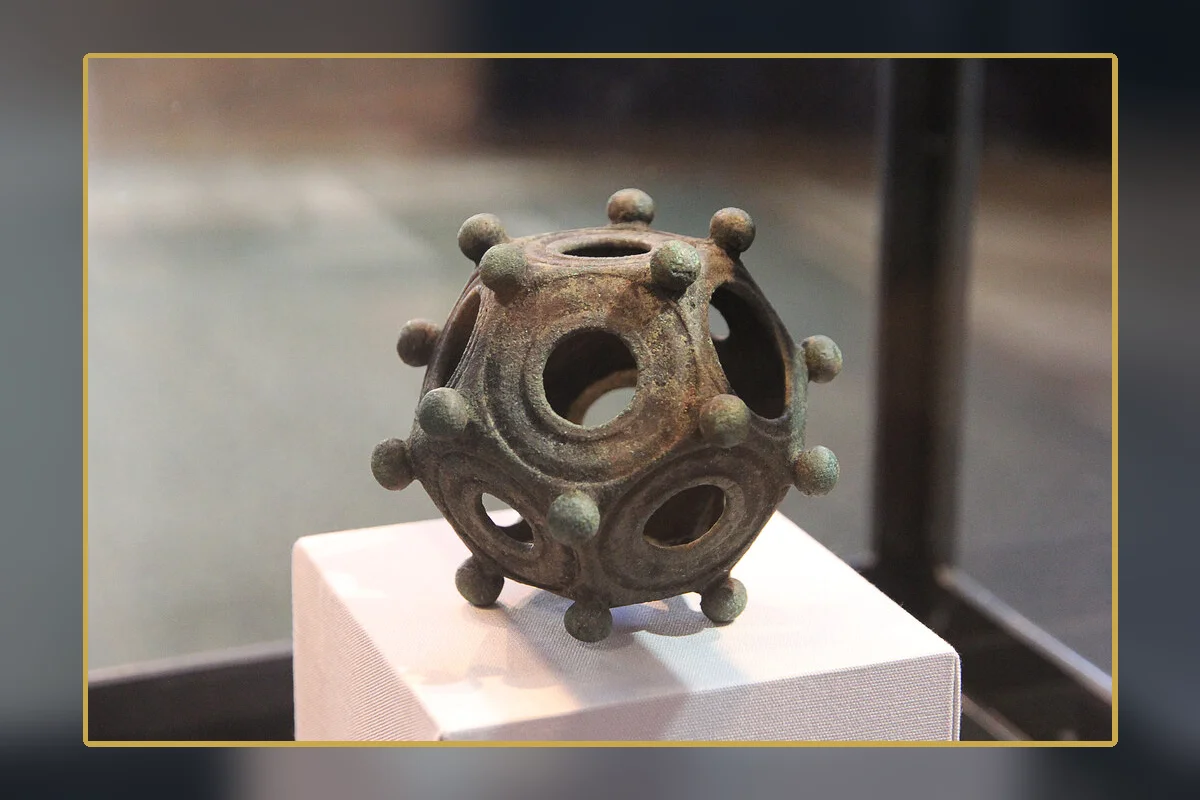
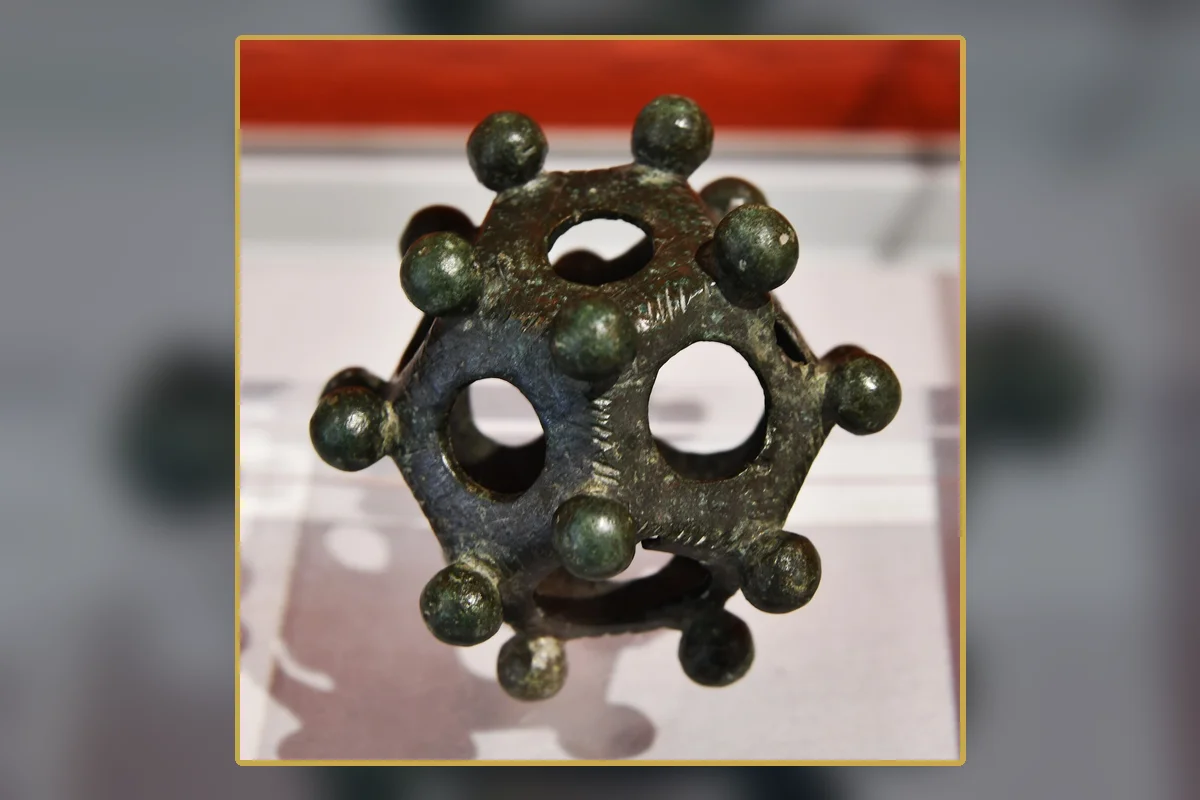
A Roman dodecahedron is a hollow cast object with twelve pentagonal faces. Circular holes of different sizes pierce the faces, and small knobs project from the twenty corners. Examples vary in dimensions and decoration. They show skill and deliberate manufacture, but they do not carry labels, instructions, or inscriptions explaining their role.
No surviving Roman text is generally accepted as describing them, and no unambiguous ancient image shows one in use. That absence separates the dodecahedrons from tools whose shapes can be matched to written inventories or scenes. Archaeologists must reason from material, wear, findspot, and comparison.
A map that stops at the empire's edges
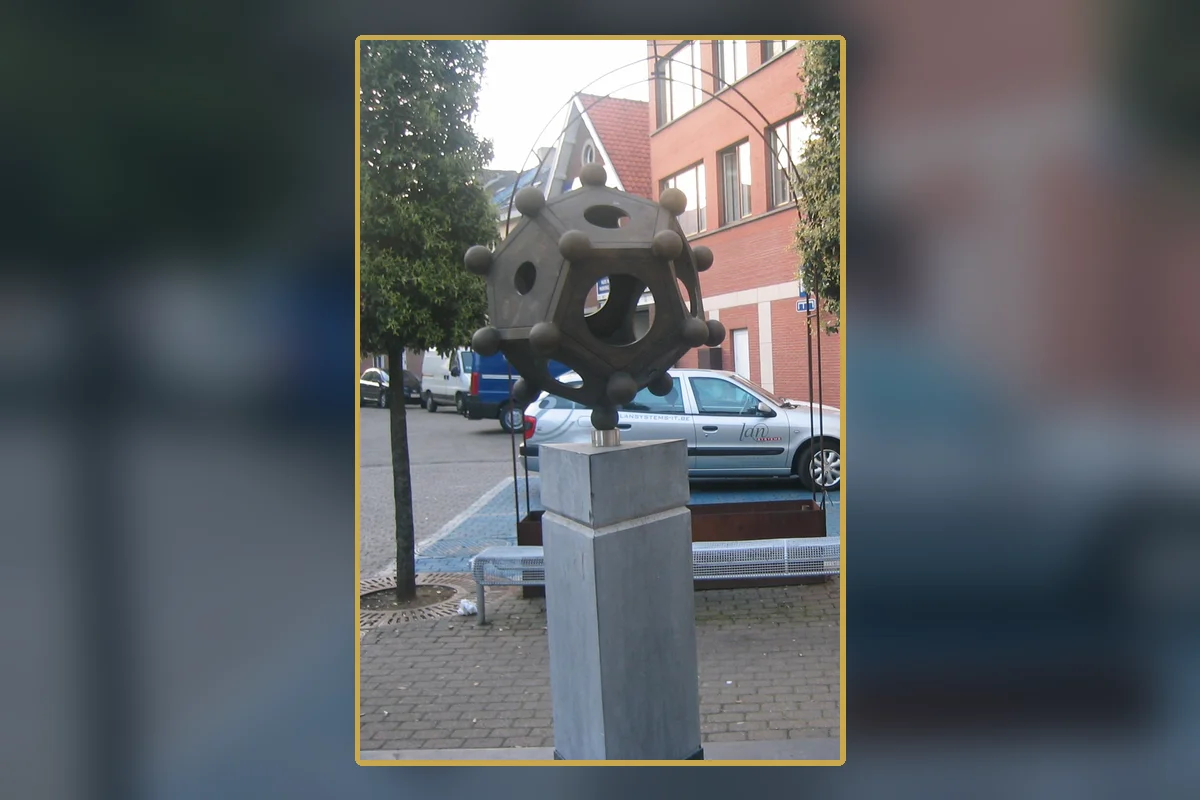
Finds cluster in Britain, Gaul, Germania, and neighboring northwestern regions rather than appearing evenly across the Roman world. Few or none are known from the Mediterranean heartlands where Roman artifacts are abundant. The distribution suggests a regional practice within the empire, perhaps connected to frontier communities or local beliefs.
Context varies. Some objects have been found in forts, settlements, graves, hoards, or less secure circumstances. A discovery with a carefully excavated layer is more informative than an antiquarian find whose original location was poorly recorded. The growing total increases the sample without automatically producing a decisive context.
Why the holes attract measuring theories
Pairs of differently sized openings invite the eye to align them. Modern experimenters have proposed rangefinders, survey tools, pipe gauges, candleholders, calendars, or devices for estimating the sun's angle. Some reconstructions can perform the advertised task. That proves a shape can be used that way, not that Romans designed it for that purpose.
A practical instrument usually benefits from standardization, scales, repeated dimensions, or recognizable wear. Dodecahedrons vary, and no accepted measurement system ties their openings together across examples. Knobs can help an object stand in several orientations, but they can also be decorative or symbolic.
The famous glove-knitting demonstration
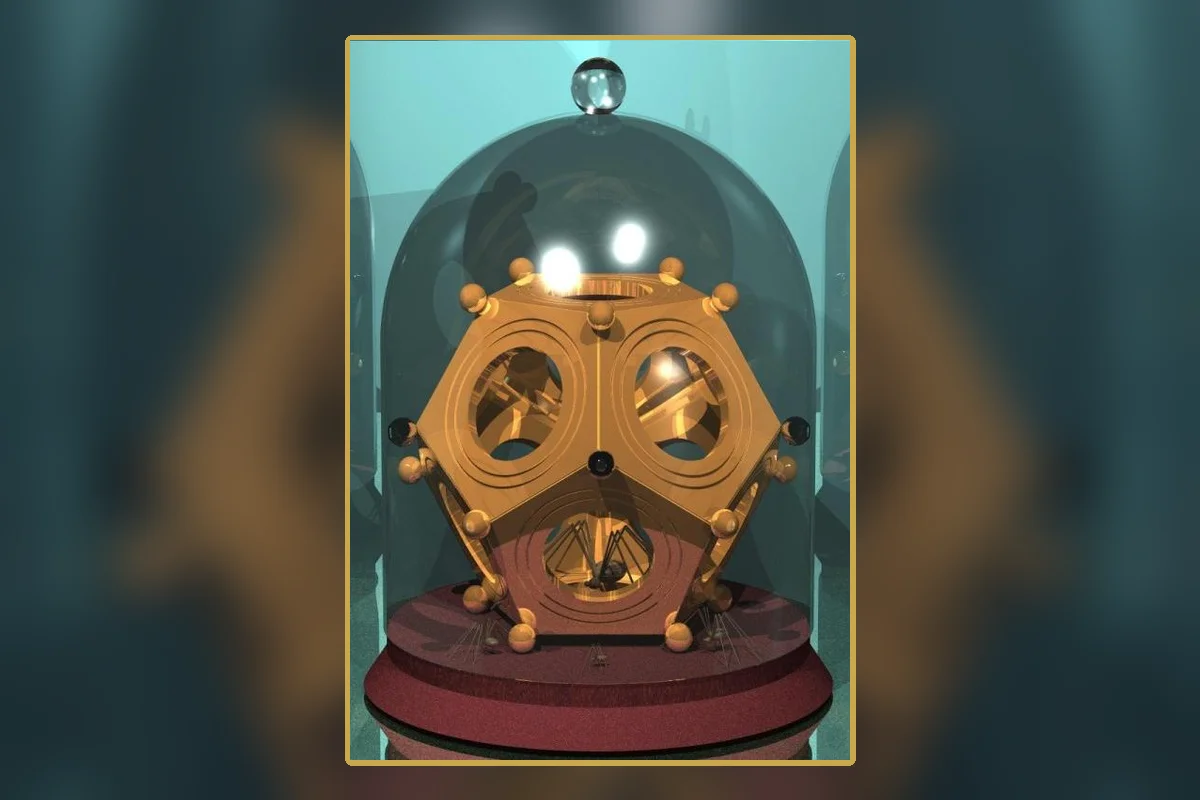
Videos show yarn looped around the knobs to produce finger-shaped tubes, leading to the claim that the objects were knitting tools. The demonstration is ingenious and visually persuasive. Yet knitting in the modern sense is not securely evidenced in Roman northwestern Europe at the relevant date, and a valuable cast-bronze device would be an unusual solution to a simple textile task.
Experimental archaeology is strongest when it predicts traces: wear patterns, residues, matching textile evidence, or a relationship between hole sizes and finished products. Without those independent tests, the glove theory remains a modern use discovered for an ancient shape.
Ritual, status, or skilled display?
A religious or divinatory function is attractive because it can explain regional distribution and lack of ordinary tool marks. Objects found with coins or in hoards may have held value beyond utility. But 'ritual' can become a label archaeologists apply when a practical function is unknown; it should not be treated as a solved category.
The casting itself may have displayed technical mastery. Hollow, thin-walled geometry with many openings is difficult to make. The dodecahedron could have been a prestige object, teaching piece, symbol of affiliation, or instrument whose practical and ceremonial meanings overlapped. Ancient categories need not match the modern divide between tool and sacred object.
What a real solution would require
A persuasive identification should explain the holes, knobs, material, variation, geographic concentration, and archaeological contexts at once. It should generate evidence that can be checked on multiple examples. One inscription, workshop assemblage, preserved residue, or image of use could transform the field.
Until such evidence appears, 'unknown' is not a failure. It is the accurate description of a bounded problem. We know when and where the objects circulated, how they were made, and what they are not documented as doing. The mystery lives in the missing link between form and practice.
What the record supports—and what it does not
There is no accepted proof that Roman dodecahedrons were glove knitters, calendars, rangefinders, candlesticks, or alien technology. Modern demonstrations show possible uses, not historical identity. A successful theory must fit archaeological context and leave predicted traces across many objects.
Evidence ledger
- FORM — Twelve faces, twenty knobs: Circular openings of varied size pierce a hollow copper-alloy body.
- DATE — Roman imperial centuries: Examples are generally dated from the second through fourth centuries CE.
- MAP — A northwestern concentration: Finds cluster in Britain, Gaul, Germania, and nearby provinces.
- EVIDENCE GAP — No accepted instruction survives: Texts and images have not securely identified the object's use.
- MYTH CHECK — A demonstration is not proof: Making a glove or measurement today does not establish Roman intention.
- TEST — One theory must explain the whole object: Material, variation, findspots, wear, and distribution all need to align.
How this reconstruction was built
For dodecahedrons, secure excavation context carries more weight than a modern demonstration. A proposed use must explain regional distribution, material cost, variation, wear, openings, and knobs across many examples. Showing that one object can knit a tube or estimate a distance establishes capability, not ancient intention. The absence of an accepted text or image keeps the function open while archaeology steadily narrows where and when the practice belonged.
To audit the account, open the source links below and compare dates, quantities, and the wording used by the institutions themselves. Look for the earliest recoverable record, then distinguish it from later summaries created after the story became famous. The five visuals in this article are archival photographs, maps, documents, objects, or clearly identified editorial diagrams selected to illuminate the surviving record. Each caption identifies its source and rights information; no reconstruction is presented as a historical photograph. That transparency is part of the Lore & Archive method.
Why this story matters
These artifacts teach a powerful rule: resemblance is a hypothesis generator, not a conclusion. Their value lies in the disciplined gap between 'this object can do X' and 'Romans made it to do X.'
Continue in the archive
- D. B. Cooper: The Hijacking Evidence That Survived the Legend
- Vasa: Why Sweden's Great Warship Sank on Its First Voyage
- The Great Molasses Flood Was Preventable
Sources and further reading
- English Heritage — Roman dodecahedron exhibition
- University of Nottingham — Norton Disney dodecahedron
Editorial note: Lore & Archive distinguishes contemporary evidence, later institutional synthesis, and unresolved inference. Where sources disagree or the record is incomplete, the uncertainty is stated rather than converted into a dramatic fact.