
Just after midnight on January 24, 1961, a B-52 bomber broke apart over farmland in North Carolina. Its wreckage scattered across rural Wayne County. Three airmen died. And from the disintegrating aircraft fell two Mark 39 thermonuclear bombs—one of them descending beneath a parachute almost as if it had been intentionally released.
No nuclear detonation occurred. But declassified technical reports show why the Goldsboro accident became one of the Cold War’s most disturbing near-misses: in one weapon, the breakup of the aircraft accidentally reproduced much of the sequence designed to prepare the bomb for use. A single arm/safe switch remained in the safe position and interrupted that chain.

The archive record
- Date: January 24, 1961
- Place: Rural Wayne County, northeast of Goldsboro, North Carolina
- Aircraft: A U.S. Air Force B-52G carrying two Mark 39 Mod 2 thermonuclear bombs
- Human cost: Three of the eight crew members died; five survived
- Outcome: Neither weapon produced a nuclear explosion
- Central finding: A declassified Sandia analysis concluded that an arm/safe switch prevented one bomb from completing its firing sequence
Why a nuclear-armed bomber was in the air
The crash occurred at the height of the Cold War, only days after John F. Kennedy became president. Strategic Air Command kept bombers ready to respond if a Soviet attack destroyed bases on the ground. Some alert missions placed nuclear weapons in the air, reducing the chance that the United States’ retaliatory force could be eliminated in a first strike.
That strategy transferred part of the risk from enemy action to ordinary flight. Aircraft had to remain aloft for long periods, refuel in the air, and carry weapons through weather, fatigue, mechanical trouble, and human decisions. Goldsboro was the moment those risks converged over an American community.
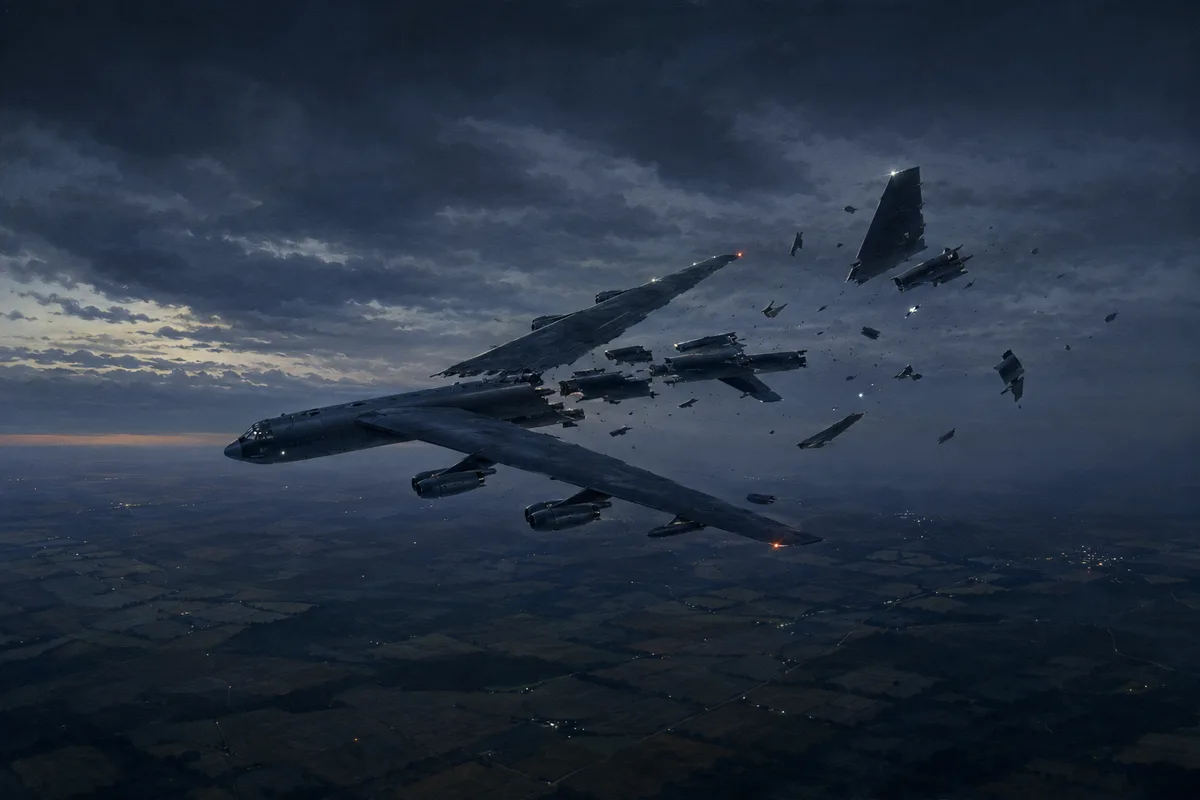
A fuel leak becomes a structural emergency
The B-52, based at Seymour Johnson Air Force Base, developed a serious fuel leak in its right wing during an airborne alert flight. The crew was directed to return. As the aircraft descended and prepared to land, the damage worsened. The right wing failed, control was lost, and the bomber began to break apart several thousand feet above the ground.
The aircraft carried eight men. Five escaped and survived. Three did not. Any account centered only on the bombs risks turning the crew into background detail, but the crash was already a fatal aviation disaster before the weapons struck the earth.

Two bombs, two very different falls
The two Mark 39 weapons did not behave alike after leaving the aircraft. That difference is essential to understanding what nearly happened—and what did not.
Weapon 1: the parachute opened
One bomb separated from the aircraft high enough for its parachute to deploy. The breakup pulled arming lanyards in a way that resembled a normal release. Internal power sources activated. A timer ran. The weapon descended largely intact and came to rest upright in the ground, its parachute hanging in nearby trees.
According to Sandia Corporation’s February 1961 safety analysis, the sequence stopped at the T-249 arm/safe switch. It remained in the safe position and prevented electrical energy from continuing to the components that would initiate detonation. The weapon’s high explosive did not fire, and there was no nuclear yield.
The terrifying part of Goldsboro is not that every safety feature failed. It is that an accident advanced so far through a sequence built for deliberate use.
Weapon 2: the parachute did not open
The second bomb left the B-52 at a lower altitude. Its parachute failed to deploy, and it struck the waterlogged ground at high speed, breaking apart and driving components deep into the soil. Its firing sequence had begun, but it had not progressed as far as the first weapon’s sequence before impact. Again, no nuclear detonation occurred.
The contrast is counterintuitive. The weapon that landed more gently created the more alarming technical sequence because the parachute deployment and associated mechanisms imitated conditions the bomb had been designed to recognize.
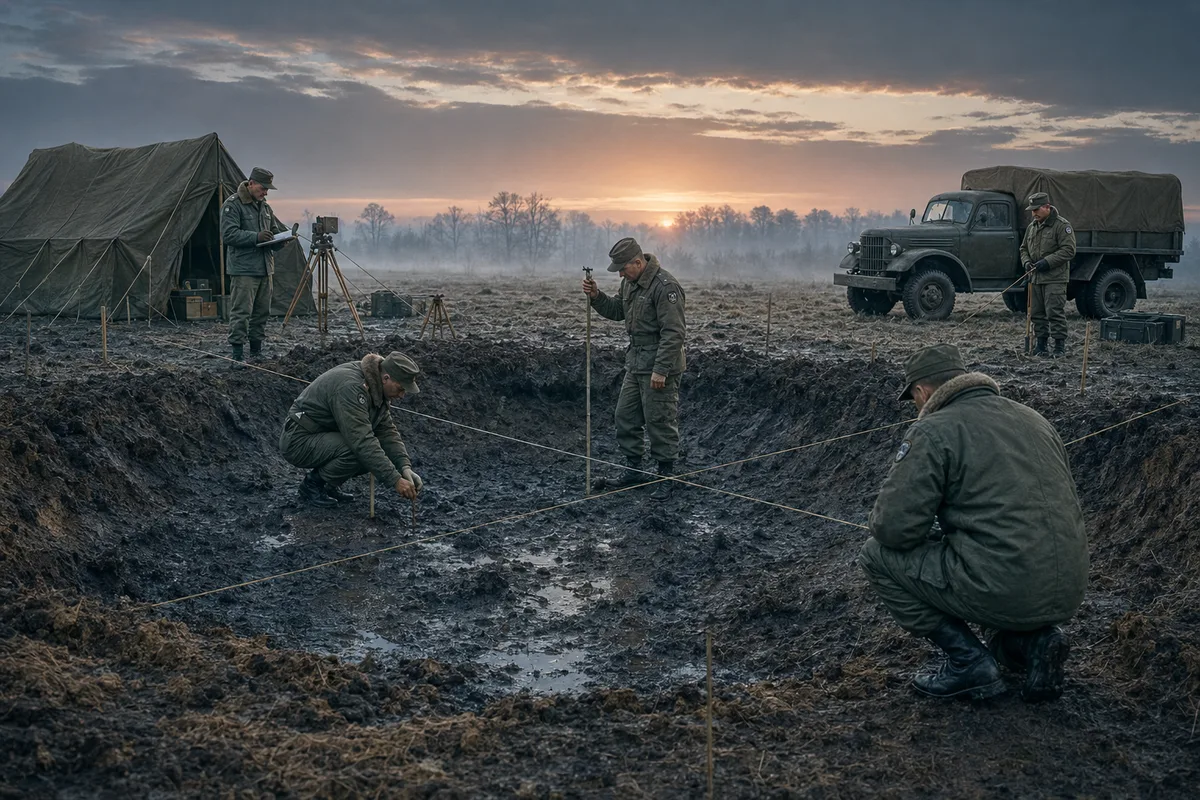
How close was Goldsboro to a nuclear explosion?
Popular accounts often say that “one switch saved North Carolina.” The declassified record supports the core of that statement, but it deserves careful wording.
Sandia’s accident analysis compared the intended detonation sequence with what happened inside each weapon. For the parachute-retarded bomb, several steps occurred: safing pins were removed, the low-voltage thermal battery activated, the parachute deployed, and the timer completed its run. The report identified the arm/safe switch’s safe setting as the condition that prevented the sequence from proceeding to detonation.
That does not mean a nuclear explosion was mathematically guaranteed if the switch had moved. Nuclear weapons are complex systems, and retrospective certainty can exceed what an accident report proves. It does mean the bomb encountered an abnormal environment and still passed through enough intended steps that safety engineers treated the event as a major warning.
The yield was enormous—but often exaggerated
The Sandia report describes each weapon as having a yield of roughly four megatons. That is millions of tons of TNT equivalent. Some later retellings assign the bombs far larger yields, including figures of 20 megatons or more. Those numbers do not match the technical documentation released for the Mark 39 weapons involved in this crash.
No estimate can responsibly reconstruct a single casualty total for an explosion that did not happen. The result would have depended on whether the detonation was an airburst or ground burst, its exact location and height, weather conditions, and the distribution of people. “It would have destroyed the entire East Coast” is not a historical finding. The documented truth—that a multi-megaton device moved deep into its arming sequence over North Carolina—is serious enough.
What the accident changed
Goldsboro became part of a broader reckoning with the safety of early sealed-pit nuclear weapons. In this design generation, the nuclear material remained assembled in the weapon rather than being inserted only shortly before use. Operational readiness increased, but so did the importance of ensuring that fire, impact, electrical faults, or accidental release could not imitate the conditions of an authorized attack.
The U.S. Air Force Safety Center describes accidents such as Goldsboro as catalysts for a “safety renaissance.” Later systems added stronger isolation of critical components, environmental sensing, coded controls, and procedures requiring more than one person for sensitive actions. These improvements did not make risk disappear. They reflected a hard lesson: a weapon should not be able to interpret the violent destruction of its carrier as a valid command.
What is documented—and what is not
| Claim | Assessment |
|---|---|
| Two nuclear weapons fell from a B-52 near Goldsboro. | Documented. |
| Three crew members died and five survived. | Documented. |
| One weapon’s parachute opened and much of its arming sequence activated. | Documented in the Sandia analysis. |
| An arm/safe switch prevented that sequence from continuing. | Documented in the Sandia analysis. |
| North Carolina was certain to be destroyed if not for one ordinary household-style switch. | Misleading. The switch was a specialized weapon component, and counterfactual effects cannot be known with certainty. |
| The bombs exploded conventionally or produced a nuclear yield. | False. |
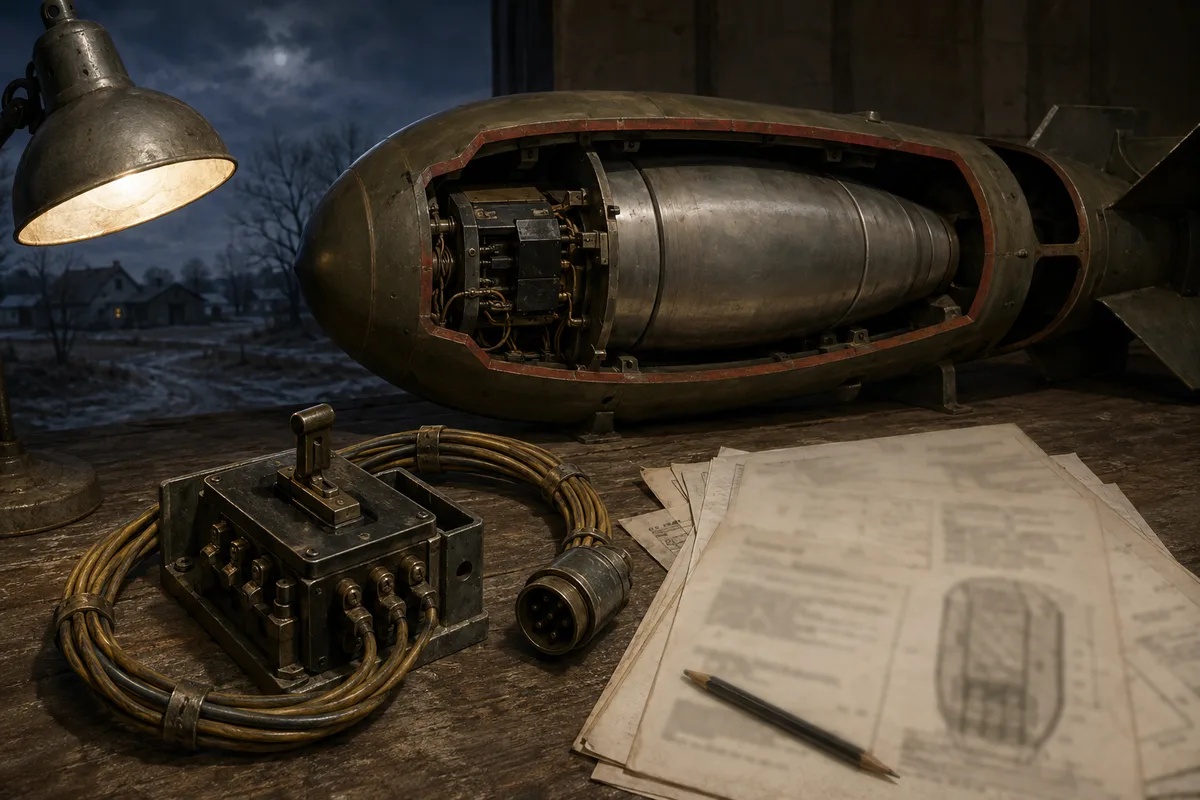
The warning beneath the sensational headline
Goldsboro is often told as a story of astonishing luck. It is also a story about systems. An aircraft designed to remain ready for war suffered a structural failure. A bomb designed to recognize an intentional release encountered several of those conditions by accident. A safety mechanism did what it was supposed to do, but only after other parts of the system had already moved toward catastrophe.
The photograph of the intact weapon in the field is unforgettable because it collapses the Cold War’s abstract danger into a local scene: mud, trees, a parachute, and a machine built to release more energy than any conventional disaster. The bomb did not detonate. The warning did.
Continue in the archive
- The Night Niagara Falls Went Silent
- Lake Nyos: The Night an Invisible Cloud Killed More Than 1,700 People
- The Great Molasses Flood Was a Preventable Industrial Disaster
Sources and further reading
- Sandia Corporation, “Analysis of the Safety Aspects of the MK 39 MOD 2 Bombs,” February 1961
- National Security Archive, declassified nuclear-weapons safety records
- North Carolina Department of Natural and Cultural Resources, “Broken Arrow Incident in Wayne County”
- U.S. Air Force Safety Center, history of nuclear-weapons safety
Editorial note: This account uses the declassified Sandia accident analysis as the primary technical source. Counterfactual blast maps and unsupported casualty estimates have been excluded.