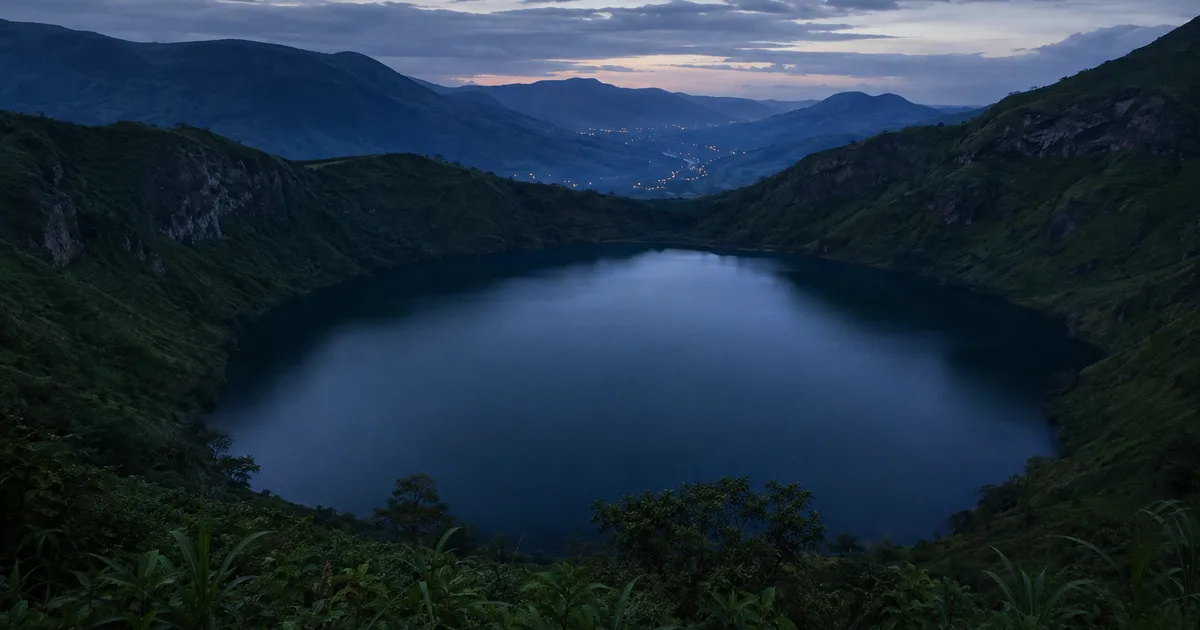
On the evening of August 21, 1986, Lake Nyos released a disaster no one nearby could see. There was no wall of lava and no ash-filled sky. A vast volume of carbon dioxide escaped from the deep lake, spilled over the rim of its crater, and flowed downhill through valleys in northwestern Cameroon. By morning, more than 1,700 people and thousands of animals were dead.
The event was so unfamiliar that its cause was not immediately obvious. Survivors had collapsed without warning. Fires had gone out. Entire compounds were silent. Investigators eventually established that the killer was not a conventional volcanic eruption or a man-made poison. It was a gas people exhale every day—released in a concentration high enough to replace the air they needed to breathe.
The archive record
- Date: August 21, 1986
- Place: Lake Nyos, northwestern Cameroon
- Hazard: A sudden release of carbon dioxide from deep lake water
- Human cost: More than 1,700 deaths; the commonly cited detailed count is 1,746
- Animal losses: About 3,500 livestock, as well as wildlife
- Cause of the initial release: Still not conclusively identified
- Prevention: Engineers later installed pipes to remove dissolved gas in a controlled way
A crater lake built to store gas
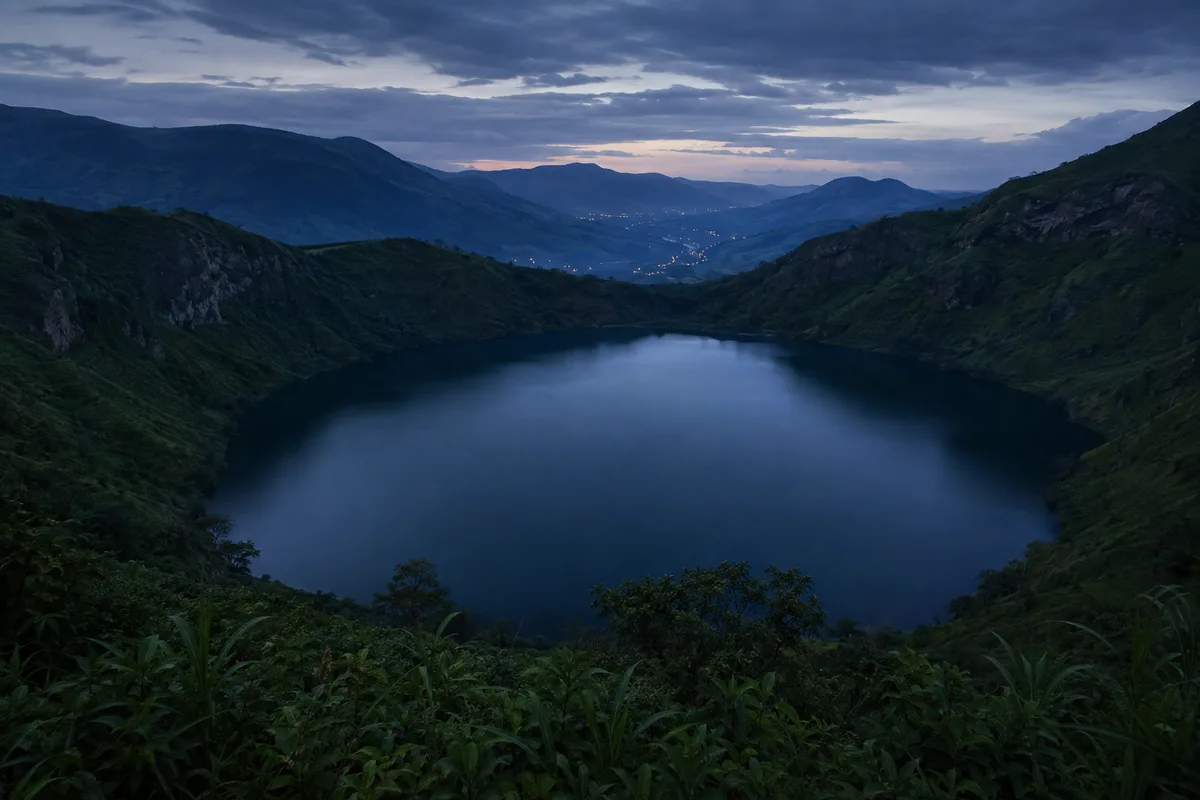
Lake Nyos occupies a volcanic crater known as a maar in the Cameroon Volcanic Line. Magma remains deep below the region. Carbon dioxide originating at depth moves upward through rock and groundwater, then enters the bottom of the lake.
In many lakes, seasonal temperature changes mix surface and deep water, allowing dissolved gases to escape gradually. Lake Nyos is deep, tropical, and strongly layered. Its colder, denser bottom water can remain isolated beneath warmer layers. At depth, high water pressure allows that water to hold far more carbon dioxide—much as pressure keeps gas dissolved inside a sealed bottle of soda.
The analogy is useful but incomplete. Lake Nyos was not a bottle with a cap, and the gas was not produced by carbonation machinery. It entered naturally over time, accumulating in a stable water column that concealed the danger from anyone looking at the surface.
What happened on August 21
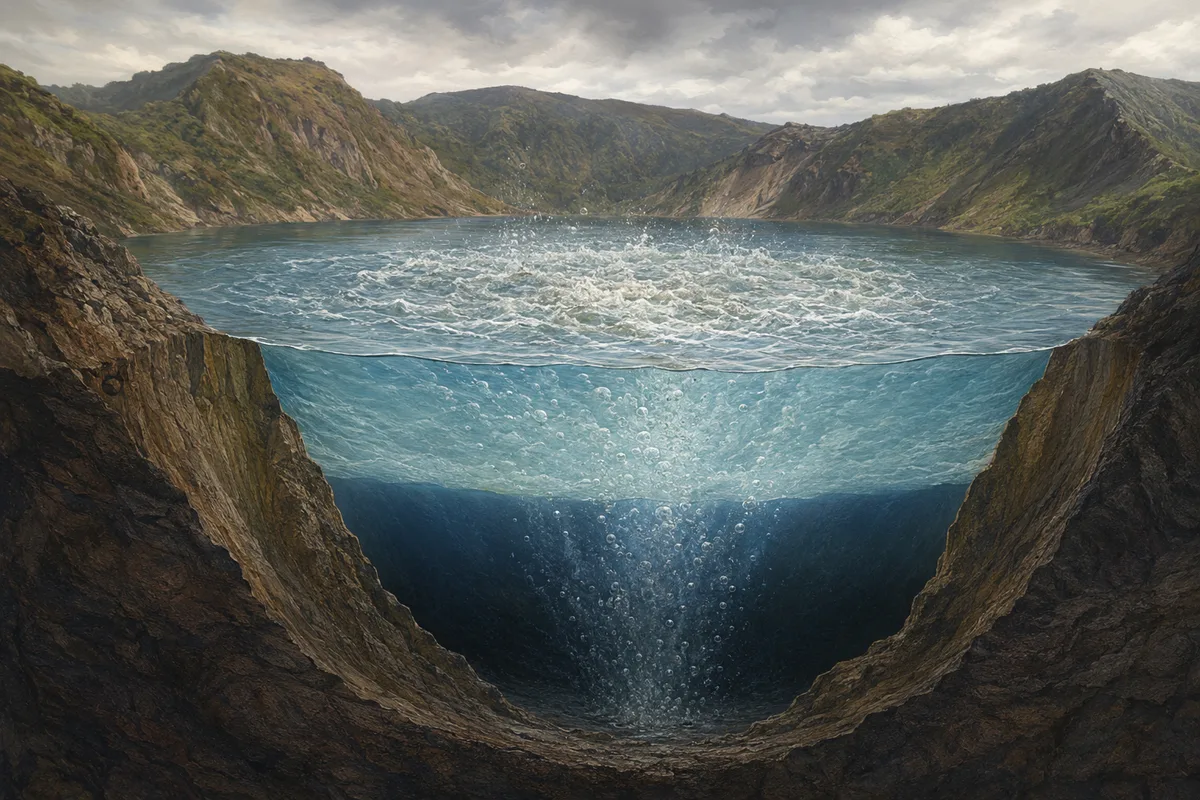
Something disturbed the lake’s balance. Gas-rich deep water began to rise. As it moved upward, pressure decreased and carbon dioxide came out of solution as bubbles. Those bubbles made the rising mixture more buoyant, drawing more deep water upward and releasing still more gas. A small disturbance could therefore accelerate into a self-sustaining outburst.
The release was violent enough to send water over a high promontory near the lake. But the deadliest part moved almost invisibly. Carbon dioxide is colorless and odorless. In concentrated form it is denser than ordinary air, so the cloud followed low ground and valley channels away from the lake.
Where the cloud became concentrated, it displaced breathable air. People and animals lost consciousness rapidly. The gas reached villages including Nyos, Cha, Kam, and Subum. USGS summaries place the human toll at about 1,700 and livestock deaths at approximately 3,500. Other scientific and historical accounts give the more specific figure of 1,746 people.
Lake Nyos was deadly not because carbon dioxide is exotic, but because a familiar gas accumulated where no one could see it and moved where people lived.
Why there was no obvious warning
A conventional explosive eruption announces itself through heat, ash, rock, and sound. A carbon-dioxide cloud can leave buildings standing. It does not stain the air a visible color. It can extinguish flames and suffocate living things while producing little damage to structures.
That mismatch initially complicated the investigation. Some victims had injuries or burns, but later medical inquiry found that many marks had secondary causes: people fell onto fires or hot surfaces, or remained unconscious under pressure for long periods. The pattern of deaths, chemical measurements, and the lake’s water structure led scientific teams to carbon dioxide.
Lake Monoun, another Cameroonian crater lake, had killed 37 people in a smaller gas release in 1984. At the time, the mechanism was still being debated. Nyos demonstrated the hazard on a devastating scale and forced researchers to understand the two events as part of the same natural process.
What triggered the outburst?
This is where a responsible account must stop short of certainty. Scientists agree on the broad mechanism: carbon dioxide accumulated in deep water and then escaped catastrophically. They do not agree on a single proven trigger for the initial upward movement.
Proposals have included a landslide entering the lake, unusual cooling or rainfall, seismic disturbance, a change in gas-rich groundwater input, or the deep water reaching a state in which a small fluctuation could begin the runaway process. No surviving observation conclusively selects one. Calling the event a “limnic eruption” names the lake outburst; it does not solve the trigger.
The evidence left inside the lake
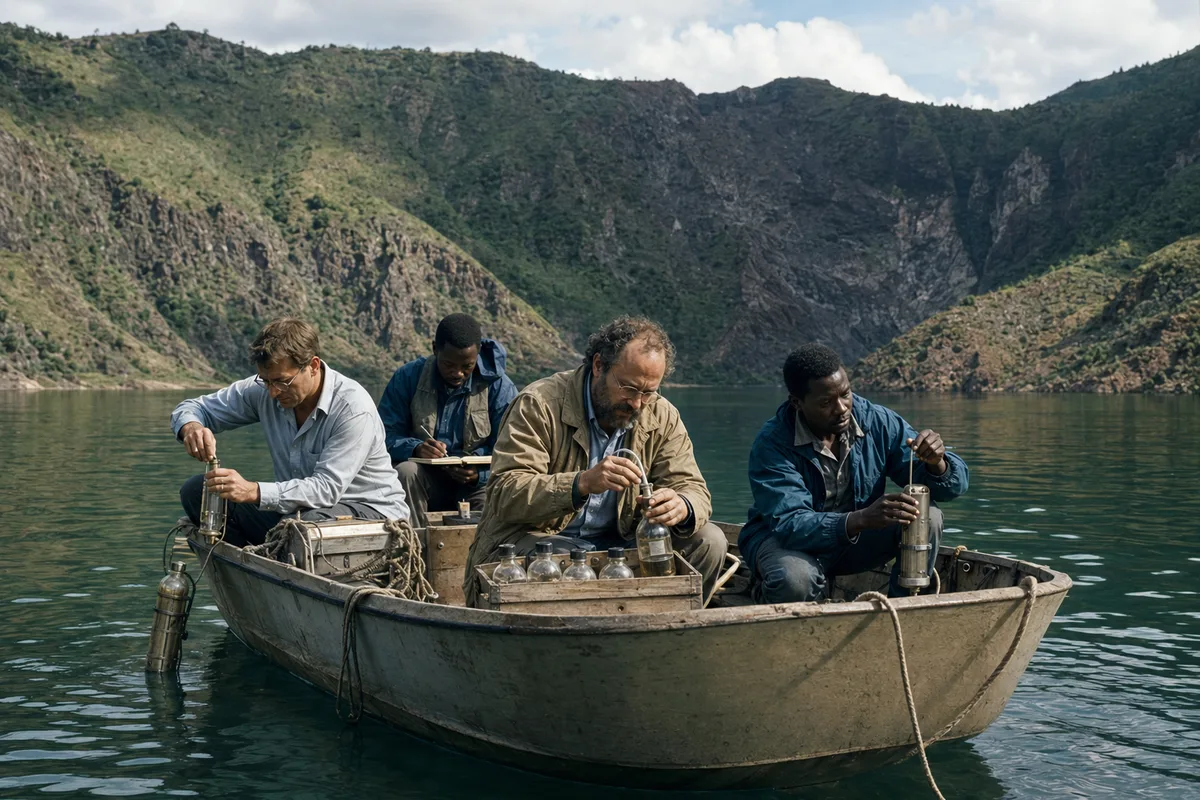
Researchers sampled the water column, measured dissolved gases, examined chemical and isotope signatures, and mapped how the cloud moved through the landscape. The chemistry pointed to carbon dioxide with a deep geological origin. The lake remained layered even after the disaster, preserving evidence of the system that had produced it.
Iron-rich deep water also reached the surface and oxidized, changing the lake’s appearance. Vegetation damage and animal deaths helped investigators reconstruct the cloud’s path and height. The result was a rare forensic study in which the “scene” extended from the bottom of a 200-meter-deep lake across multiple valleys.
How engineers began to defuse a lake
The source beneath Lake Nyos did not stop adding carbon dioxide after 1986. Measurements showed the deep water gradually recharging. Preventing another disaster therefore required more than waiting for the lake to settle.
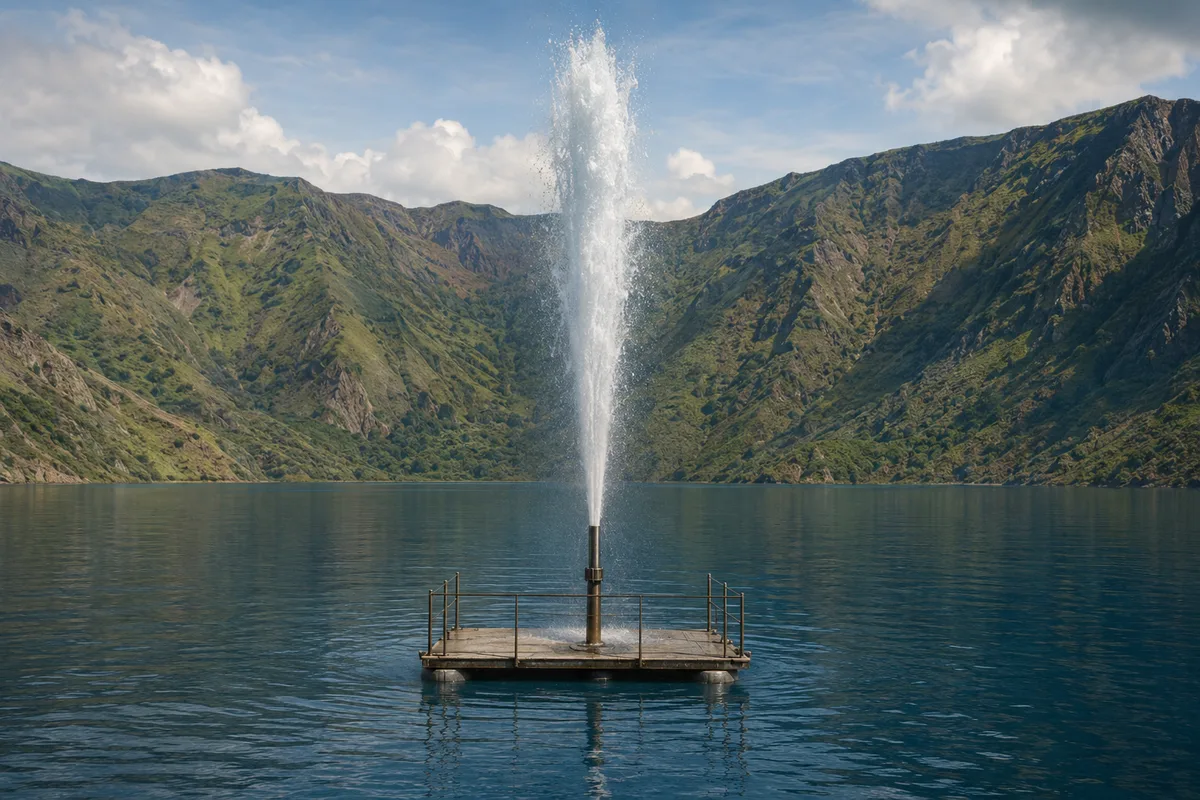
In 2001, an international team installed a pipe extending from the surface platform into gas-rich deep water. Once water began rising through the pipe, the falling pressure released carbon dioxide. The bubbles lifted the water faster, creating a self-powered fountain. Instead of allowing gas to accumulate for an uncontrolled outburst, the system vented it gradually into open air above the lake.
A 2005 study published through the U.S. Geological Survey found that controlled degassing was reducing the gas inventory without destabilizing the entire water column, but warned that one pipe removed gas too slowly for rapid risk reduction. Additional degassing capacity and continued monitoring followed. The design turned the same physics that made the disaster accelerate—the expansion of rising gas bubbles—into part of the safety system.
What we know—and what remains open
| Question | Evidence-based answer |
|---|---|
| Was this an ordinary volcanic eruption? | No. There was no erupting magma at the surface; gas escaped from lake water. |
| What killed people and animals? | Concentrated carbon dioxide that displaced breathable air. |
| Did the lake release gas because of a proven landslide? | Unresolved. A landslide is one proposed trigger, not an established fact. |
| Had anything similar happened before? | Yes. Lake Monoun released a deadly gas cloud in 1984 on a smaller scale. |
| Can the danger be reduced? | Yes. Controlled degassing and monitoring can prevent dangerous accumulation. |
The human story behind the scientific term
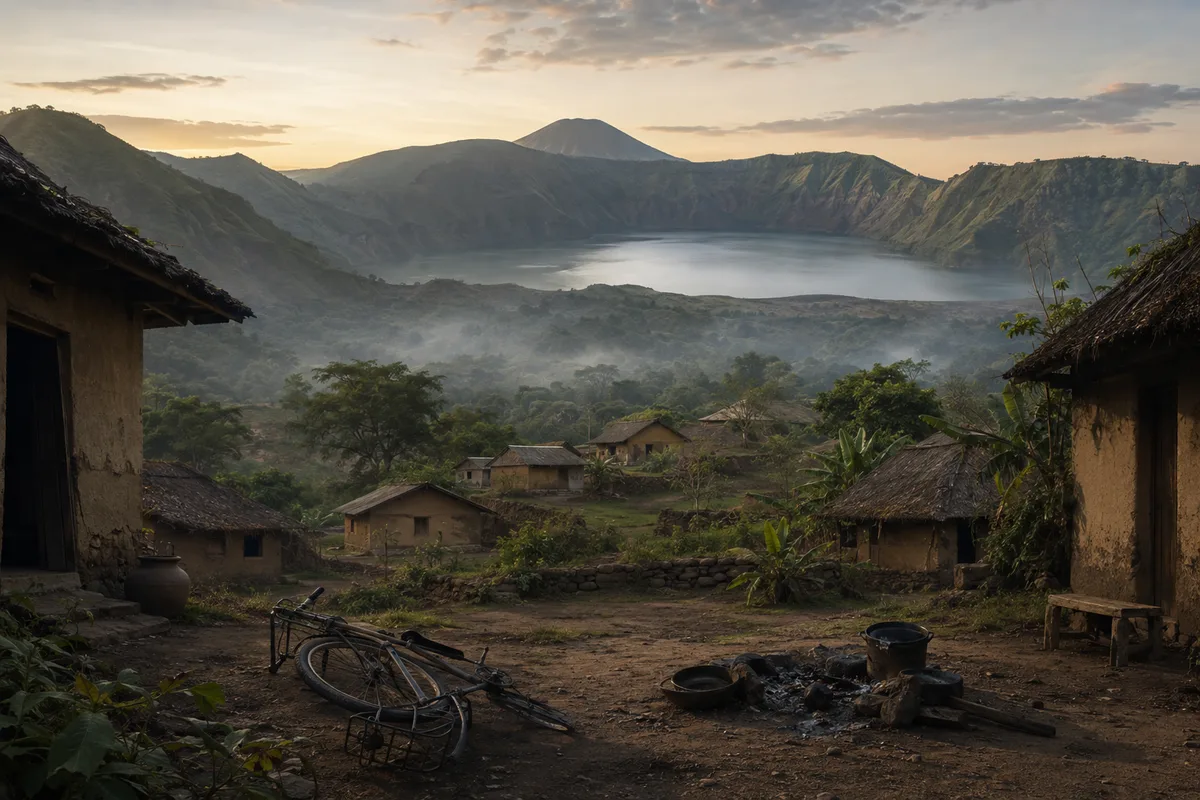
“Limnic eruption” is a clean phrase for a catastrophe that erased families and displaced communities. Scientific investigation was essential, but the event should not be reduced to a fascinating mechanism. The people around Lake Nyos lived beside a landscape that offered water, pasture, and home. The hazard was unknown not because they ignored an obvious danger, but because modern science itself had barely recognized it.
The lasting achievement at Nyos is therefore both technical and human. Researchers learned how a lake could store a lethal atmosphere. Engineers found a way to release that atmosphere slowly. Monitoring turned an invisible process into measurable information. None of that reverses the night of August 21, 1986. It does give its lesson a purpose: hidden hazards become less powerful when they are named, measured, and remembered.
Continue in the archive
- The Night Niagara Falls Went Silent
- The Great Molasses Flood Was a Preventable Industrial Disaster
- The Goldsboro Nuclear Near-Miss
Sources and further reading
- NASA Earth Observatory, “Lake Nyos, Cameroon”
- U.S. Geological Survey, Lake Nyos overview and public-domain imagery
- U.S. Geological Survey, “Origin and age of the Lake Nyos maar”
- U.S. Geological Survey / PNAS, “Degassing Lakes Nyos and Monoun”
- Kusakabe and Ohsumi, 1987 geochemical study of the Lake Nyos outburst
Editorial note: Fatality totals differ slightly among authoritative sources, so this article uses “more than 1,700” in narrative passages and identifies the commonly cited count of 1,746. Proposed triggers are presented as hypotheses, not conclusions.