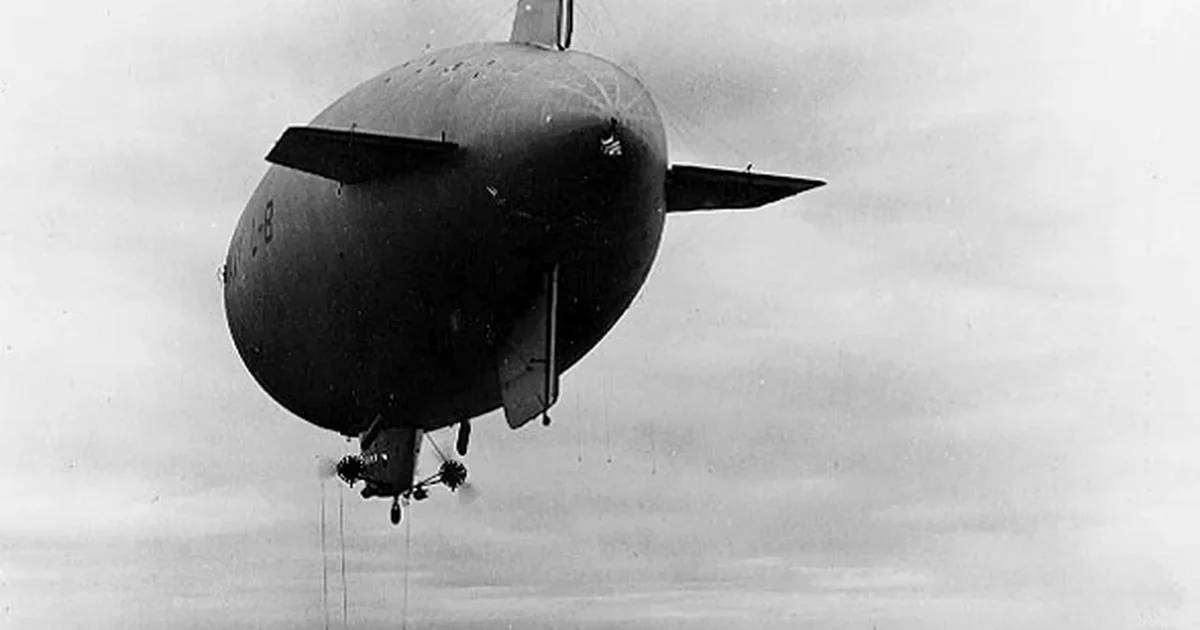
An aircraft without a crew feels impossible, but L-8 left a physical record: a reported oil slick, a sagging envelope, an open door, and a path watched from shore. None explains where the men went.
Archive record
- Date: August 16, 1942
- Base: Treasure Island, San Francisco Bay
- Missing: Lt. Ernest Cody and Ensign Charles Adams
- Aircraft: U.S. Navy L-class blimp L-8
A routine patrol finds something on the water
Lieutenant Ernest Cody and Ensign Charles Adams departed Treasure Island shortly after dawn to patrol the coast for enemy submarines. A third crewman had been assigned but stayed behind because the blimp was overweight. At 7:42 a.m., Cody radioed that L-8 was investigating an oil slick near the Farallon Islands.
A later message said they would continue the patrol. Then the airship stopped communicating. Boats and shore observers saw a blimp low over the water; some reported the crew aboard during portions of the observation. No witness documented the instant either man disappeared.
The airship crosses the coast alone
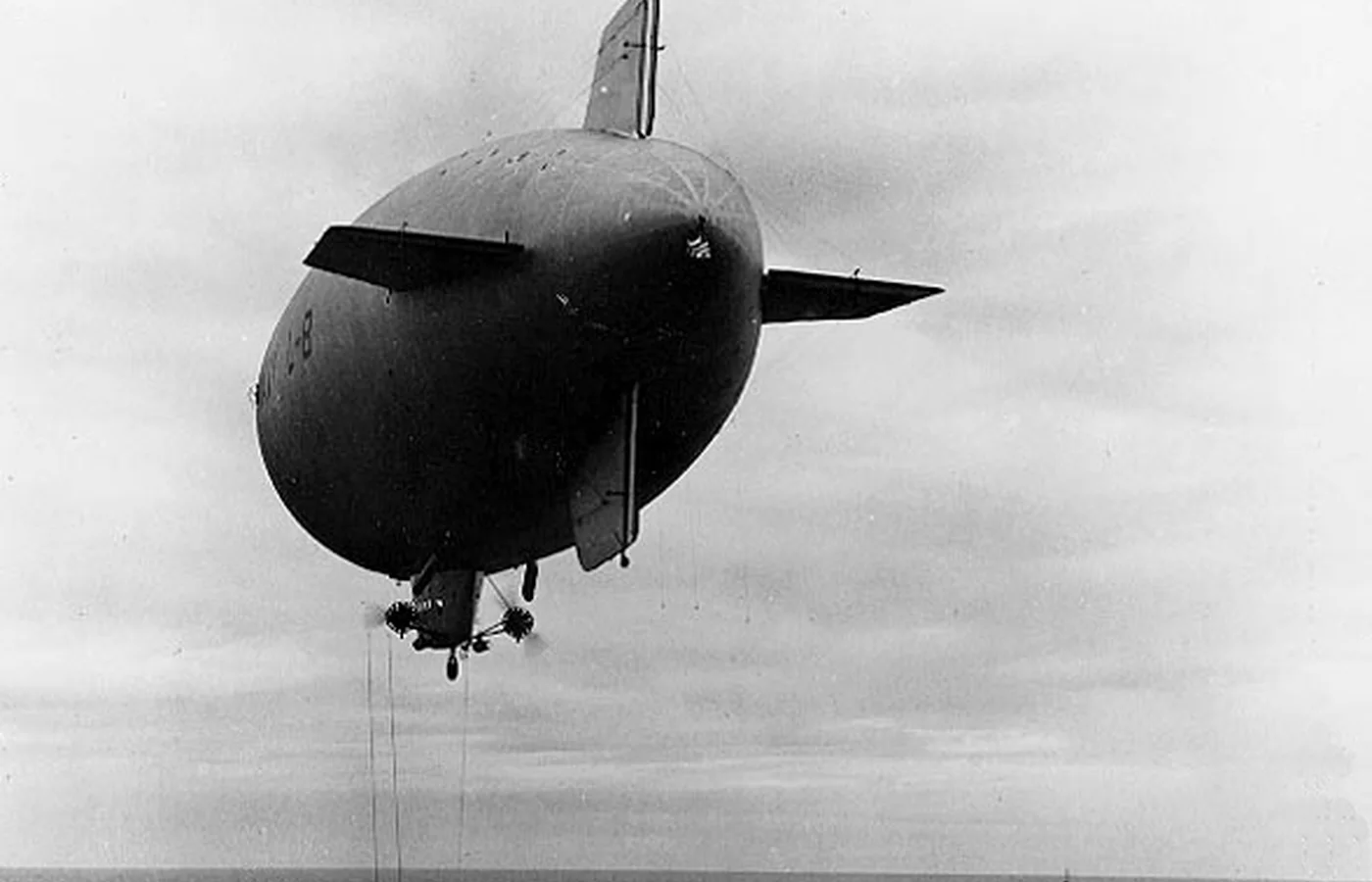
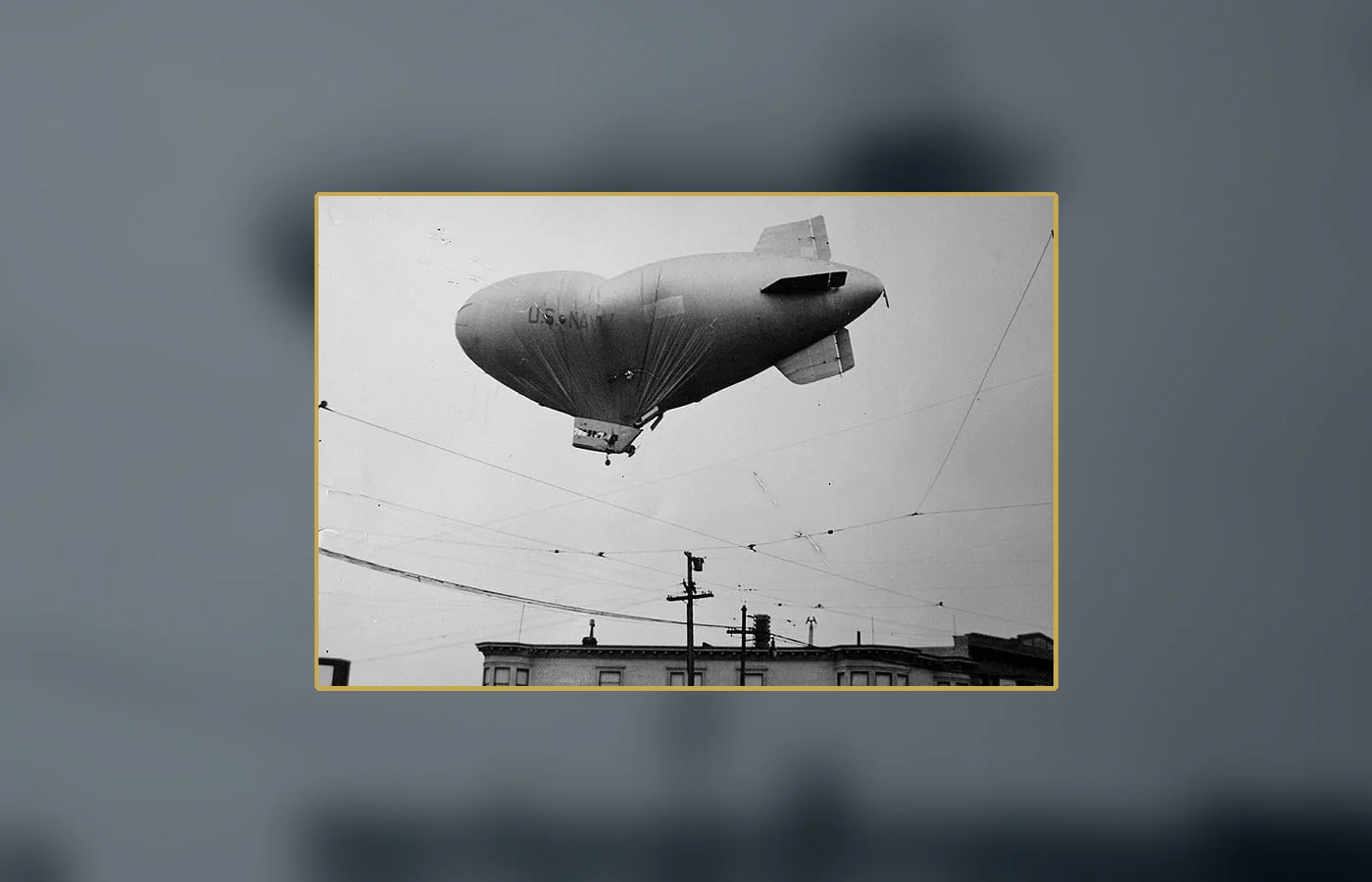
Hours later, L-8 drifted toward the San Francisco Peninsula. It struck a golf course and power lines, lost ballast, rose again, and finally descended into a street in Daly City. Residents rushed toward the crumpled control car expecting injured airmen.
Nobody was inside. The door was open, a safety bar was not in its normal position, and one depth charge was missing because it had been removed before departure to save weight. Radio and engine systems offered no obvious catastrophic failure. Parachutes and life raft remained aboard.
What the investigation could rule out
The Navy searched sea and coast but recovered neither body. Investigators examined whether one man fell and the other attempted a rescue, whether both left the gondola to manage a problem, or whether an external encounter occurred. No conclusive evidence of enemy action, mutiny, or intentional disappearance emerged.
A blimp can change attitude when weight shifts or helium temperature changes. If one man went overboard, an attempted rescue could place the second at risk; with no pilot, the lightened craft might climb or drift inland. This scenario fits basic mechanics, but no recovered gear or witness confirms the sequence.
Why the oil slick matters—but cannot solve it
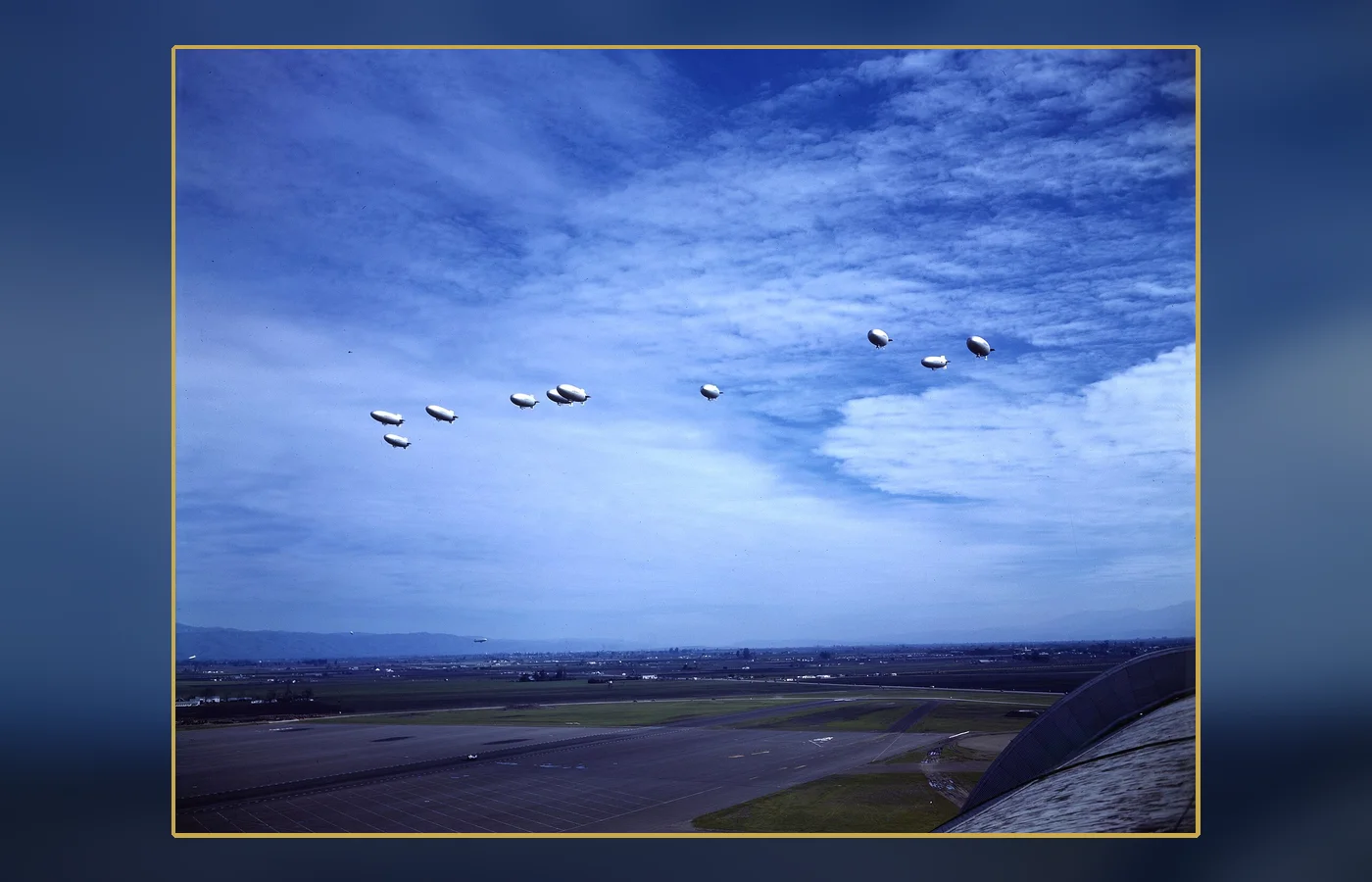
The slick drew the crew out of their patrol pattern and placed the blimp near the surface. Wartime anxiety encouraged speculation about a Japanese submarine. Yet an oil patch had many possible sources, and no enemy vessel was proven to have encountered L-8.
The crew's message is therefore a location clue, not a cause. It tells us what Cody believed deserved inspection. It does not tell us whether the slick was connected to their disappearance or merely the last event they reported.
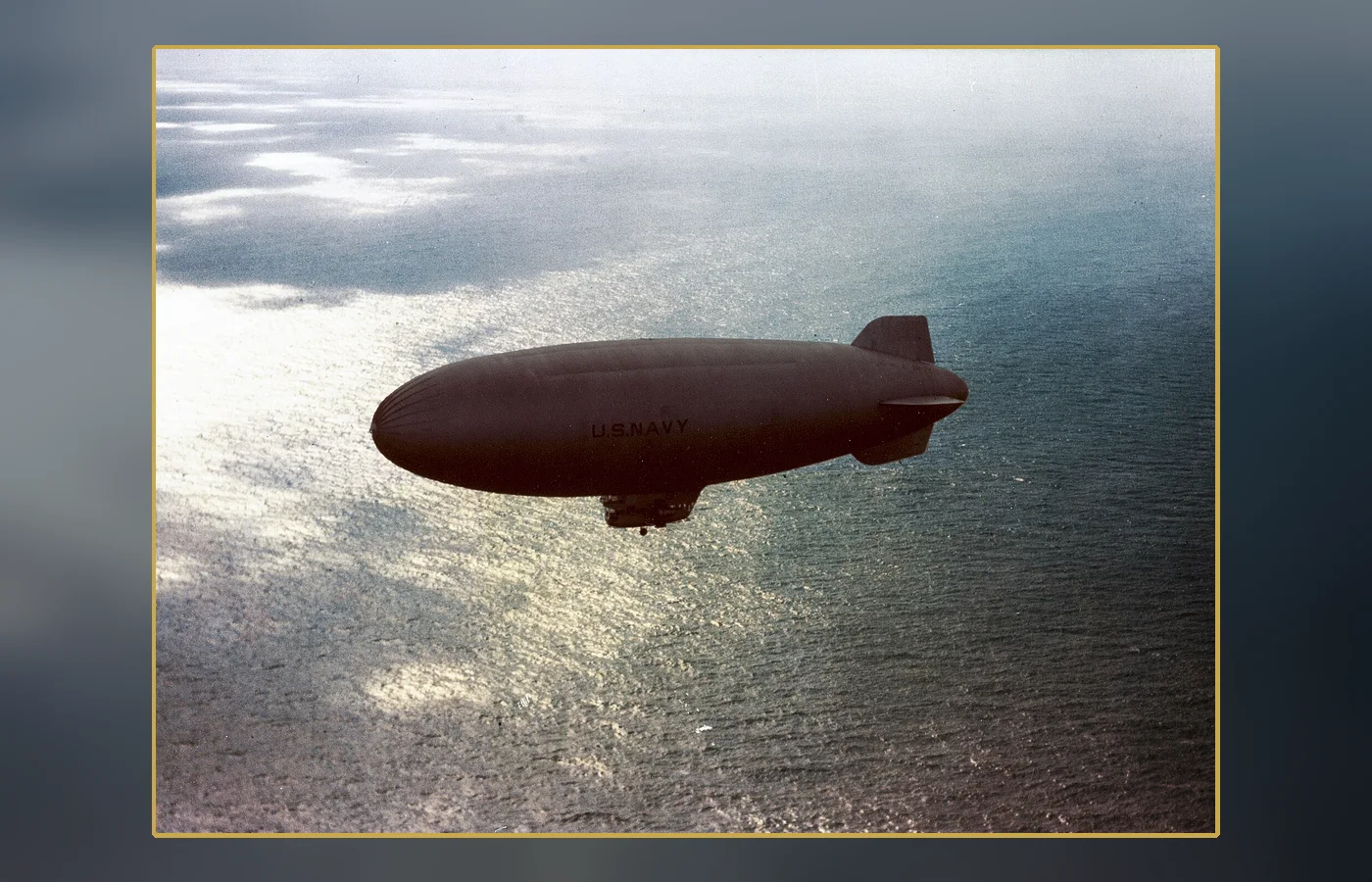
The airship's second life
L-8 was repaired and returned to service. After the war, its control car eventually became part of the Goodyear fleet and survives in the collection of the National Naval Aviation Museum. The physical aircraft outlived the men whose absence made it famous.
The case remains unresolved because the evidence is asymmetrical. We can follow the blimp from base to sea to suburb, inspect its equipment, and name the final radio call. The ocean kept the only evidence that could show whether accident, rescue attempt, or something else emptied the gondola.
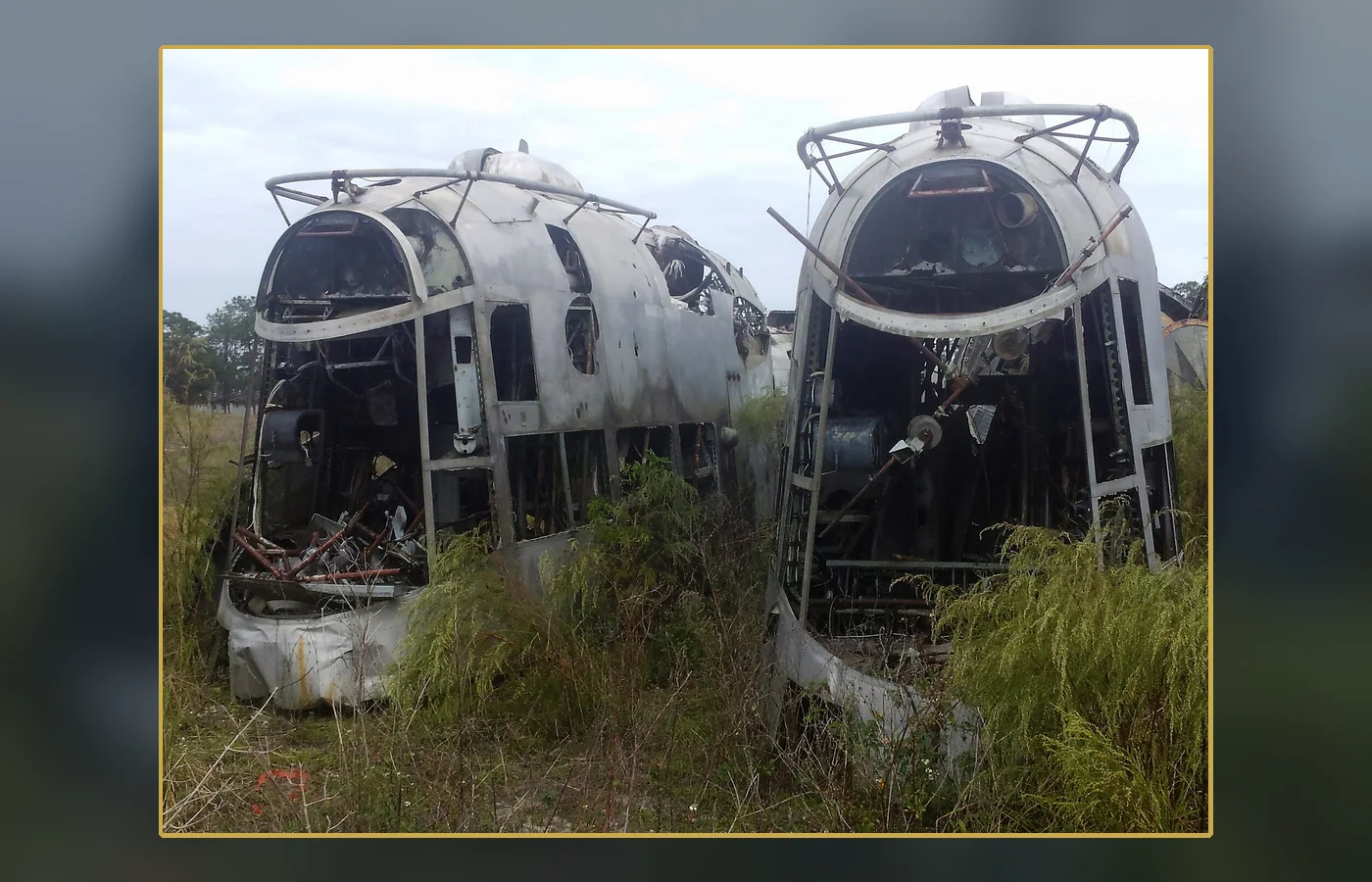
What the record supports—and what it does not
L-8 was not proven to have met an enemy submarine, and no evidence supports paranormal disappearance. An accidental fall followed by a rescue attempt is plausible, but the Navy did not recover bodies or establish a witnessed sequence.
Evidence ledger
- PATROL — Two men over coastal California: A third crewman stayed behind because of weight.
- CALL — Investigating an oil slick: Cody's message placed L-8 low over the ocean.
- LANDING — Daly City, no crew: The airship struck obstacles and came down on a street.
- SCENE — Open door, essential gear aboard: No onboard catastrophe explained the absence.
- SEARCH — No bodies recovered: Sea and coast searches failed.
- STATUS — Mechanism plausible, sequence unknown: A fall-and-rescue scenario remains unproved.
How this reconstruction was checked
This reconstruction begins with National Naval Aviation Museum — L-8 Ghost Ship, Smithsonian Magazine — The Ghost Blimp. Those records establish the dates, people, objects, and institutional findings used above. Later retellings are useful only when they can be traced back to that record. A repeated anecdote is not treated as independent confirmation simply because it appears on several websites.
The unresolved question is kept separate from the documented mechanism. In this case, the evidence supports the following boundary: L-8 was not proven to have met an enemy submarine, and no evidence supports paranormal disappearance. An accidental fall followed by a rescue attempt is plausible, but the Navy did not recover bodies or establish a witnessed sequence. The purpose of that boundary is not to flatten the mystery. It prevents a vivid but unsupported detail from displacing the evidence that makes the story worth reading.
Every visual is either a historical photograph, document, map, object, site image, or an explicitly labeled contextual comparison. Captions identify the source and license. No AI reconstruction and no text-poster image is presented as historical evidence; the featured image is derived directly from the first archival visual without a headline overlay.
Why this story matters
Few mysteries preserve the vehicle while losing only its operators. L-8 lets readers examine an almost complete scene and see exactly why completeness of objects is not completeness of explanation.
Continue in the archive
- Mary Celeste: What the Abandoned Ship Actually Left Behind
- SS Baychimo: The Arctic Ghost Ship That Refused to Stay Lost
- The Disappearance of USS Cyclops
Sources and further reading
Editorial note: Lore & Archive separates contemporary records, later institutional synthesis, and unresolved inference. When sources disagree or the archive is incomplete, the uncertainty is stated rather than converted into a dramatic fact.