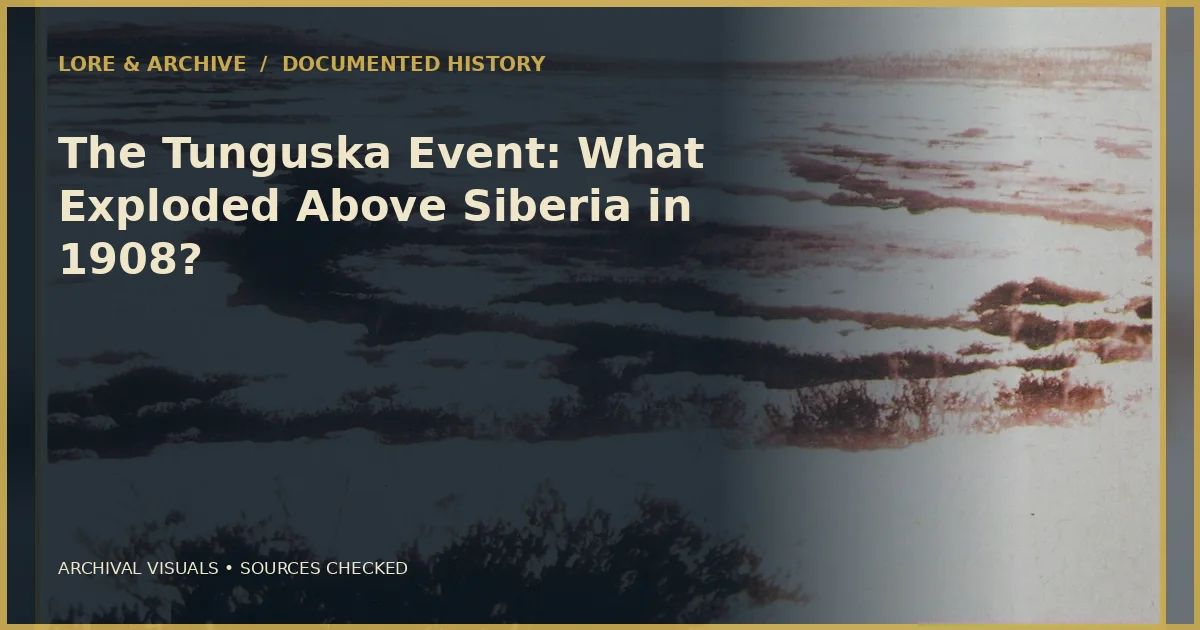
The largest recorded impact event in modern history left trees pointing away from an invisible center. The missing crater once looked like the mystery; today it is one of the event's most useful clues.
Archive record
- Date: June 30, 1908
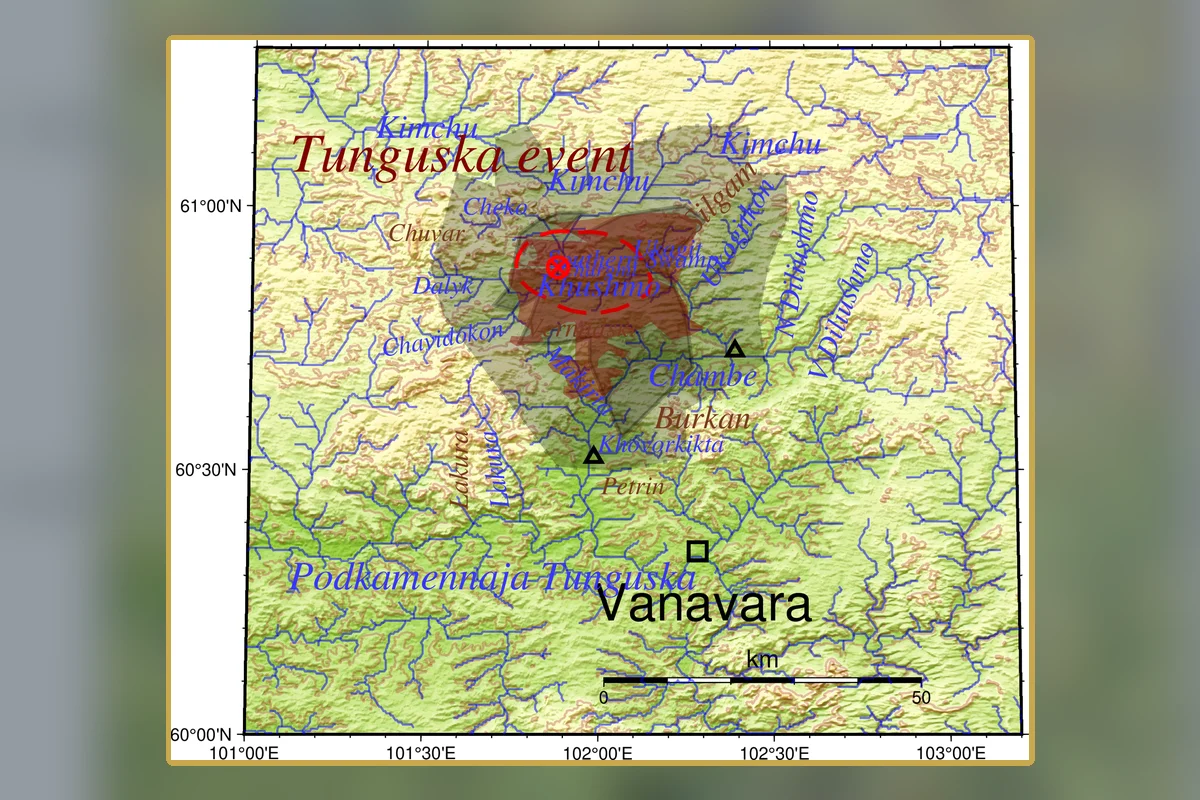
- Location: near the Podkamennaya Tunguska River, Siberia
- Effect: roughly 2,000 square kilometers of forest damaged
- Scientific consensus: atmospheric breakup of a small asteroid or comet-like body
A flash over an almost empty landscape
Shortly after seven in the morning, witnesses across central Siberia described a brilliant object, heat, thunderous reports, and a shock that threw people from their feet and rattled buildings far from the source. Instruments registered atmospheric and seismic disturbances. Because the blast occurred over a remote, sparsely populated region, it produced no urban ruin and relatively few immediate records from the center.
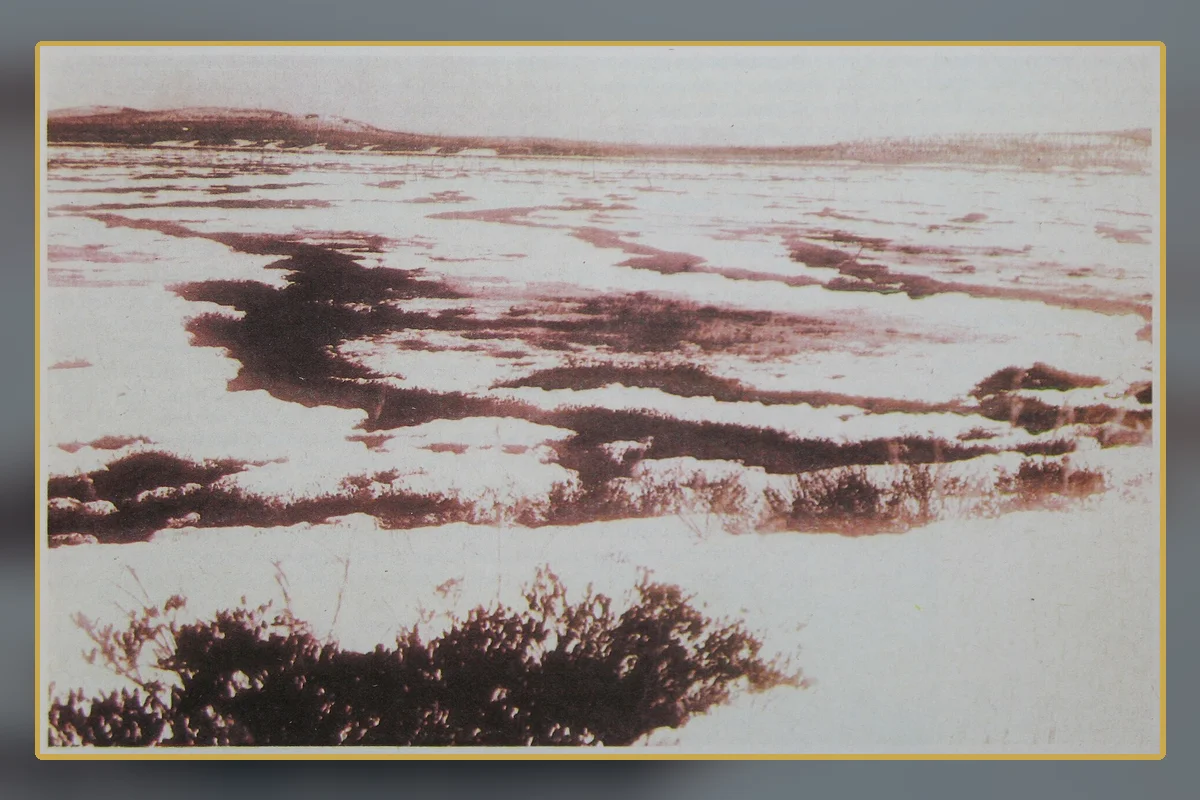
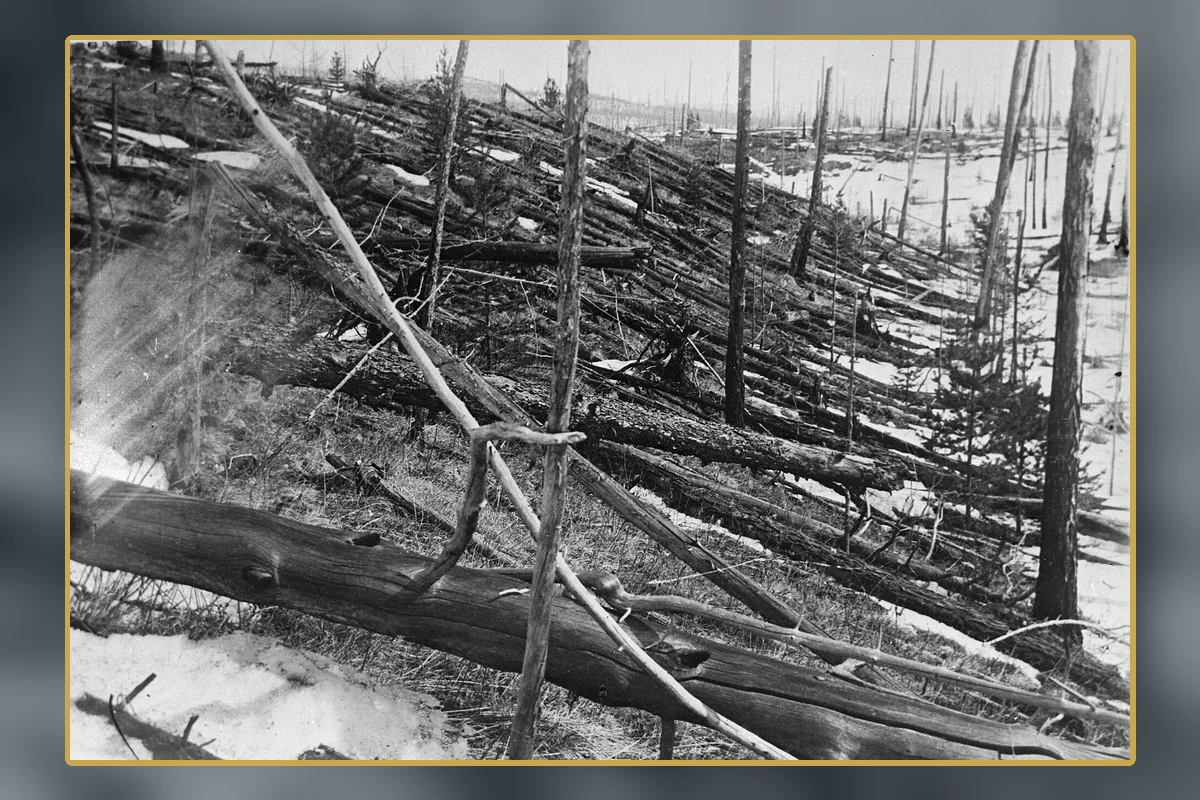
The landscape absorbed the evidence. Trees fell across an enormous area in a radial pattern, while a zone close to the center retained upright trunks stripped of branches. That counterintuitive pattern—standing trees beneath the explosion, fallen trees farther out—would later match the physics of an airburst whose shock traveled downward and outward.
Why investigators arrived so late
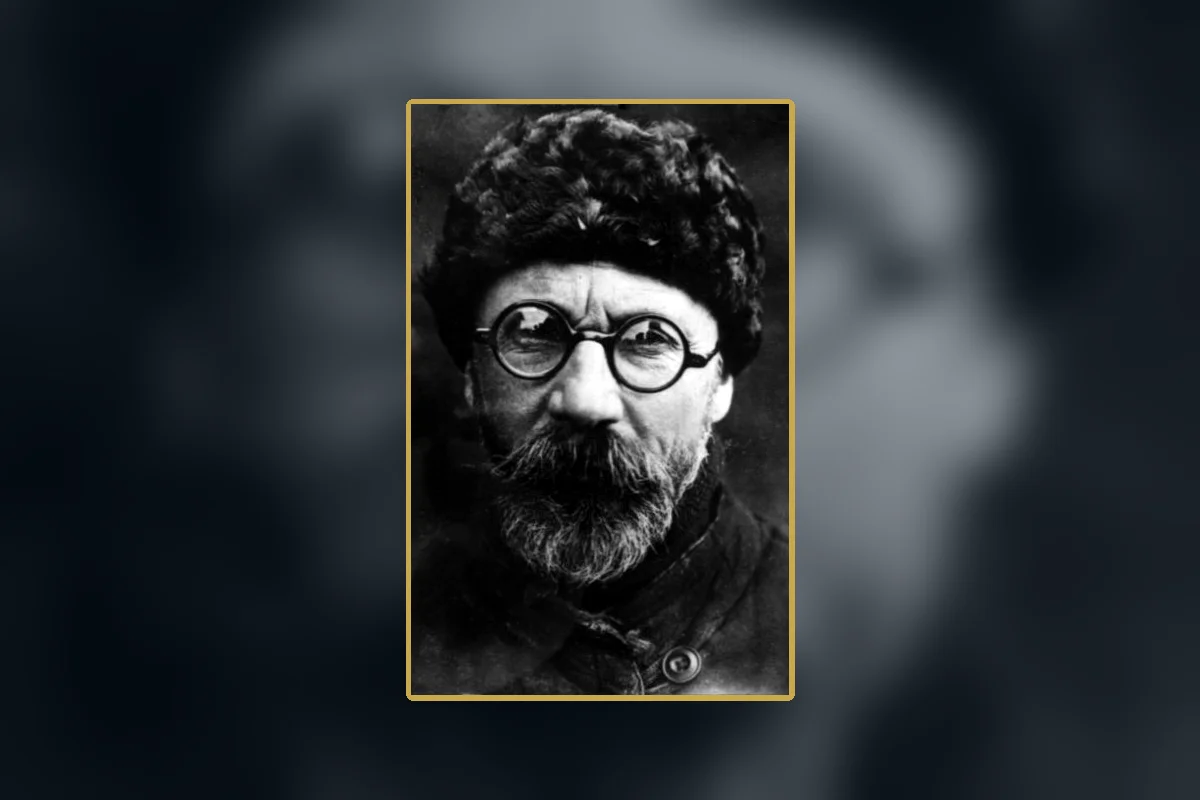
Russia passed through war, revolution, and civil conflict before mineralogist Leonid Kulik led expeditions toward the site in the 1920s. Local Evenki testimony helped direct the search. Kulik expected a meteorite crater and iron fragments; instead he encountered swamps, burned and toppled forest, and no single obvious hole that could explain the scale of destruction.
The delay mattered. Weather, regrowth, fire, and human memory had altered the scene. It also encouraged a misleading assumption: if a large object caused the blast, a large crater must exist. Later research showed that a stony body tens of meters across could disintegrate several kilometers above ground, releasing most of its energy into the atmosphere before a coherent mass reached the surface.
An explosion without a crater
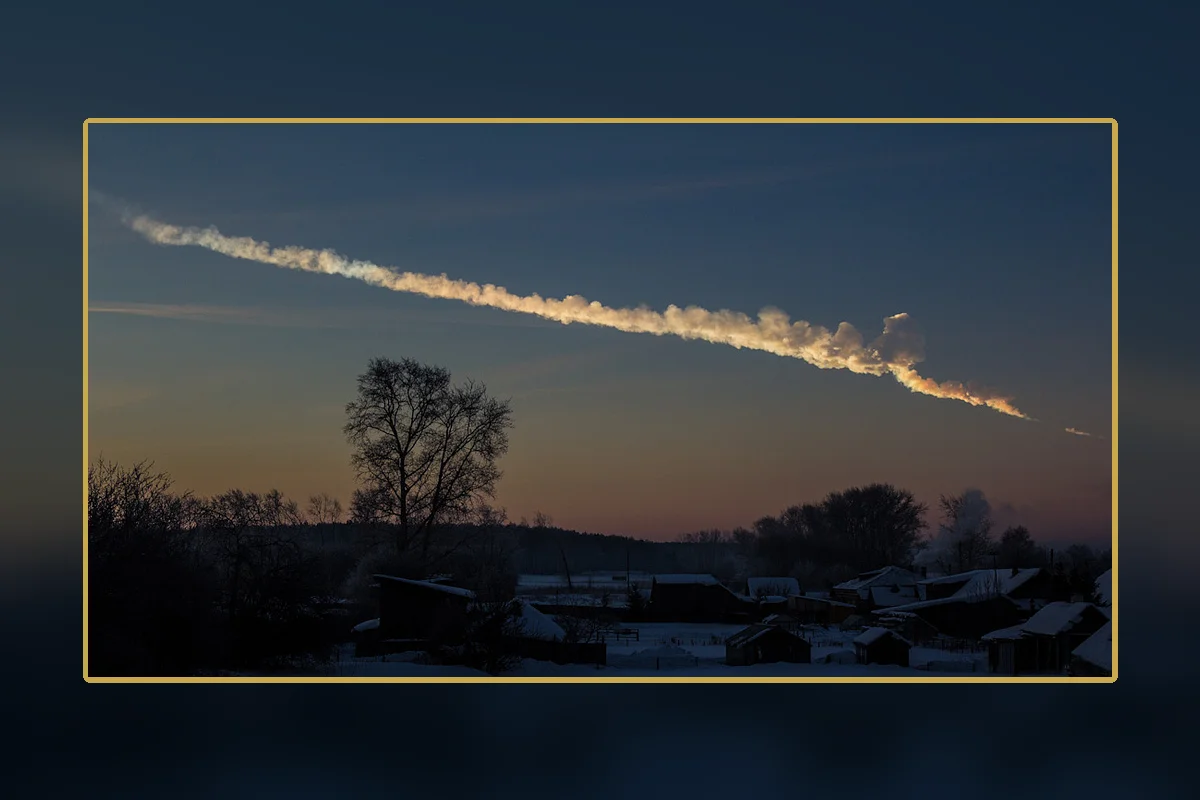
Incoming space rock encounters rapidly increasing air pressure as it descends. A fragile object can flatten, fragment, and deposit energy in a violent atmospheric burst. The result can resemble an immense bomb: a pressure wave, intense thermal radiation, and widespread treefall, but no bowl-shaped crater and no recoverable main meteorite. Small particles may disperse across a broad area.
Computer modeling and comparisons with observed bolides make that scenario physically ordinary, even if Tunguska's scale was exceptional. NASA researchers use the event as a natural laboratory for planetary-defense planning because it demonstrates that objects too small to cause a global catastrophe can still devastate a metropolitan-sized region.
Asteroid, comet, or something stranger?
The leading explanation is a small asteroid, probably stony, though some researchers have argued for a cometary fragment because an icy body might leave less recoverable material. Composition, entry angle, size, and burst altitude are reconstructed from indirect effects and differ among models. Those uncertainties concern details of the object, not whether a high-energy airburst occurred.
Black holes, alien spacecraft, antimatter, and exotic geophysical explosions have appeared in popular accounts. They are not required to explain the evidence. A cosmic airburst accounts for the eyewitness light, blast waves, forest pattern, and lack of a classic crater using processes observed in smaller modern events.
What later searches can and cannot prove
Researchers have examined peat layers for microscopic particles, mapped treefall, tested sediment, and investigated nearby lakes. Some studies proposed Lake Cheko as an impact feature; others found its age or shape inconsistent with that interpretation. The debate illustrates the difference between detecting traces compatible with an event and identifying an uncontested fragment of the original body.
Tunguska therefore has a strong causal explanation without a museum-ready culprit. Science often works that way. Multiple independent patterns can establish the class of event while leaving the object's exact recipe and flight path uncertain. A missing named meteorite is not the same as a missing mechanism.
The warning hidden in the forest
Tunguska occurred before systematic asteroid surveys and over a region with few people. Shift the trajectory and time slightly, and the same energy could have arrived over a city. The event is commemorated on June 30 as Asteroid Day, a reminder that finding near-Earth objects early is an engineering problem rather than a prediction of apocalypse.
Its enduring lesson is precise: planetary hazards do not need dinosaur-killing scale to matter. Atmospheric entry, breakup, and blast effects can create severe regional damage. The mystery worth keeping is not whether something cosmic happened, but which object arrived and exactly how the atmosphere converted its motion into devastation.
What the record supports—and what it does not
Tunguska is sometimes presented as an explosion that baffled science because no crater or intact meteorite was found. In fact, those absences fit an atmospheric airburst. Scientists continue to refine the object's composition, size, angle, and burst height; they do not need a supernatural or technological cause to explain the recorded effects.
Evidence ledger
- EVENT — June 30, 1908: A brilliant atmospheric explosion shook central Siberia shortly after seven in the morning.
- FOOTPRINT — A forest-scale blast: Trees were damaged across roughly 2,000 square kilometers, with a radial fall pattern.
- MECHANISM — Energy released in the air: A stony body can fragment under atmospheric pressure before a coherent mass reaches the ground.
- CLUE — No classic crater required: The absence that puzzled early searches is consistent with a high-energy airburst.
- MYTH CHECK — Exotic causes add no evidence: Impact physics explains the light, shock, heat, and treefall without aliens or antimatter.
- LEGACY — A planetary-defense benchmark: Tunguska shows that a relatively small near-Earth object can still cause regional devastation.
How this reconstruction was built
No single Tunguska artifact carries the case. The reconstruction joins witness reports, pressure and seismic records, the geometry of fallen trees, microscopic searches, and modern airburst modeling. Each line has different uncertainty, especially after expeditions began nearly two decades later. Agreement across those independent lines supports a cosmic airburst even though estimates of composition, entry angle, burst height, and released energy remain ranges rather than one exact solution.
To audit the account, open the source links below and compare dates, quantities, and the wording used by the institutions themselves. Look for the earliest recoverable record, then distinguish it from later summaries created after the story became famous. The five visuals in this article are archival photographs, maps, documents, objects, or clearly identified editorial diagrams selected to illuminate the surviving record. Each caption identifies its source and rights information; no reconstruction is presented as a historical photograph. That transparency is part of the Lore & Archive method.
Why this story matters
The event shows how a strong explanation can emerge from distributed evidence: witness reports, pressure records, treefall geometry, chemistry, and physics. It also demonstrates responsible uncertainty. Calling the object a cosmic body is well supported; claiming exact dimensions to the last meter is not.
Continue in the archive
- D. B. Cooper: The Hijacking Evidence That Survived the Legend
- The Radium Girls: How Factory Workers Forced a Reckoning With Radiation
- The Great Molasses Flood Was Preventable
Sources and further reading
- NASA — Tunguska revisited
- NASA Science — Meteors and meteorites facts
- European Space Agency — Asteroid Day and Tunguska
Editorial note: Lore & Archive distinguishes contemporary evidence, later institutional synthesis, and unresolved inference. Where sources disagree or the record is incomplete, the uncertainty is stated rather than converted into a dramatic fact.