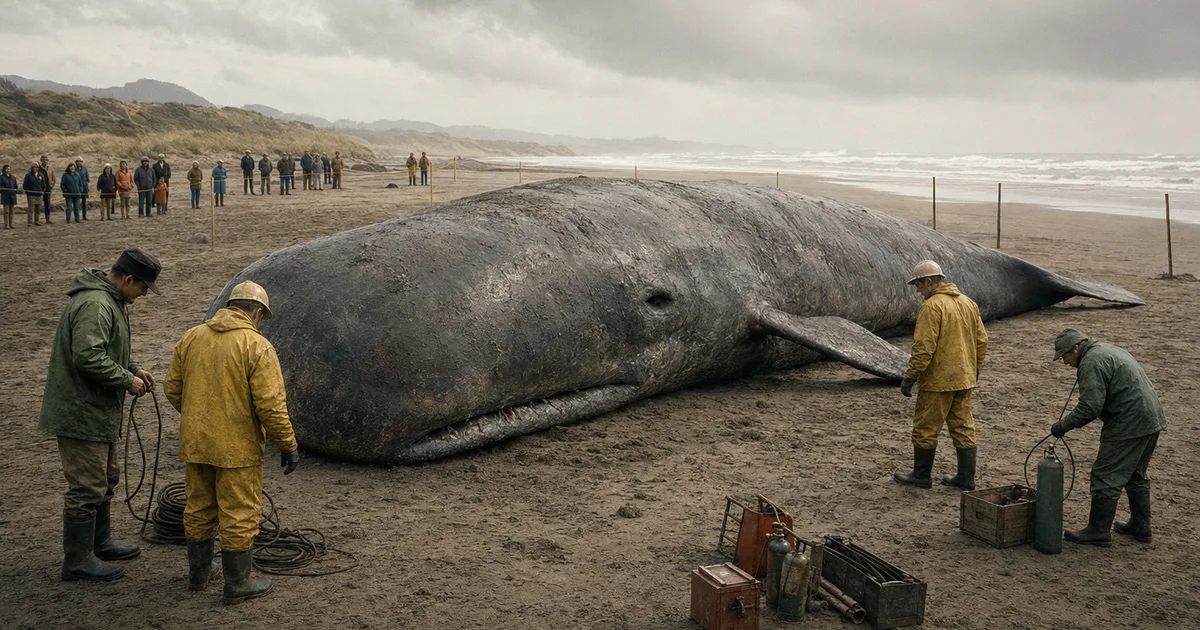
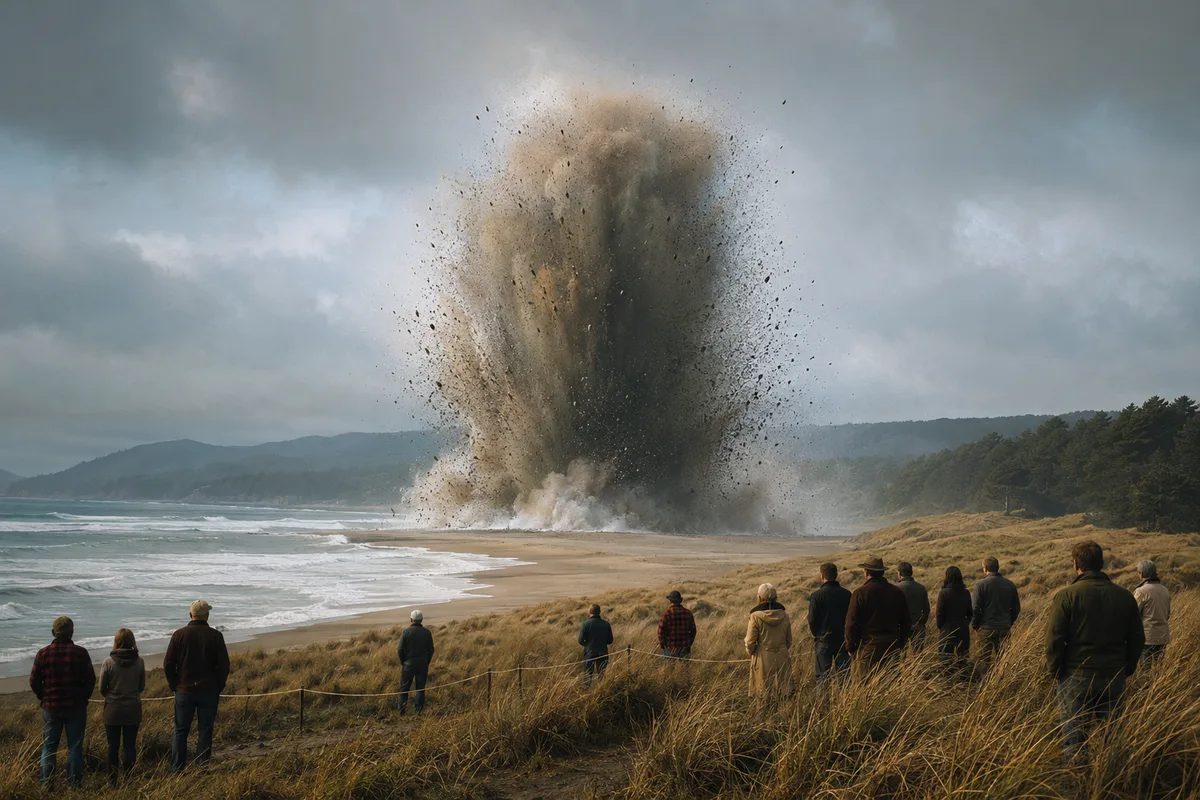
On the afternoon of November 12, 1970, a section of the Oregon coast rose into a column of sand, smoke, and whale. Spectators standing about a quarter mile away had been told they were beyond the danger zone. Then pieces of an eight-ton carcass began falling around them.
The “exploding whale” sounds like a story invented after the internet. It is not. Oregon highway officials deliberately used a half-ton of dynamite to dispose of a dead sperm whale near Florence. A television crew recorded the decision, the countdown, the blast, and the moment confidence turned into a scramble for cover.
The archive record
- Carcass discovered: November 9, 1970
- Detonation: November 12, 1970, near Florence, Oregon
- Animal: A sperm whale about 45 feet long and estimated at eight tons
- Agency: Oregon State Highway Division, now part of the Oregon Department of Transportation
- Explosive charge: Approximately one-half ton of dynamite
- Result: Large pieces traveled far beyond the intended area; a parked car was crushed, but no person was reported injured
- Cleanup: Workers still had to collect and bury much of the carcass
The problem on the beach
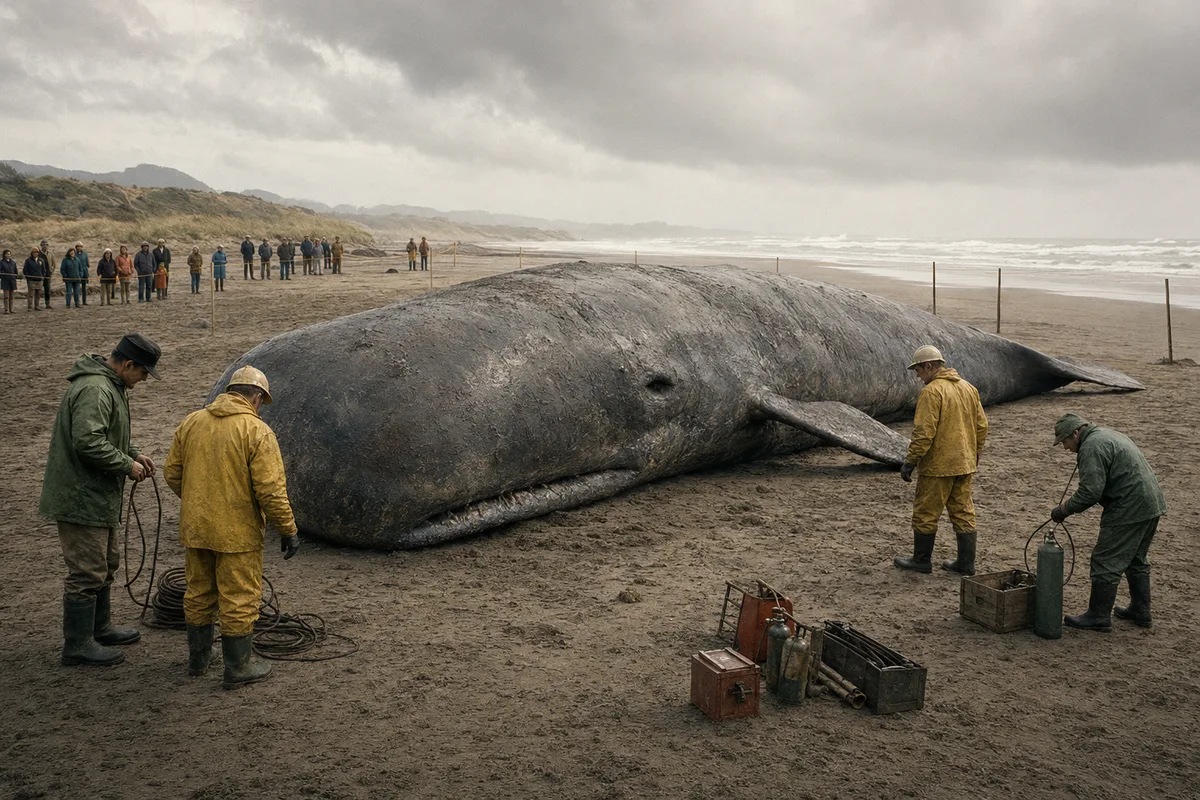
The whale washed ashore on November 9 south of the Siuslaw River. It had already been dead long enough to produce an overwhelming smell. Officials worried that curious visitors might climb onto the decaying body, fall in, or be injured if internal gases caused it to rupture.
Responsibility fell to the Oregon State Highway Division because Oregon’s beaches were then administered as part of the state highway system. The agency knew how to clear rockslides and repair roads. It did not have a routine procedure for a 45-foot marine mammal.
Several options were considered. Cutting the carcass apart would be slow, unpleasant, and difficult. Burying it on the beach raised fears that waves would uncover it. No rendering plant wanted the remains. After consultation that reportedly included Navy and munitions advice, Assistant District Highway Engineer George Thornton chose the method his department used on immovable boulders: explosives.
The theory behind the dynamite
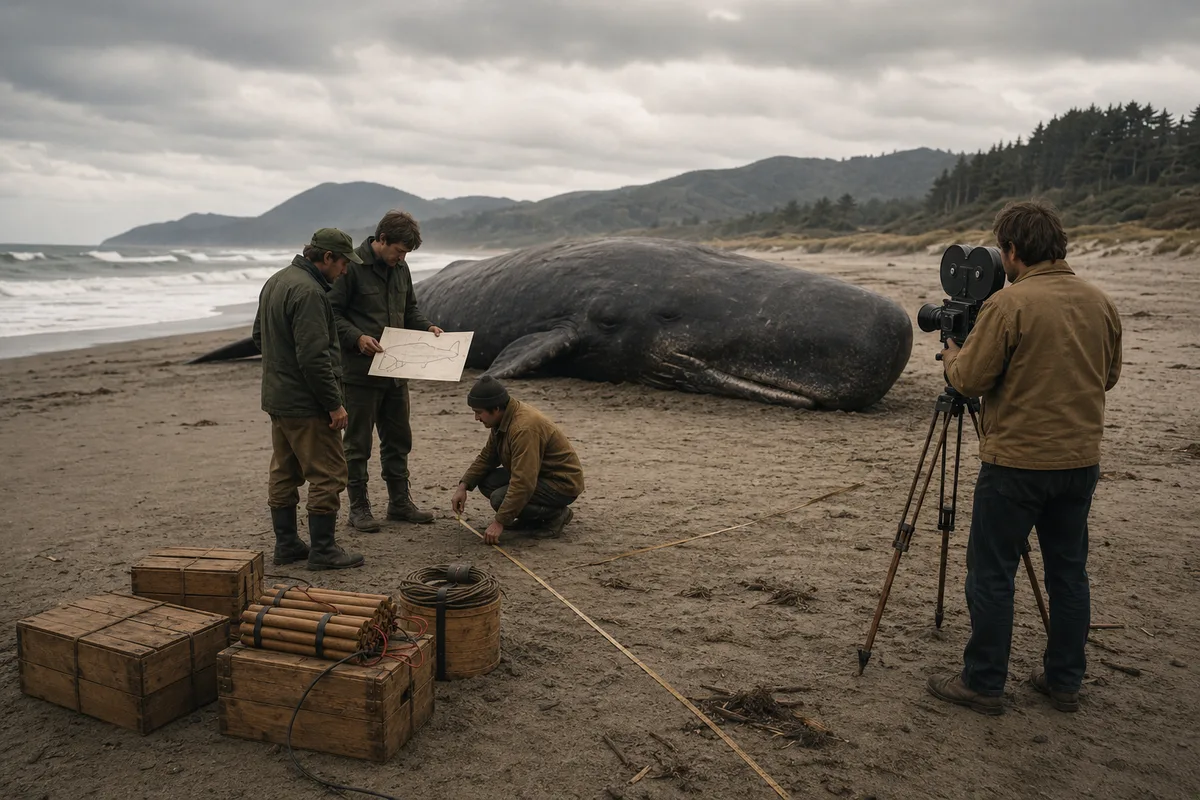
The plan had a simple internal logic. A sufficiently powerful charge would break the carcass into pieces small enough for gulls and other scavengers to consume. Most fragments would fall close to the blast, and nature would finish the cleanup.
The flaw was scale. A whale is not a uniform stone. It is a vast structure of bone, muscle, organs, and thick blubber. Energy moving through that material would not necessarily create the neat, evenly sized fragments the plan assumed. Nor could the blast be tested at a smaller scale on the actual object.
Workers placed about a half-ton of dynamite under the landward side of the carcass. The intended direction of force was toward the Pacific. A crowd gathered. Reporters arrived. KATU television journalist Paul Linnman interviewed Thornton before the detonation, preserving the official confidence that the plan would work.
The blast
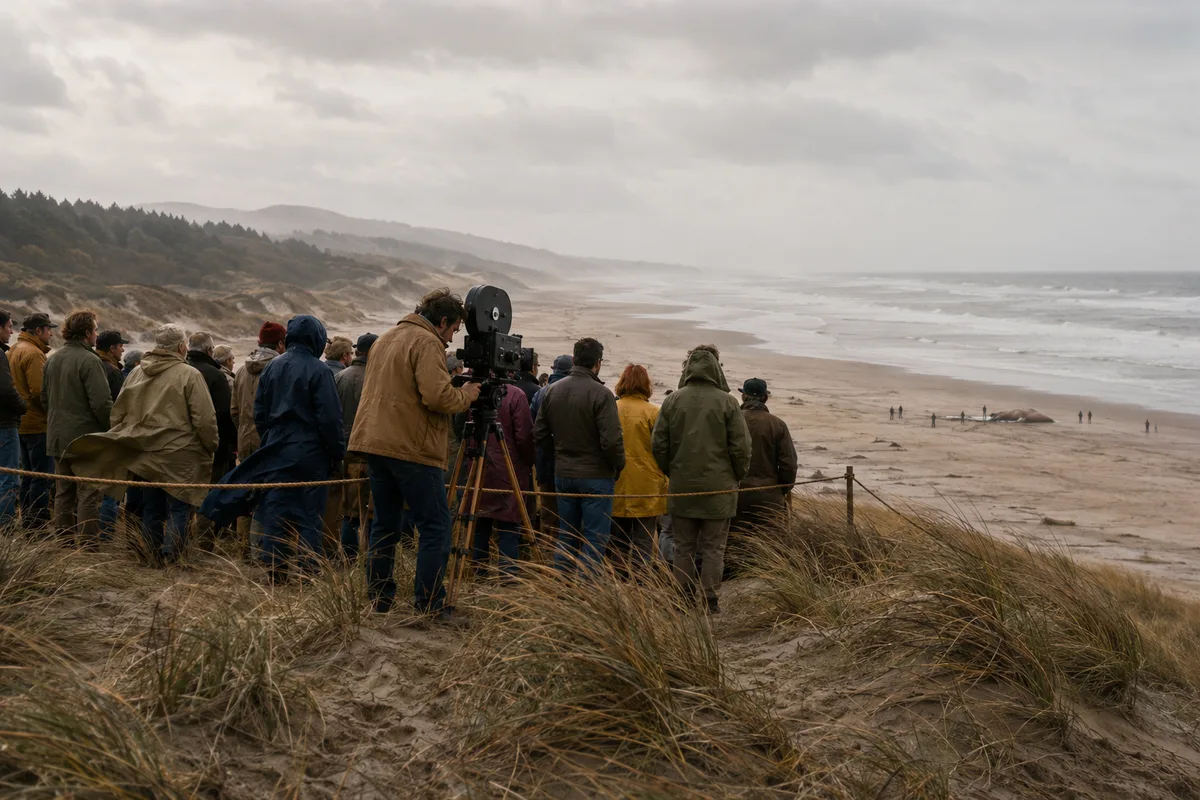
The charge detonated in the afternoon. The beach disappeared behind a towering plume. For a moment, the event resembled a successful demolition. Then the debris came down.
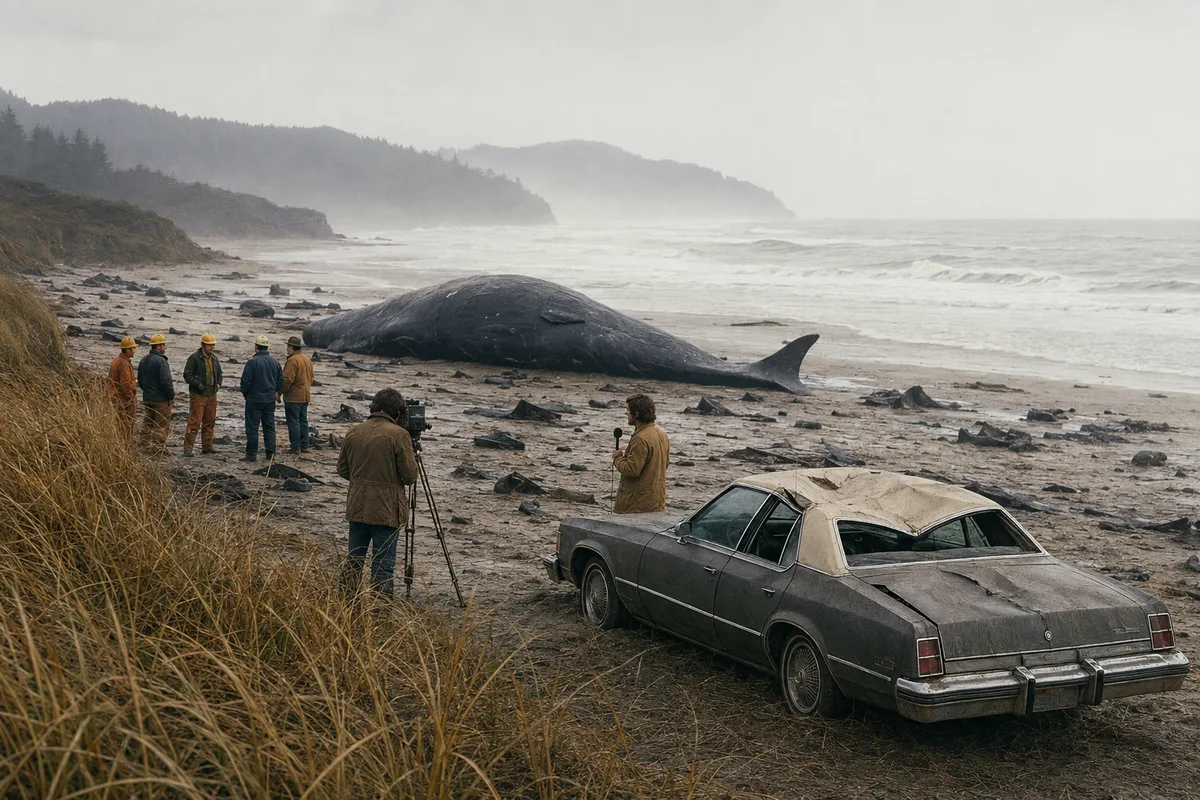
Small fragments showered spectators and vehicles. Much larger sections sailed beyond the planned perimeter. One heavy piece crushed the roof of a parked sedan. People ran as debris struck the sand around them. Remarkably, no one was reported injured.
The explosion solved one problem by distributing it across a much larger area.
The carcass had not been reduced to scavenger-sized pieces. Large remains were still on the beach, now mixed with fragments spread across the surrounding area. Highway crews collected what they could and buried the rest. The operation ended with the cleanup method officials had hoped the dynamite would avoid.
Why the television report became unforgettable
The event might have remained a local cautionary tale if KATU’s camera had not recorded it. Linnman’s report contains all the elements later audiences expect from viral video: a premise that sounds fictional, a confident prediction, a visible countdown, an enormous reversal, and a reporter trying to describe something language was not built to make dignified.
The footage also settles questions that would otherwise invite exaggeration. The explosion happened. Spectators were present. Debris traveled into the viewing area. The crushed car was real. This is not folklore built from a misunderstood photograph; it is a documented public operation with contemporary news coverage.
A strange second life on the early internet
Two decades later, humorist Dave Barry wrote about the explosion in a 1990 syndicated column. An abridged version circulated on electronic bulletin boards, often stripped of context. Readers who encountered the story assumed it had just happened and contacted Oregon officials in disbelief.
As video sharing became easier, the KATU report followed. The Oregon Encyclopedia notes that an Oregon transportation spokesperson later described it as the first story to go viral on the internet. “First” is difficult to prove for any early online phenomenon, but the label captures something important: this 1970 local broadcast found a second, global audience because digital networks rewarded exactly what the film already contained—surprise, visual proof, and an ending people felt compelled to show someone else.
What happened the next time whales washed ashore?
In 1979, 41 sperm whales stranded and died on a nearby beach. Contemporary reporting noted that explosives were quickly rejected. Authorities burned and buried the carcasses instead. Oregon’s later policy has favored burial for dead stranded whales when removal is necessary.
The change does not mean every whale carcass has one easy solution. Location, species, size, public access, tides, decomposition, equipment, and environmental effects all matter. Leaving a carcass to decompose naturally may be appropriate in a remote area; burial or removal may be necessary near communities. The lesson from Florence is narrower and more useful: demolition assumptions developed for rock cannot be transferred to biological material without understanding how that material will behave.
Myth and record
| Claim | What the record shows |
|---|---|
| The whale exploded naturally from decomposition. | False for the Florence event. Officials deliberately detonated dynamite. |
| The blast occurred in 1970 near Florence, Oregon. | Documented. |
| The whale was blown into tiny pieces that birds removed. | False. Large remains still required collection and burial. |
| Falling blubber destroyed a car. | Documented. |
| Spectators were killed. | False. No one was reported injured. |
| The familiar video is a later reenactment. | False. It is contemporary KATU news footage. |
More than a punchline
It is easy to retell the exploding whale as proof that past officials were foolish. That version loses the more transferable lesson. They faced a rare, urgent, unpleasant problem. They considered several options, consulted people they believed had relevant expertise, and selected a method familiar from another kind of work. The failure occurred because the analogy—whale as boulder—was wrong.
Good decisions require more than confidence and experience. They require testing the assumptions that connect past experience to a new problem. How will the material absorb energy? Where can debris travel? What happens if the cleanup mechanism—scavengers—does not behave as expected? How large should the exclusion zone be if the model is wrong?
Florence eventually embraced the episode with humor; the city even has an Exploding Whale Memorial Park. The joke survives because no person died. The lesson survives because the camera recorded the exact instant a reasonable-sounding plan encountered reality.
Continue in the archive
- The Day the BBC Decided There Was No News
- The Great Molasses Flood Was a Preventable Industrial Disaster
- The Night Niagara Falls Went Silent
Sources and further reading
- The Oregon Encyclopedia, “Florence Whale Explosion”
- Oregon Historical Society, 50th-anniversary collection feature
- Oregon Coast Visitors Association, Exploding Whale Memorial Park
Editorial note: The KATU broadcast remains copyrighted. Embed or reuse the footage only under terms permitted by the rights holder; use licensed or original artwork for a commercial featured image.